


Elk Leg Steak - 6oz
First LightWrite a Review
First Light
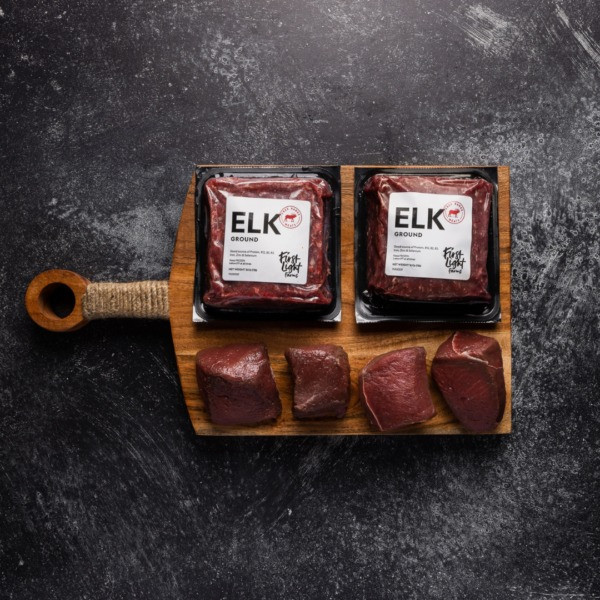
Elk Leg Steak - 6oz
- Versatile cut built for weeknight and weekend cooking alike: Elk leg steaks are naturally tender at this cut weight and cook quickly — ideal for a hot cast-iron sear, a reverse sear, or a simple grill finish. No marinades required.
- Raised on open New Zealand pastures, never confined — no antibiotics, no added hormones, ever: First Light's elk are raised on open pastures in New Zealand, a country whose agriculture is structurally GMO-free, giving you full-chain transparency without a third-party cert label to decode.
- Built for high-protein, low-fat eating styles: At 40g protein per steak with minimal fat, these steaks fit naturally into paleo, carnivore, and performance-nutrition diets without compromise.
Elk is not a novelty protein — it is what beef looks like when the animal spends its entire life on open pasture without grain, antibiotics, or hormones. First Light raises its elk on New Zealand's wide grasslands, where land management standards and the country's non-GMO agricultural framework mean you get genuinely clean protein by default, not by marketing claim.
Each order includes one 6 oz elk leg steak. At 40g of protein and 180 calories per steak, the macro profile is exceptional: this is a genuinely lean red meat with micronutrient depth that lean chicken cannot match. Elk is a meaningful source of iron, phosphorus, and zinc — the minerals that support oxygen transport, bone density, and immune function — which makes it a smarter lean-protein choice than most options at the same calorie count.
Elk leg steaks cook faster than comparable beef cuts because of their low intramuscular fat content. A hot, dry-heat method works best: cast iron or grill, high heat, and a finish to medium-rare (130–135°F internal). Resting is critical. Season simply — salt, pepper, and a finishing fat like grass-fed butter or herb oil — so the natural flavor of the meat comes through. Avoid overcooking; elk at well-done becomes tough in a way that mid-rare elk does not.
Shoppers who care about what a "clean" red meat actually means will find elk compelling in a way grocery-store options rarely are. The beef section at most stores — even the premium cases — is dominated by grain-finished cattle raised in confinement. First Light's pasture-raised elk comes from a fundamentally different production system: open land, natural behavior, no feed additives. That difference shows up in the fat profile and in the way the protein sits in your body after a meal.
Tanner D., Verified Buyer: "Fast shipping. Great tasting Elk."
William R., Verified Buyer: "Great. Prompt delivery and taste was Awesome. Will definitely order again soon."
Store frozen. Thaw in refrigerator 24 hours before cooking. Suitable for paleo, carnivore, keto, gluten-free, and dairy-free eating styles. Not suitable for vegetarian or vegan diets.
Ingredients: Elk.
Common Questions
How does pasture-raised elk compare nutritionally to conventional grain-finished beef?
Pasture-raised elk is significantly leaner than grain-finished beef, with roughly 2-3g of total fat per 3.5 oz serving compared to 15-20g in a comparable cut of grain-finished ribeye or sirloin. Elk also delivers approximately 26-28g of protein per 3.5 oz serving at around 150 calories, while a 3.5 oz grain-finished beef serving at the same weight can run 250-300 calories depending on cut and marbling grade. On iron, elk provides roughly 3.5mg per 3.5 oz serving — comparable to beef — but with a fraction of the saturated fat load. Grain-finishing cattle accelerates fat deposition and shifts the omega-6 to omega-3 ratio unfavorably; grass- and pasture-raised animals consistently show a ratio closer to 2:1 or 3:1, versus 7:1 or higher in grain-finished beef. For anyone managing caloric density without sacrificing micronutrient intake, elk offers a meaningfully different nutritional profile than what dominates the conventional beef case.
What specific compounds in pasture-raised elk make it nutritionally different from conventionally raised red meat?
Two compounds stand out: conjugated linoleic acid (CLA) and the omega-3 fatty acid ALA (alpha-linolenic acid). CLA is a naturally occurring fatty acid found in the meat and fat of ruminants that graze on fresh grass; research published in journals including the American Journal of Clinical Nutrition associates higher CLA intake with reduced body fat accumulation and improved immune markers. Pasture-raised ruminants consistently produce 2-5 times more CLA than grain-finished animals because CLA is synthesized in the rumen from linolenic acid found in green forage — a process that slows dramatically when the diet shifts to grain. Elk also provides meaningful amounts of zinc (approximately 4-5mg per 3.5 oz serving), which supports over 300 enzymatic reactions including immune cell production, and phosphorus, which is essential for ATP synthesis and bone mineralization. The heme iron in elk, like all red meat, is absorbed at roughly 15-35% efficiency — substantially higher than the 2-10% absorption rate of non-heme iron from plant sources.
Does elk fit a keto, paleo, or carnivore diet, and what do the macros look like per serving?
Elk fits all three protocols cleanly. Each 6 oz steak from this product provides approximately 40g of protein, around 4-6g of fat, and zero carbohydrates, making it inherently keto-compatible without any macro manipulation. For paleo, elk qualifies on every axis: it is an unprocessed, single-ingredient animal protein from a pasture-raised animal with no antibiotics, added hormones, or grain in its diet. Carnivore practitioners specifically seek out lean-to-moderate-fat red meat with dense micronutrient profiles, and elk's iron, zinc, and phosphorus content makes it a more nutrient-complete option than chicken breast, which is the default lean protein for many carnivore beginners. At approximately 180 calories per 6 oz steak, elk allows for high protein intake without pushing total caloric load upward, which matters for anyone in a fat-loss phase within keto or carnivore. Pairing elk with a finishing fat like grass-fed butter or tallow during cooking also allows keto practitioners to dial fat intake up without changing the protein source.
Can I substitute elk steaks directly for beef or pork in recipes, and what cooking adjustments do I need to make?
Elk substitutes well for beef in most applications — grilled steaks, pan-seared preparations, steak salads, tacos, and stir-fries — but requires two meaningful adjustments because of its low intramuscular fat. First, reduce your target internal temperature: elk should be pulled at 130-135°F for medium-rare, which is 5-10°F lower than many people cook beef, because the absence of marbling means the meat tightens and dries rapidly above that range. Second, add external fat to compensate for the lack of intramuscular fat — basting with butter, finishing oil, or bone marrow butter during the last 60-90 seconds of cooking keeps the texture supple. For dishes that use braised beef (short ribs, pot roast), elk leg is not an ideal substitute in a quick-cook format; those applications favor fattier, connective-tissue-rich cuts. Elk works best in applications that showcase a lean, clean beef analog: think grilled skirt steak preparations, carne asada, or a simple pan sauce steak. Pork substitution is less direct because pork's flavor profile is fattier and milder, but elk works anywhere pork tenderloin is used as a lean protein component.
How do I verify First Light's pasture-raised and no-antibiotics claims, and what does New Zealand's GMO-free status actually mean?
First Light is a New Zealand-based producer, and New Zealand has maintained a de facto GMO-free agricultural status since the early 2000s through the Hazardous Substances and New Organisms Act (HSNO), which effectively prohibits the outdoor cultivation of GMO crops. This means the GMO-free claim for First Light elk reflects national agricultural policy rather than a third-party certification audit — it is accurate but operates differently than a USDA Organic or Non-GMO Project Verified label. The no-antibiotics claim can be partially verified through New Zealand's Animal Products Act, which governs export-quality meat and requires compliance with veterinary drug residue standards enforced by MPI (Ministry for Primary Industries). New Zealand meat exported to the U.S. must pass USDA FSIS import inspection. First Light's pasture-raised claim aligns with New Zealand's dominant production model — the country's pastoral farming system means most ruminants graze year-round on open land rather than in confinement feeding operations. Consumers who want third-party audit documentation beyond country-of-origin standards can contact First Light directly, as their production model is transparent and well-documented within the New Zealand agricultural sector.
Why does elk have such a different fat profile from beef, and does that affect how it tastes?
Elk are physiologically different from cattle in how they deposit fat — they store the majority of their fat subcutaneously (under the skin) rather than intramuscularly (within the muscle), which is the opposite pattern from beef breeds selectively developed for marbling. This means an elk steak looks visually leaner than beef and has a noticeably different mouthfeel: cleaner, firmer, and less buttery, with a flavor that is often described as mildly gamey in the best sense — earthy and mineral-forward rather than neutral. The fat that is present in elk is higher in polyunsaturated fatty acids relative to grain-finished beef, which contributes a slightly different flavor compound profile during cooking. Overcooking amplifies the lean texture into toughness because there is no intramuscular fat to lubricate the muscle fibers as they contract with heat — this is why the 130-135°F target matters more for elk than for a well-marbled ribeye. Eaters who are accustomed to grain-finished beef may notice the absence of that fatty richness, but most find that elk's cleaner flavor stands up well to bold seasoning and benefits from a high-heat sear that creates a proper Maillard crust.
What does USDA labeling allow beef producers to call 'grass-fed,' and how does that compare to what First Light is actually doing with elk?
The USDA's grass-fed marketing claim standard was withdrawn as a formal mandatory standard in 2016, which means the term 'grass-fed' on beef packaging in the U.S. is currently self-certified — producers can make the claim without third-party verification, and the USDA does not audit those claims at the farm level. A beef labeled grass-fed in an American grocery store may have been grass-fed for part of its life and grain-finished for the last 90-120 days, which is standard practice in the conventional industry and meaningfully changes the fat profile. First Light's elk production in New Zealand operates under a different framework: the animals are on open pasture for their entire lives in a country where grain-finishing in feedlots is not the dominant production model. New Zealand's export meat standards are audited by MPI for residue and welfare compliance, adding a regulatory layer that self-certified U.S. grass-fed claims lack. For consumers trying to navigate label claims, the relevant question is always whether 'grass-fed' means grass-finished (no grain at any stage) — for elk raised in New Zealand's pastoral system, the answer is yes by default, because there is no economic or logistical infrastructure for feedlot grain-finishing the way there is in the U.S. beef industry.
- __Storage_Location:
- Frozen
- __Volume:
- 800
- __Owner:
- TCFarm
- __badge:
- Pasture-Raised