


Rocky Mountain Ground Elk - 1 lb
Northstar BisonBelow are the available bulk discount rates for each individual item when you purchase a certain amount
- Buy 6 - 11 and get 4% off
- Buy 12 - 23 and get 8% off
- Buy 24 or above and get 12% off
Write a Review
Northstar Bison
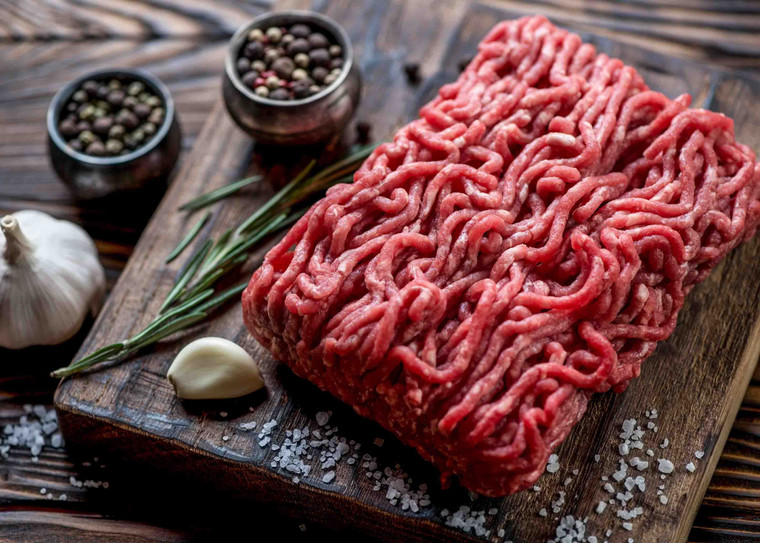
Rocky Mountain Ground Elk - 1 lb
93–95% lean. One ingredient. Raised on open regenerative pasture and field-harvested without stress. Northstar's Ground Elk comes from herds raised across Wisconsin, Minnesota, and southern Canada; no hormones, no antibiotics, no GMO feed, no soy, no corn. Ground in small batches to keep temperatures controlled and texture intact, with zero flavor enhancers, colorings, or preserving agents. The ingredient list has exactly one item on it. Hand delivered to your door by local drivers.
- Burgers, Bolognese, chili, tacos, meatballs, stuffed peppers — a direct, leaner substitute for ground beef in any recipe
- 93–95% lean with 25g protein and 3.3g fat per 100g — humanely field-harvested using the Zero Stress method, small-batch ground with no additives of any kind
- Keto, paleo, carnivore, and gluten-free
93–95% lean. Zero fillers. One ingredient. Northstar's Ground Elk is raised on open regenerative pasture across Wisconsin, Minnesota, and southern Canada, and harvested in the field using our Zero Stress Field Harvest method, so the animal never sees a processing facility floor. That's not how most ground meat gets made.
Each 1 lb package is ground in small batches to keep temperatures controlled and texture intact. No flavor enhancers, no colorings, no preserving agents. The ingredient list has exactly one item: 100% Rocky Mountain Elk meat.
Most ground meat at the grocery store tells only part of the story. Conventional ground beef commonly contains added colorants, uses modified atmosphere packaging gases to extend shelf life, and rarely discloses how or where the animal was raised. This ground elk comes from animals raised without hormones, antibiotics, GMO feed, soy, or corn — on open pasture with verified humane harvest practices. It's a category apart.
Per 100g serving: 159 calories, 25g protein, 3.3g fat, 56mg cholesterol. At 93–95% lean, this is one of the leanest ground proteins available. The fat profile reflects how the animal actually lived — open-pasture raised and never finished on grain, soy, or corn.
Use it anywhere you'd reach for ground beef: burgers, Bolognese, chili, tacos, meatballs, stuffed peppers. Because it's so lean, medium heat and a watchful eye are all it takes — avoid overcooking to keep it juicy.
Customers who've made the switch tend not to go back. The clean, rich flavor and noticeably superior texture are what Northstar's regulars cite most — along with how it performs in the pan compared to anything they've found at the grocery store.
- "Once you try the ground elk from Northstar Bison, you will never eat ground beef from the grocery store again! The difference is indescribable." — Debbie B., Verified Buyer
- "Love love love the ground elk. Totally replaced ground beef with it for a leaner option. Perfect burgers." — Renee O., Verified Buyer
- "The meat is incredibly fresh, clean tasting, and noticeably superior to what you typically find in grocery stores. You can really tell they care about sourcing and standards." — Carmal T., Verified Buyer
Fits keto, paleo, carnivore, and gluten-free diets. Packaged frozen; keeps in the freezer for up to 24 months. Thaw in the refrigerator for 24 hours before use; use within 5–7 days once thawed. Hand delivered to your door by local drivers.
Ingredients: 100% Rocky Mountain Elk meat
Common Questions
How does this ground elk compare nutritionally to conventional 80/20 ground beef?
Per 100g, this ground elk delivers 25g of protein, 3.3g of fat, and 159 calories. Conventional 80/20 ground beef runs roughly 17g of protein, 20g of fat, and 254 calories per 100g — meaning this elk has about 47% more protein and roughly 83% less fat per serving. Even lean 93/7 ground beef typically contains around 21g protein and 7g fat per 100g, so the elk still edges it out on both counts. Cholesterol comes in at 56mg per 100g, which is moderate and consistent with other lean wild or pasture-raised red meats. For anyone tracking macros, that 25g protein at under 160 calories is a ratio difficult to match with conventional ground meats.
Does pasture raising actually change the fat profile, or is that just marketing?
There is peer-reviewed evidence that grazing animals produce measurably different fat profiles than grain-finished ones. Studies published in Nutrition Journal and the Journal of Animal Science have found that grass-fed and pasture-raised ruminants show omega-6 to omega-3 ratios closer to 2:1 or 3:1, compared to ratios of 7:1 or higher in grain-finished animals. Conjugated linoleic acid (CLA), a fatty acid associated with reduced inflammation and improved body composition in multiple clinical trials, is also found at significantly higher concentrations in pasture-raised animals — some studies report 2 to 5 times more CLA versus grain-fed counterparts. Elk in particular are naturally lean animals that were never bred or finished for fat accumulation, so the fat present reflects actual foraging activity rather than energy surplus from corn or soy. This elk is raised without GMO feed, soy, or corn, and is never grain-finished, which preserves that pasture-derived fat profile from field to package.
Does this fit keto, paleo, or carnivore macros, and how does it work across those protocols?
Yes, this product fits all three. At 93–95% lean with 3.3g fat and 25g protein per 100g, zero carbohydrates, no fillers, no additives, and a single-ingredient list of 100% elk meat, it clears the standards of each protocol. For strict carnivore, the absence of any plant-derived additives — no soy, no corn, no flavor enhancers, no colorings, no preserving agents — matters as much as the macro split. For keto, the very low carb load (zero) and high protein density make it a clean building block; some strict keto practitioners who prioritize higher fat intake may choose to cook it in butter, tallow, or a fat of choice to hit their fat targets, since 3.3g per 100g is intentionally lean. For paleo, both the single ingredient and the open-pasture, non-GMO, no-antibiotic, no-hormone raising protocol align directly with what the framework requires. Gluten-free buyers should note there are no grains, fillers, or shared-equipment additives declared — the ingredient list is one item.
Can I substitute this for ground beef or ground pork in standard recipes, and does anything need to change?
Ground elk substitutes directly for ground beef in virtually any recipe — burgers, Bolognese, chili, tacos, meatballs, meat sauces, stuffed peppers, and shepherd's pie all work without reformulation. The two practical adjustments to keep in mind are heat level and cook time. Because elk is 93–95% lean, it has less internal fat to self-baste, which means it can dry out faster than 80/20 ground beef. Medium heat rather than high heat, and pulling it off about 30 seconds earlier than you would beef, keeps it juicy. For burgers specifically, a brief rest after cooking helps redistribute moisture. Against ground pork, which typically runs 70–75% lean and is higher in fat and milder in flavor, elk will produce a leaner, firmer texture — so in a meatball or meatloaf mix calling for pork, a small addition of fat (olive oil, egg yolk, or bone marrow) can compensate if you want the original texture. The flavor of elk is clean and mildly rich, not gamey, which makes it versatile across cuisines.
What does the Zero Stress Field Harvest method actually mean, and why does it matter for meat quality?
The Zero Stress Field Harvest method means the animal is harvested directly on pasture — in its natural environment — rather than transported to and processed inside a conventional slaughter facility. Conventional harvest involves loading, transport, holding pens, and high-stimulation environments that elevate cortisol and adrenaline in the animal. Elevated stress hormones at the time of harvest trigger glycogen depletion in muscle tissue, which affects post-mortem pH drop — the process that determines tenderness, moisture retention, and shelf color in the final meat. Meat from animals harvested under high stress is more prone to producing what the industry calls dark, firm, and dry (DFD) cuts, characterized by elevated pH and poor texture. Field harvest eliminates that stress cascade because the animal has no awareness of the event, is not transported, and is not confined. For a ground product specifically, this means the raw material going into the grinder has not been compromised by stress-related biochemical changes before processing.
How do I know the no-hormone, no-antibiotic, and no-GMO claims are verifiable and not just label language?
USDA regulations require that 'no added hormones' and 'no antibiotics' claims on meat labels be substantiated through documentation submitted to and approved by USDA's Food Safety and Inspection Service — producers must maintain records of animal management practices that support those statements. Elk, unlike cattle, are not a species where hormone implants are commercially standard practice, but the explicit claim still requires verification under USDA label approval rules. The no-GMO-feed claim is a production practice assertion that requires traceable feed sourcing documentation; the additional declarations of no soy and no corn narrow what approved feed inputs are permissible in that supply chain, making the claim more specific and auditable than a generic 'natural' label would be. Regenerative ranching certification involves third-party evaluation of land management practices, not just a self-reported label. What matters to the skeptical buyer is that each of these is a specific, named claim rather than a vague term like 'all-natural,' which has no USDA regulatory definition and requires no substantiation whatsoever.
Why is this ground in small batches, and does batch size actually affect the product?
Small-batch grinding matters for two reasons: temperature control and texture integrity. Commercial high-volume grinding generates friction heat that raises the internal temperature of the meat as it passes through the grinder plates. If that temperature rises too much during processing, you begin to affect protein structure before the product is ever cooked — essentially beginning denaturation prematurely, which changes texture and moisture behavior in the pan. Smaller batch sizes allow the grinder and the meat to stay closer to refrigerated temperatures throughout the process, preserving the protein matrix. On texture, high-volume grinding often requires multiple passes or finer plates to achieve throughput targets, which over-works the meat and produces a paste-like consistency rather than distinct, loose granules. A properly small-batch ground product should have visible texture when you break it apart raw — which matters for how it browns in a skillet and how it holds structure in a burger or meatball. These are process variables that don't appear on a nutrition label but determine what the product is actually like to cook and eat.
- __Storage_Location:
- Frozen
- __Volume:
- 600
- __badge:
- Field-Harvested
- __Owner:
- NorthStar