


Garlic Dipping Sauce 15 - 5Oz
Bachans
$11.79
(No reviews yet)

Write a Review
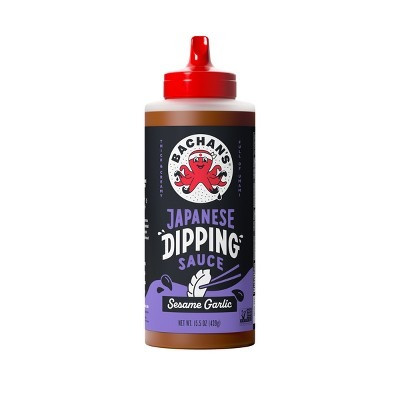
Bachans
Garlic Dipping Sauce 15 - 5Oz
Bachan's Garlic Sesame Dipping Sauce is built on a foundation of real ingredients that earn their place — organic garlic, organic toasted sesame oil, white miso, mirin, and crushed sesame seeds — balanced with Non-GMO Project Verified soy sauce and cane sugar for a sauce that hits savory, nutty, and umami notes all at once.
- Endlessly versatile: use as a dipping sauce for dumplings, spring rolls, grilled proteins, or roasted vegetables; doubles as a marinade, stir-fry finish, or noodle dressing
- Certified credentials: Organic certification and Non-GMO Project Verification on a single sauce — most grocery-aisle dipping sauces carry neither; every bottle is built from ingredients that passed third-party scrutiny
- Pantry-friendly: shelf-stable before opening; suits vegetarian and most dairy-free diets; contains wheat and soy
Bachan's Garlic Sesame Dipping Sauce layers toasted sesame depth with the savory warmth of organic roasted garlic, white miso, and mirin — a Japanese-inspired sauce that earns a permanent spot on the counter, not just a one-time use.
The 15.5 oz bottle is built around a thoughtful ingredient list: cane sugar, sesame paste, organic garlic, Non-GMO soy sauce (water, soybeans, wheat, salt), organic rice vinegar, organic roasted garlic, white miso (rice, filtered water, non-GMO soybeans, sea salt), sea salt, mirin (water, rice, koji seed, sea salt), crushed sesame seeds, and organic toasted sesame oil. Two certifications — Organic and Non-GMO Project Verified — cover the garlic, vinegar, sesame oil, and roasted garlic components, while Non-GMO soybeans anchor the miso and soy sauce. No artificial colors, no artificial preservatives, no flavor enhancers.
The miso and mirin combination does real flavor work here. White miso contributes fermented umami without sharpness; mirin adds subtle rice-based sweetness that balances the garlic's edge. Sesame shows up three ways — sesame paste for body, crushed seeds for texture, and toasted sesame oil for aromatic finish — giving the sauce a layered nuttiness that single-note sesame sauces can't match.
Use it straight from the bottle as a dipping sauce for potstickers, tempura, grilled chicken skewers, or raw vegetables. Thin with a splash of rice vinegar for a noodle dressing. Toss with roasted cauliflower or broccoli as a glaze. Marinate salmon or pork tenderloin for 30 minutes before cooking. The garlic-forward profile holds up to heat, making it equally effective as a stir-fry finishing sauce.
Suitable for vegetarian diets. Contains wheat and soy — not suitable for gluten-free or soy-free diets. Store in a cool, dry pantry before opening; refrigerate after opening and use within the timeframe noted on the bottle.
Ingredients: Cane Sugar, Sesame Paste, Organic Garlic, Non-Gmo Soy Sauce (Water, Soybeans, Wheat, Salt), Organic Rice Vinegar, Organic Roasted Garlic, White Miso (Rice, Filtered Water, Non-Gmo Soybeans, Sea Salt), Sea Salt, Mirin (Water, Rice, Koji Seed, Sea Salt), Crushed Sesame Seeds, And Organic Toasted Sesame Oil.
Common Questions
How does this sauce compare to standard bottled teriyaki or sesame sauces at the grocery store?
Most mass-market sesame or teriyaki sauces rely on high-fructose corn syrup, sodium benzoate as a preservative, and artificial flavor boosters like disodium inosinate or disodium guanylate to simulate umami. Bachan's Garlic Sesame Dipping Sauce derives its umami from actual fermented ingredients — white miso and soy sauce — which produce glutamates naturally through microbial fermentation rather than chemical synthesis. The sesame presence in conventional sauces is typically limited to a small amount of sesame oil listed near the end of the ingredient deck; here, sesame appears three times (paste, crushed seeds, toasted oil), meaning it functions as a structural flavor component rather than a trace aromatic. The cane sugar used here is a straightforward sucrose source, whereas many competing products use corn-derived sweeteners that some consumers actively avoid.
What role does white miso actually play in the flavor, and how is it made?
White miso, called shiro miso in Japanese, is produced by fermenting soybeans with rice and a mold culture called Aspergillus oryzae (koji), along with salt and water — exactly the process reflected in the ingredient panel here. The fermentation period for white miso is relatively short, typically one to three months, which yields a mild, slightly sweet flavor profile compared to the sharper, more pungent character of red or aged miso. During fermentation, proteins in the soybeans break down into free glutamates — specifically glutamic acid — which are the same compounds responsible for the savory depth associated with umami, the fifth basic taste. This means the miso is doing real biochemical work in the sauce, not just adding color or texture. The result is a rounded savoriness that doesn't taste fermented in an obvious way but prevents the garlic and sesame from feeling flat.
What exactly is mirin and why does it matter in a dipping sauce?
Mirin is a Japanese rice-based condiment produced by fermenting glutinous rice with koji (Aspergillus oryzae) and then combining it with shochu or another spirit to arrest fermentation, leaving residual sugars and a mild alcohol content — typically around 10 to 14 percent in traditional hon mirin. The version in this sauce is a brewed mirin made with water, rice, koji seed, and sea salt, which places it in the category of fermented rather than synthetic mirin (many lower-cost products substitute corn syrup and salt with added alcohol to simulate the flavor). In a dipping sauce context, mirin contributes a subtler, more complex sweetness than plain sugar because the glucose and oligosaccharides from rice fermentation have different molecular weights and interact differently on the palate than sucrose alone. It also has a slight viscosity-building effect, which helps the sauce cling to food rather than sliding off immediately.
Is this sauce gluten-free, and what are the specific allergen concerns?
This sauce is not gluten-free. The Non-GMO soy sauce in the ingredient list contains wheat, and wheat is also present in the white miso base (rice, filtered water, non-GMO soybeans, sea salt — the miso itself appears wheat-free, but the soy sauce component is a confirmed gluten source). Anyone managing celiac disease or non-celiac gluten sensitivity should not use this sauce without confirming reformulation directly with the manufacturer. Soy is the second major allergen present, appearing in both the soy sauce and the miso. Sesame is a top-nine allergen in the United States as of January 2023 under FASTER Act regulations, and this sauce contains sesame in three forms — paste, crushed seeds, and toasted oil — making it a high sesame-exposure product. The sauce is suitable for vegetarian diets and does not contain animal-derived ingredients.
What does the Non-GMO Project Verified certification actually confirm, and which ingredients does it cover?
Non-GMO Project Verified is a third-party certification administered by the Non-GMO Project, a nonprofit organization that requires ingredient traceability, annual audits, and testing thresholds — the standard requires that at-risk ingredients test below 0.9 percent GMO presence, consistent with European Union labeling thresholds. The certification covers the entire product formulation, meaning that every ingredient sourced for this bottle has been evaluated through the Non-GMO Project's supply chain verification process. The soybeans used in the miso and soy sauce are specifically called out as Non-GMO on the ingredient label, which is significant because soybeans are one of the highest-GMO-prevalence crops in the United States — over 90 percent of U.S. soy acreage is planted with genetically engineered varieties. The Organic certification separately confirms that the organic-designated ingredients (garlic, rice vinegar, roasted garlic, toasted sesame oil) were grown without synthetic pesticides or fertilizers under USDA National Organic Program standards, which is administered and verified through an accredited third-party certifying agent.
What are the most practical ways to use this beyond dipping?
The sauce functions well as a marinade for proteins because the garlic and soy components contain enzymes and salt that begin breaking down surface proteins within 20 to 30 minutes — salmon fillets, chicken thighs, and pork tenderloin all benefit from a 30-minute soak before roasting or grilling. Thinned 2-to-1 with rice vinegar or water, it becomes a cohesive noodle dressing that coats soba or rice noodles without clumping. For a roasted vegetable glaze, toss cauliflower, broccoli, or Brussels sprouts in the undiluted sauce before roasting at 400 to 425 degrees Fahrenheit — the cane sugar and mirin caramelize at high heat and create char edges without burning as quickly as honey-based sauces. It also works as a stir-fry finishing sauce added in the last 60 to 90 seconds of cooking, where the garlic flavor remains assertive but the sesame oil doesn't overheat and turn bitter. For a dipping context beyond potstickers, it pairs well with cold tofu, blanched snap peas, or grilled scallions.
Why does this sauce use sesame three ways, and does that actually make a flavor difference?
Sesame paste (tahini-style ground sesame), crushed sesame seeds, and toasted sesame oil each contribute distinct sensory properties that don't overlap. Sesame paste provides fat-soluble flavor compounds and body — it acts as an emulsifier and gives the sauce thickness and a rich, almost creamy baseline nuttiness. Crushed sesame seeds introduce texture and a slightly more raw, grainy sesame flavor because the seed coat is intact and the oils haven't been fully extracted. Toasted sesame oil, produced by pressing roasted sesame seeds, contains pyrazine compounds formed during the roasting process — specifically 2-phenylethanol and various alkylpyrazines — which are responsible for the distinctively deep, aromatic, almost smoky note that defines the finish of the sauce. Using only sesame oil, as many sauces do, produces a strong aromatic presence but lacks body; using only paste produces depth but no aromatic finish. The three-component approach means the sesame character is present at the first taste, in the mid-palate, and as a lingering finish.
The 15.5 oz bottle is built around a thoughtful ingredient list: cane sugar, sesame paste, organic garlic, Non-GMO soy sauce (water, soybeans, wheat, salt), organic rice vinegar, organic roasted garlic, white miso (rice, filtered water, non-GMO soybeans, sea salt), sea salt, mirin (water, rice, koji seed, sea salt), crushed sesame seeds, and organic toasted sesame oil. Two certifications — Organic and Non-GMO Project Verified — cover the garlic, vinegar, sesame oil, and roasted garlic components, while Non-GMO soybeans anchor the miso and soy sauce. No artificial colors, no artificial preservatives, no flavor enhancers.
The miso and mirin combination does real flavor work here. White miso contributes fermented umami without sharpness; mirin adds subtle rice-based sweetness that balances the garlic's edge. Sesame shows up three ways — sesame paste for body, crushed seeds for texture, and toasted sesame oil for aromatic finish — giving the sauce a layered nuttiness that single-note sesame sauces can't match.
Use it straight from the bottle as a dipping sauce for potstickers, tempura, grilled chicken skewers, or raw vegetables. Thin with a splash of rice vinegar for a noodle dressing. Toss with roasted cauliflower or broccoli as a glaze. Marinate salmon or pork tenderloin for 30 minutes before cooking. The garlic-forward profile holds up to heat, making it equally effective as a stir-fry finishing sauce.
Suitable for vegetarian diets. Contains wheat and soy — not suitable for gluten-free or soy-free diets. Store in a cool, dry pantry before opening; refrigerate after opening and use within the timeframe noted on the bottle.
Ingredients: Cane Sugar, Sesame Paste, Organic Garlic, Non-Gmo Soy Sauce (Water, Soybeans, Wheat, Salt), Organic Rice Vinegar, Organic Roasted Garlic, White Miso (Rice, Filtered Water, Non-Gmo Soybeans, Sea Salt), Sea Salt, Mirin (Water, Rice, Koji Seed, Sea Salt), Crushed Sesame Seeds, And Organic Toasted Sesame Oil.
Common Questions
How does this sauce compare to standard bottled teriyaki or sesame sauces at the grocery store?
Most mass-market sesame or teriyaki sauces rely on high-fructose corn syrup, sodium benzoate as a preservative, and artificial flavor boosters like disodium inosinate or disodium guanylate to simulate umami. Bachan's Garlic Sesame Dipping Sauce derives its umami from actual fermented ingredients — white miso and soy sauce — which produce glutamates naturally through microbial fermentation rather than chemical synthesis. The sesame presence in conventional sauces is typically limited to a small amount of sesame oil listed near the end of the ingredient deck; here, sesame appears three times (paste, crushed seeds, toasted oil), meaning it functions as a structural flavor component rather than a trace aromatic. The cane sugar used here is a straightforward sucrose source, whereas many competing products use corn-derived sweeteners that some consumers actively avoid.
What role does white miso actually play in the flavor, and how is it made?
White miso, called shiro miso in Japanese, is produced by fermenting soybeans with rice and a mold culture called Aspergillus oryzae (koji), along with salt and water — exactly the process reflected in the ingredient panel here. The fermentation period for white miso is relatively short, typically one to three months, which yields a mild, slightly sweet flavor profile compared to the sharper, more pungent character of red or aged miso. During fermentation, proteins in the soybeans break down into free glutamates — specifically glutamic acid — which are the same compounds responsible for the savory depth associated with umami, the fifth basic taste. This means the miso is doing real biochemical work in the sauce, not just adding color or texture. The result is a rounded savoriness that doesn't taste fermented in an obvious way but prevents the garlic and sesame from feeling flat.
What exactly is mirin and why does it matter in a dipping sauce?
Mirin is a Japanese rice-based condiment produced by fermenting glutinous rice with koji (Aspergillus oryzae) and then combining it with shochu or another spirit to arrest fermentation, leaving residual sugars and a mild alcohol content — typically around 10 to 14 percent in traditional hon mirin. The version in this sauce is a brewed mirin made with water, rice, koji seed, and sea salt, which places it in the category of fermented rather than synthetic mirin (many lower-cost products substitute corn syrup and salt with added alcohol to simulate the flavor). In a dipping sauce context, mirin contributes a subtler, more complex sweetness than plain sugar because the glucose and oligosaccharides from rice fermentation have different molecular weights and interact differently on the palate than sucrose alone. It also has a slight viscosity-building effect, which helps the sauce cling to food rather than sliding off immediately.
Is this sauce gluten-free, and what are the specific allergen concerns?
This sauce is not gluten-free. The Non-GMO soy sauce in the ingredient list contains wheat, and wheat is also present in the white miso base (rice, filtered water, non-GMO soybeans, sea salt — the miso itself appears wheat-free, but the soy sauce component is a confirmed gluten source). Anyone managing celiac disease or non-celiac gluten sensitivity should not use this sauce without confirming reformulation directly with the manufacturer. Soy is the second major allergen present, appearing in both the soy sauce and the miso. Sesame is a top-nine allergen in the United States as of January 2023 under FASTER Act regulations, and this sauce contains sesame in three forms — paste, crushed seeds, and toasted oil — making it a high sesame-exposure product. The sauce is suitable for vegetarian diets and does not contain animal-derived ingredients.
What does the Non-GMO Project Verified certification actually confirm, and which ingredients does it cover?
Non-GMO Project Verified is a third-party certification administered by the Non-GMO Project, a nonprofit organization that requires ingredient traceability, annual audits, and testing thresholds — the standard requires that at-risk ingredients test below 0.9 percent GMO presence, consistent with European Union labeling thresholds. The certification covers the entire product formulation, meaning that every ingredient sourced for this bottle has been evaluated through the Non-GMO Project's supply chain verification process. The soybeans used in the miso and soy sauce are specifically called out as Non-GMO on the ingredient label, which is significant because soybeans are one of the highest-GMO-prevalence crops in the United States — over 90 percent of U.S. soy acreage is planted with genetically engineered varieties. The Organic certification separately confirms that the organic-designated ingredients (garlic, rice vinegar, roasted garlic, toasted sesame oil) were grown without synthetic pesticides or fertilizers under USDA National Organic Program standards, which is administered and verified through an accredited third-party certifying agent.
What are the most practical ways to use this beyond dipping?
The sauce functions well as a marinade for proteins because the garlic and soy components contain enzymes and salt that begin breaking down surface proteins within 20 to 30 minutes — salmon fillets, chicken thighs, and pork tenderloin all benefit from a 30-minute soak before roasting or grilling. Thinned 2-to-1 with rice vinegar or water, it becomes a cohesive noodle dressing that coats soba or rice noodles without clumping. For a roasted vegetable glaze, toss cauliflower, broccoli, or Brussels sprouts in the undiluted sauce before roasting at 400 to 425 degrees Fahrenheit — the cane sugar and mirin caramelize at high heat and create char edges without burning as quickly as honey-based sauces. It also works as a stir-fry finishing sauce added in the last 60 to 90 seconds of cooking, where the garlic flavor remains assertive but the sesame oil doesn't overheat and turn bitter. For a dipping context beyond potstickers, it pairs well with cold tofu, blanched snap peas, or grilled scallions.
Why does this sauce use sesame three ways, and does that actually make a flavor difference?
Sesame paste (tahini-style ground sesame), crushed sesame seeds, and toasted sesame oil each contribute distinct sensory properties that don't overlap. Sesame paste provides fat-soluble flavor compounds and body — it acts as an emulsifier and gives the sauce thickness and a rich, almost creamy baseline nuttiness. Crushed sesame seeds introduce texture and a slightly more raw, grainy sesame flavor because the seed coat is intact and the oils haven't been fully extracted. Toasted sesame oil, produced by pressing roasted sesame seeds, contains pyrazine compounds formed during the roasting process — specifically 2-phenylethanol and various alkylpyrazines — which are responsible for the distinctively deep, aromatic, almost smoky note that defines the finish of the sauce. Using only sesame oil, as many sauces do, produces a strong aromatic presence but lacks body; using only paste produces depth but no aromatic finish. The three-component approach means the sesame character is present at the first taste, in the mid-palate, and as a lingering finish.
- __Storage_Location:
- Dry
- __Volume:
- 400
- __Owner:
- TCFarm
- __badge:
- Non-GMO