


Hot Honey Japanese Bbq Sauce - 17Oz
Bachans
$7.99
(No reviews yet)

Write a Review
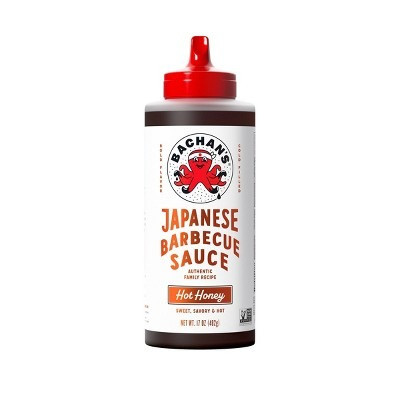
Bachans
Hot Honey Japanese Bbq Sauce - 17Oz
Bachan's Hot Honey Japanese BBQ Sauce brings together the slow heat of red habanero and the floral sweetness of organic honey in a sauce built on the same umami-forward base that made Bachan's a cult pantry staple — Non-GMO Project Verified and made with certifiably organic key aromatics.
- Use it everywhere: glaze over grilled chicken thighs, toss with roasted cauliflower, stir into noodles, or use as a dipping sauce for dumplings and spring rolls — the habanero heat builds without overwhelming.
- Certified clean label: Non-GMO Project Verified soy sauce anchors the umami base; organic honey, organic ginger, organic garlic, and organic toasted sesame oil round out the flavor without artificial colors, preservatives, or flavor enhancers.
- Allergen transparency: Contains wheat, soy, and sesame — clearly labeled for households managing those sensitivities.
Bachan's started as a family recipe passed down through generations of Japanese-American cooking, and the Hot Honey variation is their most daring expression yet — a 17 oz bottle that layers habanero fire, fermented soy depth, and the unmistakable sweetness of organic honey into a single all-purpose sauce.
The ingredient list reads like a pantry of intentional choices: Non-GMO Project Verified soy sauce (water, soybeans, wheat, salt) provides the fermented backbone; organic honey and cane sugar balance heat with sweetness; red habanero purée (habanero, salt, vinegar) delivers the slow-building burn; and organic ginger, organic garlic, and organic toasted sesame oil tie it all together with aromatic depth. Mirin and organic rice vinegar add brightness and balance. There are no artificial flavors, no artificial colors, and no preservatives.
At 17 oz, this is a serious cooking sauce — large enough to carry you through a weekend of grilling or a week of weeknight meals. Use it as a glaze on salmon or pork tenderloin in the last five minutes of cooking, as a stir-fry sauce over udon or soba, as a marinade for tofu or chicken thighs, or straight from the bottle as a dipping sauce alongside gyoza or lettuce wraps. The habanero heat is real but measured — it climbs rather than punches, making it workable across a range of spice tolerances.
Certified Non-GMO Project Verified. Key aromatics (honey, ginger, garlic, rice vinegar, sesame oil) are certified organic. Store at room temperature; refrigerate after opening.
⚠️ Contains: Wheat, Soy, Sesame.
Ingredients: Non-GMO Soy Sauce (Water, Soybeans, Wheat, Salt), Cane Sugar, Organic Honey, Red Habanero Purée (Red Habanero, Salt, Vinegar), Organic Rice Vinegar, Mirin (Water, Rice, Koji Seed, Sea Salt), Tomato Paste, Organic Ginger, Organic Garlic, Green Onion, Organic Toasted Sesame Oil, Sea Salt.
Common Questions
How hot is the habanero heat in this sauce, and how does it compare to other hot sauces on the Scoville scale?
Red habanero peppers register between 100,000 and 350,000 Scoville Heat Units (SHU), making them significantly hotter than jalapeños (2,500–8,000 SHU) and considerably above cayenne (30,000–50,000 SHU). In this sauce, the habanero appears as a purée blended with salt and vinegar, which dilutes and moderates the raw pepper intensity considerably. The addition of organic honey, cane sugar, and mirin creates a genuine sweet counterweight that slows the perceived burn — the heat builds over 10–20 seconds rather than hitting immediately. Most people who tolerate medium-hot commercial hot sauces (like Cholula or Tapatío) will find this manageable, though those sensitive to capsaicin should start with a small quantity.
What does Non-GMO Project Verified actually mean for the soy sauce in this product, and why does it matter?
Non-GMO Project Verified is a third-party certification administered by the Non-GMO Project, a nonprofit organization that requires products to meet a standard of less than 0.9% GMO content — the threshold at which EU regulations consider a product to require GMO labeling. Soybeans are one of the highest-risk crops for GMO contamination in the U.S., where over 90% of the conventional soy crop is genetically modified, primarily to be herbicide-resistant. The soy sauce in this product carries the Non-GMO Project butterfly seal, meaning the soybeans were sourced from verified non-GMO supply chains and tested to confirm they fall below that 0.9% threshold. This matters for consumers avoiding herbicide-resistant crop varieties and for those who want traceability in fermented ingredients where the original source grain is not always disclosed.
Which of the ingredients in this sauce are certified organic, and which are not?
The product is labeled as having key organic ingredients rather than being fully certified organic across every component. Confirmed organic ingredients include: honey, rice vinegar, ginger, garlic, and toasted sesame oil — all of which carry the organic designation in the ingredient list. The soy sauce base (water, soybeans, wheat, salt) is Non-GMO Project Verified but is not labeled organic in the ingredient deck. Cane sugar, mirin, tomato paste, green onion, and sea salt are also not listed as organic. For shoppers prioritizing a fully organic product, this distinction is worth noting — it is a partially organic sauce with Non-GMO verification on the higher-risk remaining ingredients.
Does this sauce contain gluten, and can it be used in gluten-free cooking?
This sauce is not gluten-free. The soy sauce base is brewed with wheat — a standard ingredient in traditionally brewed Japanese soy sauce (shoyu) — and wheat is listed as a declared allergen on the label alongside soy and sesame. The mirin component (water, rice, koji seed, sea salt) is inherently gluten-free, but the soy sauce component makes the overall product unsuitable for anyone with celiac disease or a wheat allergy. People following a low-gluten diet by personal preference rather than medical necessity may choose to use it in small quantities as a glaze where dilution occurs during cooking, but those with celiac disease should avoid it entirely and look for tamari-based Japanese BBQ sauces instead.
What are the best ways to use this sauce as a glaze versus a marinade, and does cooking change the flavor profile?
As a glaze, apply Bachan's Hot Honey in the final 3–5 minutes of cooking over direct heat — the sugars (from cane sugar, honey, and mirin) will caramelize quickly at temperatures above 300°F, creating a lacquered, sticky crust on proteins like salmon, chicken thighs, or pork belly. Applied too early over high heat, the sugars will burn before the protein cooks through. As a marinade, the rice vinegar and soy sauce provide acid and salt that begin denaturing surface proteins and drawing flavor into the meat within 30–60 minutes — longer marination (2–4 hours) works well for chicken or tofu but can over-soften delicate fish. Cooking concentrates and slightly mutes the raw habanero sharpness while amplifying the savory fermented soy notes, so the cooked sauce tastes somewhat less sharp than it does cold from the bottle. For dipping, serve it unheated to preserve the full honey-and-habanero brightness.
Is this sauce suitable for keto or paleo diets given the sugar content from honey and cane sugar?
This sauce contains both cane sugar and organic honey as prominent early ingredients, meaning it carries a meaningful carbohydrate load that makes strict keto use difficult. A typical Japanese BBQ sauce of this style runs roughly 10–15 grams of sugar per 2-tablespoon serving, which would consume a significant portion of the standard 20–50g daily net carb ceiling for ketogenic diets. Paleo compatibility depends on interpretation — honey is generally considered paleo-acceptable since it is an unrefined natural sweetener, but cane sugar and soy sauce (which contains wheat) disqualify it from strict paleo and from Whole30. The sauce does not fit carnivore guidelines at all given its plant-based and sweetener content. People using keto or paleo frameworks loosely may use it sparingly as a glaze where only a thin coating adheres to the food, but it is not designed for low-carb dietary protocols.
What role does mirin play in this sauce, and how is it different from just adding sugar?
Mirin is a Japanese sweet rice wine made by fermenting glutinous rice with koji mold (Aspergillus oryzae) and then combining it with shochu or salt to halt fermentation at a point of high residual sugar — typically 40–50% sugar by weight in hon-mirin (true mirin). Unlike plain cane sugar, mirin contributes not only sweetness but also naturally occurring amino acids produced during koji fermentation, mild umami compounds, and a subtle alcoholic depth that evaporates during cooking. This fermented complexity is one reason Japanese glazes develop a richer, more layered sweetness than Western barbecue sauces sweetened purely with refined sugar. The mirin in this formula works alongside the soy sauce's own fermentation-derived glutamates to build the sauce's savory-sweet backbone in a way that cane sugar alone cannot replicate.
The ingredient list reads like a pantry of intentional choices: Non-GMO Project Verified soy sauce (water, soybeans, wheat, salt) provides the fermented backbone; organic honey and cane sugar balance heat with sweetness; red habanero purée (habanero, salt, vinegar) delivers the slow-building burn; and organic ginger, organic garlic, and organic toasted sesame oil tie it all together with aromatic depth. Mirin and organic rice vinegar add brightness and balance. There are no artificial flavors, no artificial colors, and no preservatives.
At 17 oz, this is a serious cooking sauce — large enough to carry you through a weekend of grilling or a week of weeknight meals. Use it as a glaze on salmon or pork tenderloin in the last five minutes of cooking, as a stir-fry sauce over udon or soba, as a marinade for tofu or chicken thighs, or straight from the bottle as a dipping sauce alongside gyoza or lettuce wraps. The habanero heat is real but measured — it climbs rather than punches, making it workable across a range of spice tolerances.
Certified Non-GMO Project Verified. Key aromatics (honey, ginger, garlic, rice vinegar, sesame oil) are certified organic. Store at room temperature; refrigerate after opening.
⚠️ Contains: Wheat, Soy, Sesame.
Ingredients: Non-GMO Soy Sauce (Water, Soybeans, Wheat, Salt), Cane Sugar, Organic Honey, Red Habanero Purée (Red Habanero, Salt, Vinegar), Organic Rice Vinegar, Mirin (Water, Rice, Koji Seed, Sea Salt), Tomato Paste, Organic Ginger, Organic Garlic, Green Onion, Organic Toasted Sesame Oil, Sea Salt.
Common Questions
How hot is the habanero heat in this sauce, and how does it compare to other hot sauces on the Scoville scale?
Red habanero peppers register between 100,000 and 350,000 Scoville Heat Units (SHU), making them significantly hotter than jalapeños (2,500–8,000 SHU) and considerably above cayenne (30,000–50,000 SHU). In this sauce, the habanero appears as a purée blended with salt and vinegar, which dilutes and moderates the raw pepper intensity considerably. The addition of organic honey, cane sugar, and mirin creates a genuine sweet counterweight that slows the perceived burn — the heat builds over 10–20 seconds rather than hitting immediately. Most people who tolerate medium-hot commercial hot sauces (like Cholula or Tapatío) will find this manageable, though those sensitive to capsaicin should start with a small quantity.
What does Non-GMO Project Verified actually mean for the soy sauce in this product, and why does it matter?
Non-GMO Project Verified is a third-party certification administered by the Non-GMO Project, a nonprofit organization that requires products to meet a standard of less than 0.9% GMO content — the threshold at which EU regulations consider a product to require GMO labeling. Soybeans are one of the highest-risk crops for GMO contamination in the U.S., where over 90% of the conventional soy crop is genetically modified, primarily to be herbicide-resistant. The soy sauce in this product carries the Non-GMO Project butterfly seal, meaning the soybeans were sourced from verified non-GMO supply chains and tested to confirm they fall below that 0.9% threshold. This matters for consumers avoiding herbicide-resistant crop varieties and for those who want traceability in fermented ingredients where the original source grain is not always disclosed.
Which of the ingredients in this sauce are certified organic, and which are not?
The product is labeled as having key organic ingredients rather than being fully certified organic across every component. Confirmed organic ingredients include: honey, rice vinegar, ginger, garlic, and toasted sesame oil — all of which carry the organic designation in the ingredient list. The soy sauce base (water, soybeans, wheat, salt) is Non-GMO Project Verified but is not labeled organic in the ingredient deck. Cane sugar, mirin, tomato paste, green onion, and sea salt are also not listed as organic. For shoppers prioritizing a fully organic product, this distinction is worth noting — it is a partially organic sauce with Non-GMO verification on the higher-risk remaining ingredients.
Does this sauce contain gluten, and can it be used in gluten-free cooking?
This sauce is not gluten-free. The soy sauce base is brewed with wheat — a standard ingredient in traditionally brewed Japanese soy sauce (shoyu) — and wheat is listed as a declared allergen on the label alongside soy and sesame. The mirin component (water, rice, koji seed, sea salt) is inherently gluten-free, but the soy sauce component makes the overall product unsuitable for anyone with celiac disease or a wheat allergy. People following a low-gluten diet by personal preference rather than medical necessity may choose to use it in small quantities as a glaze where dilution occurs during cooking, but those with celiac disease should avoid it entirely and look for tamari-based Japanese BBQ sauces instead.
What are the best ways to use this sauce as a glaze versus a marinade, and does cooking change the flavor profile?
As a glaze, apply Bachan's Hot Honey in the final 3–5 minutes of cooking over direct heat — the sugars (from cane sugar, honey, and mirin) will caramelize quickly at temperatures above 300°F, creating a lacquered, sticky crust on proteins like salmon, chicken thighs, or pork belly. Applied too early over high heat, the sugars will burn before the protein cooks through. As a marinade, the rice vinegar and soy sauce provide acid and salt that begin denaturing surface proteins and drawing flavor into the meat within 30–60 minutes — longer marination (2–4 hours) works well for chicken or tofu but can over-soften delicate fish. Cooking concentrates and slightly mutes the raw habanero sharpness while amplifying the savory fermented soy notes, so the cooked sauce tastes somewhat less sharp than it does cold from the bottle. For dipping, serve it unheated to preserve the full honey-and-habanero brightness.
Is this sauce suitable for keto or paleo diets given the sugar content from honey and cane sugar?
This sauce contains both cane sugar and organic honey as prominent early ingredients, meaning it carries a meaningful carbohydrate load that makes strict keto use difficult. A typical Japanese BBQ sauce of this style runs roughly 10–15 grams of sugar per 2-tablespoon serving, which would consume a significant portion of the standard 20–50g daily net carb ceiling for ketogenic diets. Paleo compatibility depends on interpretation — honey is generally considered paleo-acceptable since it is an unrefined natural sweetener, but cane sugar and soy sauce (which contains wheat) disqualify it from strict paleo and from Whole30. The sauce does not fit carnivore guidelines at all given its plant-based and sweetener content. People using keto or paleo frameworks loosely may use it sparingly as a glaze where only a thin coating adheres to the food, but it is not designed for low-carb dietary protocols.
What role does mirin play in this sauce, and how is it different from just adding sugar?
Mirin is a Japanese sweet rice wine made by fermenting glutinous rice with koji mold (Aspergillus oryzae) and then combining it with shochu or salt to halt fermentation at a point of high residual sugar — typically 40–50% sugar by weight in hon-mirin (true mirin). Unlike plain cane sugar, mirin contributes not only sweetness but also naturally occurring amino acids produced during koji fermentation, mild umami compounds, and a subtle alcoholic depth that evaporates during cooking. This fermented complexity is one reason Japanese glazes develop a richer, more layered sweetness than Western barbecue sauces sweetened purely with refined sugar. The mirin in this formula works alongside the soy sauce's own fermentation-derived glutamates to build the sauce's savory-sweet backbone in a way that cane sugar alone cannot replicate.
- __Owner:
- TCFarm
- __Storage_Location:
- Dry
- __Volume:
- 400
- __badge:
- Non-GMO