


Barrique-Aged Fish Sauce - 200ml
Third Coast Superior
$25.99
(No reviews yet)

Write a Review
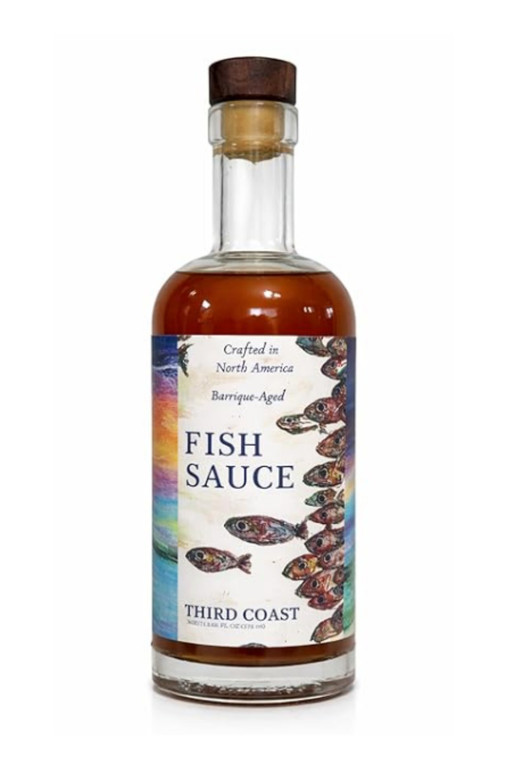
Third Coast Superior
Barrique-Aged Fish Sauce - 200ml
Lake Superior meets the French cooperage in a fish sauce unlike anything on a grocery shelf. Third Coast Superior ages their small-batch fish sauce in 3rd-year French barrique — the same oak barrels used in fine wine production — drawing out deep caramelized umami, a whisper of tannins, and an oceanic salinity that comes entirely from pure Oregon coastal sea salt. This is a finishing condiment built for cooks who understand that structure and depth can't be rushed.
- Built for the kitchen: finish broths, build vinaigrettes, and add backbone to slow-braised dishes — wherever you need umami without harshness or funk.
- Genuinely rare process: barrique aging in oak is unheard of in commercial fish sauce; it develops complexity the way a great wine does, not through additives or extended industrial fermentation.
- Clean-label, multi-diet: sugar-free, keto, and paleo compatible — sourced and produced domestically with regenerative harvesting practices.
Third Coast Superior's Barrique-Aged Fish Sauce is what happens when a Great Lakes producer takes the ancient logic of fish sauce — salt, time, patience — and introduces it to Old World barrel craft. The result is a condiment with layered depth: pure umami from Lake Superior waters, clean oceanic salinity from Oregon coastal sea salt, and a smooth tannin undertone drawn from 3rd-year French barrique oak.
Most fish sauces are aged in stainless steel or plastic tanks, relying on time alone to develop flavor. Third Coast Superior chose barrique — specifically 3rd-year French oak, where the intense new-barrel tannins have mellowed enough to impart nuance without overpowering — to add a dimension no stainless tank can. The aging process develops caramelized umami alongside a finish that is clean and smooth rather than sharp or pungent. Small-batch production means every lot is handled with intention, not scaled for efficiency.
On the sourcing side, this sauce is entirely domestically produced, with regenerative harvesting practices baked into the supply chain. The salt source — Oregon coastal sea salt — is chosen for purity and mineral profile, not commodity price. These are decisions a large manufacturer doesn't make because the market never demanded it. Third Coast Superior made them anyway.
Use it as a finishing drop into bone broth or ramen for instant depth. Whisk a few dashes into a vinaigrette for umami-forward acidity. Add it late in a braise to build structure without saltiness dominating. It behaves more like a seasoning amplifier than a condiment — a little goes far.
Sugar-free, keto, and paleo compatible. Shelf-stable; store in a cool, dry place. Produced and sourced in the United States.
Ingredients: Herring, Sea Salt, Rice Koji, Botanicals & Spices.
Common Questions
How does barrique-aged fish sauce differ from conventional fish sauce in flavor and chemistry?
Conventional fish sauce is aged in stainless steel or food-grade plastic tanks, where flavor development comes entirely from enzymatic breakdown of fish proteins over months or years — producing glutamate, inosinate, and other free amino acids that register as umami. Barrique aging introduces an additional layer: oak-derived compounds called ellagitannins and vanillin migrate from the wood into the liquid, contributing smooth tannin structure and subtle caramel-like finish notes. Third Coast Superior specifically uses 3rd-year French oak barriques, meaning the most aggressive tannin extraction has already occurred in prior fills, leaving wood that imparts nuance rather than astringency. The result is a sauce with the same core umami mechanism as traditional fish sauce but with a rounder, less sharp finish that behaves more like a fine aged vinegar than a commodity condiment.
What is the science behind fish sauce as an umami source, and why does a small amount have such a large flavor impact?
Umami intensity in fermented fish products is driven primarily by free glutamate and nucleotide compounds — particularly inosine monophosphate (IMP) — that are released as fish proteins break down through enzymatic and microbial activity during aging. Glutamate activates specific taste receptors (mGluR4 and T1R1/T1R3) on the tongue, producing the savory, mouth-coating sensation that makes food taste more complete and satisfying. When glutamate and IMP are present together, their umami effect is synergistic rather than additive — meaning the combination produces a flavor intensity disproportionate to the quantity of either compound alone. This is why 1–2 teaspoons of fish sauce can transform a pot of braise or a bowl of broth that might otherwise need significantly more salt or seasoning to feel fully developed.
Is this fish sauce compatible with keto, paleo, and carnivore diets, and what are the actual macros?
This sauce is certified sugar-free, keto, and paleo compatible, meaning it contains no added sugars, sweeteners, or fermentable carbohydrates that would interfere with ketosis or strict paleo protocols. Traditional fish sauce produced from fish and salt alone is essentially zero carbohydrate and near-zero calorie per typical serving (1–2 teaspoons), making it one of the most macro-neutral flavor tools available for any low-carbohydrate diet. Carnivore dieters who allow seasoning and fermented condiments also commonly use fish sauce as a salt delivery mechanism with added umami depth. The Oregon coastal sea salt base means the sodium comes from a mineral-intact source rather than refined industrial salt, which some paleo and ancestral health frameworks consider meaningful. Confirm the exact ingredient list before use if you are managing a specific medical condition, as sodium content per serving is relevant for anyone tracking electrolytes on a strict protocol.
How should I substitute this fish sauce for salt or other umami sources in specific recipes?
In vinaigrettes and dressings, replace half the salt with 1–2 teaspoons of fish sauce and whisk it directly into the acid component — the salinity and umami integrate cleanly and the raw fish aroma dissipates almost entirely once emulsified. In braises, short ribs, or lamb shanks, add 1–2 teaspoons in the last 30–45 minutes of cooking rather than at the beginning, which preserves the nuanced barrel-aged finish notes that long heat exposure would flatten. For bone broth, ramen, or pho, a finishing dose of 1 teaspoon per bowl just before serving adds instant depth without making the dish taste like fish. If substituting for Worcestershire sauce, use roughly half the volume since fish sauce has a more concentrated umami punch and no sweetener to balance. It also works as a direct substitute for soy sauce in marinades for those avoiding gluten or soy, though the flavor profile is saltier and less sweet, so small adjustments may be needed.
How can I verify the sourcing and certification claims on this product?
Third Coast Superior carries certifications for wild-caught sourcing, domestic production, and regenerative harvesting practices — these are claims that can be cross-referenced by asking the producer directly for lot-level documentation or third-party audit records. Wild-caught certification from recognized bodies requires chain-of-custody documentation tracing fish from harvest through processing, so a legitimate certifier should be named on or with the product. The domestic sourcing claim is specific and verifiable: both the fish (Lake Superior) and the salt (Oregon coastal) are named geographic sources within the United States, not general statements. Regenerative harvesting in a Great Lakes context typically refers to harvest rates set below population replenishment thresholds, often in coordination with state fisheries management — details the producer should be able to provide on request. If exact certification bodies are not printed on the label, contacting Third Coast Superior directly is the fastest way to obtain documentation.
Why does the choice of Oregon coastal sea salt matter compared to standard table salt or commodity sea salt?
Oregon coastal sea salt is harvested through solar evaporation of Pacific seawater, a process that retains trace minerals — including magnesium, potassium, and calcium — that are stripped out during the refining process used to produce standard table salt or most commodity sea salts. These residual minerals affect not just flavor (adding subtle complexity beyond pure sodium chloride) but also the ionic environment during fermentation, which can influence enzymatic activity and the final mineral profile of the finished sauce. From a sourcing transparency standpoint, naming a specific geographic salt source — rather than listing generic sea salt — signals a deliberate ingredient decision that can be traced and verified, unlike commodity salt sourced from the lowest available cost. For paleo and ancestral health frameworks specifically, unrefined mineral-intact salt is often preferred over iodized or chemically processed alternatives on the basis that the trace mineral matrix more closely resembles what humans historically consumed.
How does this fish sauce compare to Southeast Asian fish sauces like Red Boat or Tiparos in terms of production method and flavor?
Southeast Asian fish sauces like Red Boat (Vietnam) are typically made from a single species — Red Boat uses black anchovies — fermented with sea salt in wooden barrels or cement vats for 12–24 months, producing a very clean, high-glutamate sauce with an intensely savory and slightly sweet finish that reflects the species and tropical fermentation conditions. Tiparos and similar mass-market Thai fish sauces often include added sugar, hydrolyzed protein, or flavor enhancers to accelerate production timelines and hit a price point, which is why label reading matters. Third Coast Superior's sauce uses Great Lakes fish — a cold, freshwater-species source rather than warm-water anchovies — which produces a different amino acid profile and flavor baseline, then adds the barrique-oak aging dimension that no Southeast Asian producer traditionally employs. The practical result is a sauce with comparable umami intensity but a smoother, less pungent finish and a mild tannin roundness that makes it more versatile as a finishing ingredient in Western cooking contexts.
Most fish sauces are aged in stainless steel or plastic tanks, relying on time alone to develop flavor. Third Coast Superior chose barrique — specifically 3rd-year French oak, where the intense new-barrel tannins have mellowed enough to impart nuance without overpowering — to add a dimension no stainless tank can. The aging process develops caramelized umami alongside a finish that is clean and smooth rather than sharp or pungent. Small-batch production means every lot is handled with intention, not scaled for efficiency.
On the sourcing side, this sauce is entirely domestically produced, with regenerative harvesting practices baked into the supply chain. The salt source — Oregon coastal sea salt — is chosen for purity and mineral profile, not commodity price. These are decisions a large manufacturer doesn't make because the market never demanded it. Third Coast Superior made them anyway.
Use it as a finishing drop into bone broth or ramen for instant depth. Whisk a few dashes into a vinaigrette for umami-forward acidity. Add it late in a braise to build structure without saltiness dominating. It behaves more like a seasoning amplifier than a condiment — a little goes far.
Sugar-free, keto, and paleo compatible. Shelf-stable; store in a cool, dry place. Produced and sourced in the United States.
Ingredients: Herring, Sea Salt, Rice Koji, Botanicals & Spices.
Common Questions
How does barrique-aged fish sauce differ from conventional fish sauce in flavor and chemistry?
Conventional fish sauce is aged in stainless steel or food-grade plastic tanks, where flavor development comes entirely from enzymatic breakdown of fish proteins over months or years — producing glutamate, inosinate, and other free amino acids that register as umami. Barrique aging introduces an additional layer: oak-derived compounds called ellagitannins and vanillin migrate from the wood into the liquid, contributing smooth tannin structure and subtle caramel-like finish notes. Third Coast Superior specifically uses 3rd-year French oak barriques, meaning the most aggressive tannin extraction has already occurred in prior fills, leaving wood that imparts nuance rather than astringency. The result is a sauce with the same core umami mechanism as traditional fish sauce but with a rounder, less sharp finish that behaves more like a fine aged vinegar than a commodity condiment.
What is the science behind fish sauce as an umami source, and why does a small amount have such a large flavor impact?
Umami intensity in fermented fish products is driven primarily by free glutamate and nucleotide compounds — particularly inosine monophosphate (IMP) — that are released as fish proteins break down through enzymatic and microbial activity during aging. Glutamate activates specific taste receptors (mGluR4 and T1R1/T1R3) on the tongue, producing the savory, mouth-coating sensation that makes food taste more complete and satisfying. When glutamate and IMP are present together, their umami effect is synergistic rather than additive — meaning the combination produces a flavor intensity disproportionate to the quantity of either compound alone. This is why 1–2 teaspoons of fish sauce can transform a pot of braise or a bowl of broth that might otherwise need significantly more salt or seasoning to feel fully developed.
Is this fish sauce compatible with keto, paleo, and carnivore diets, and what are the actual macros?
This sauce is certified sugar-free, keto, and paleo compatible, meaning it contains no added sugars, sweeteners, or fermentable carbohydrates that would interfere with ketosis or strict paleo protocols. Traditional fish sauce produced from fish and salt alone is essentially zero carbohydrate and near-zero calorie per typical serving (1–2 teaspoons), making it one of the most macro-neutral flavor tools available for any low-carbohydrate diet. Carnivore dieters who allow seasoning and fermented condiments also commonly use fish sauce as a salt delivery mechanism with added umami depth. The Oregon coastal sea salt base means the sodium comes from a mineral-intact source rather than refined industrial salt, which some paleo and ancestral health frameworks consider meaningful. Confirm the exact ingredient list before use if you are managing a specific medical condition, as sodium content per serving is relevant for anyone tracking electrolytes on a strict protocol.
How should I substitute this fish sauce for salt or other umami sources in specific recipes?
In vinaigrettes and dressings, replace half the salt with 1–2 teaspoons of fish sauce and whisk it directly into the acid component — the salinity and umami integrate cleanly and the raw fish aroma dissipates almost entirely once emulsified. In braises, short ribs, or lamb shanks, add 1–2 teaspoons in the last 30–45 minutes of cooking rather than at the beginning, which preserves the nuanced barrel-aged finish notes that long heat exposure would flatten. For bone broth, ramen, or pho, a finishing dose of 1 teaspoon per bowl just before serving adds instant depth without making the dish taste like fish. If substituting for Worcestershire sauce, use roughly half the volume since fish sauce has a more concentrated umami punch and no sweetener to balance. It also works as a direct substitute for soy sauce in marinades for those avoiding gluten or soy, though the flavor profile is saltier and less sweet, so small adjustments may be needed.
How can I verify the sourcing and certification claims on this product?
Third Coast Superior carries certifications for wild-caught sourcing, domestic production, and regenerative harvesting practices — these are claims that can be cross-referenced by asking the producer directly for lot-level documentation or third-party audit records. Wild-caught certification from recognized bodies requires chain-of-custody documentation tracing fish from harvest through processing, so a legitimate certifier should be named on or with the product. The domestic sourcing claim is specific and verifiable: both the fish (Lake Superior) and the salt (Oregon coastal) are named geographic sources within the United States, not general statements. Regenerative harvesting in a Great Lakes context typically refers to harvest rates set below population replenishment thresholds, often in coordination with state fisheries management — details the producer should be able to provide on request. If exact certification bodies are not printed on the label, contacting Third Coast Superior directly is the fastest way to obtain documentation.
Why does the choice of Oregon coastal sea salt matter compared to standard table salt or commodity sea salt?
Oregon coastal sea salt is harvested through solar evaporation of Pacific seawater, a process that retains trace minerals — including magnesium, potassium, and calcium — that are stripped out during the refining process used to produce standard table salt or most commodity sea salts. These residual minerals affect not just flavor (adding subtle complexity beyond pure sodium chloride) but also the ionic environment during fermentation, which can influence enzymatic activity and the final mineral profile of the finished sauce. From a sourcing transparency standpoint, naming a specific geographic salt source — rather than listing generic sea salt — signals a deliberate ingredient decision that can be traced and verified, unlike commodity salt sourced from the lowest available cost. For paleo and ancestral health frameworks specifically, unrefined mineral-intact salt is often preferred over iodized or chemically processed alternatives on the basis that the trace mineral matrix more closely resembles what humans historically consumed.
How does this fish sauce compare to Southeast Asian fish sauces like Red Boat or Tiparos in terms of production method and flavor?
Southeast Asian fish sauces like Red Boat (Vietnam) are typically made from a single species — Red Boat uses black anchovies — fermented with sea salt in wooden barrels or cement vats for 12–24 months, producing a very clean, high-glutamate sauce with an intensely savory and slightly sweet finish that reflects the species and tropical fermentation conditions. Tiparos and similar mass-market Thai fish sauces often include added sugar, hydrolyzed protein, or flavor enhancers to accelerate production timelines and hit a price point, which is why label reading matters. Third Coast Superior's sauce uses Great Lakes fish — a cold, freshwater-species source rather than warm-water anchovies — which produces a different amino acid profile and flavor baseline, then adds the barrique-oak aging dimension that no Southeast Asian producer traditionally employs. The practical result is a sauce with comparable umami intensity but a smoother, less pungent finish and a mild tannin roundness that makes it more versatile as a finishing ingredient in Western cooking contexts.
- __Storage_Location:
- Dry
- __Volume:
- 300
- __Owner:
- ThirdCoast
- __badge:
- Wild-Caught