


Black Cherry Pineapple Energy Drink - 12 fl oz
Yerbae
$2.79
Below are the available bulk discount rates for each individual item when you purchase a certain amount
- Buy 2 - 5 and get 5% off
- Buy 6 - 11 and get 10% off
- Buy 12 or above and get 20% off
(No reviews yet)

Write a Review
Yerbae
Black Cherry Pineapple Energy Drink - 12 fl oz
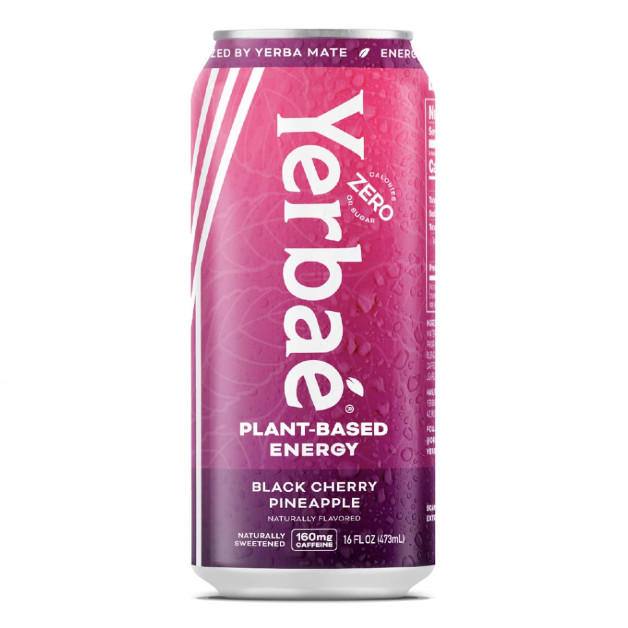
Yerbaé harnesses the power of yerba mate — a South American botanical with centuries of traditional use — to deliver 160 mg of plant-derived caffeine with zero sugar, zero calories, and zero carbs. This isn't a reformulated mainstream energy drink with a clean-label sticker slapped on; it's a sparkling water built from the ground up around a single functional plant, naturally sweetened and certified across every major dietary standard that matters to label-readers.
- Bold without compromise: Black Cherry Pineapple flavor brings a tart-sweet tropical arc that makes this an easy everyday substitute for conventional energy drinks — straight from the can, over ice, or mixed into a zero-sugar mocktail.
- 160 mg plant-sourced caffeine from yerba mate in a 16 oz format — more per can than most mainstream energy drinks while carrying Non-GMO Project Verified, Vegan, Keto, and Gluten-Free certifications simultaneously.
- Fits virtually every clean-eating protocol: keto, vegan, gluten-free, and sugar-free — with no artificial sweeteners and no synthetic dyes to disqualify it from a strict ingredient standard.
Yerbaé was built on one idea: that an energy drink could earn every certification a values-driven shopper demands without sacrificing the caffeine kick they actually need. The answer was yerba mate, the South American leaf that delivers smooth, sustained energy through a naturally occurring caffeine profile that includes theobromine and polyphenols alongside the caffeine itself — a mechanism that differs from synthetic caffeine added to conventional energy drinks.
This 16 fl oz can of Black Cherry Pineapple delivers 160 mg of caffeine — sourced entirely from yerba mate — with a verified zero on sugar, calories, and carbohydrates. The flavor profile layers tart black cherry against bright pineapple, creating a sparkling finish that doesn't rely on sweeteners (artificial or otherwise) to taste finished. The product is naturally sweetened per Yerbaé's own labeling, meaning the flavor comes from the fruit-derived flavoring, not from added sugars or sugar alcohols that could affect blood glucose or kick someone out of ketosis.
Compared to the category standard — conventional energy drinks typically built around synthetic caffeine, high-fructose corn syrup or sucralose, artificial dyes, and taurine blends — Yerbaé's stack is strikingly minimal. The caffeine source is botanical, the certifications are third-party verified (Non-GMO Project, Gluten-Free), and the dietary suitability list (keto, vegan, gluten-free, sugar-free) is rare to find all confirmed on a single energy beverage in this size format.
At 16 oz, this is Yerbaé's highest-caffeine offering in the lineup — 40 mg more per can than their 12 oz Energy Beverage and 60 mg more than their 12 oz Energy Seltzer — making it the right choice for anyone who wants a full, sustained morning or pre-workout lift. Drink straight from the can cold, pour over ice for a slower sip, or use as the sparkling base in a zero-sugar cocktail mixer.
Store at room temperature. Refrigerate after opening. Suitable for keto, vegan, gluten-free, and sugar-free diets. Non-GMO Project Verified.
⚠️ INGREDIENTS UNVERIFIED — confirm before approving: Carbonated Water, Natural Flavors, Yerba Mate Extract, Organic Stevia Leaf Extract (or similar naturally-derived sweetener). Full ingredient declaration should be confirmed against the physical can or manufacturer's current product page before final approval.
Common Questions
How does yerba mate caffeine actually differ from the synthetic caffeine in most energy drinks?
Yerba mate delivers caffeine alongside two co-occurring compounds — theobromine and polyphenols — that are absent from synthetic caffeine isolates. Theobromine is a mild vasodilator and bronchodilator found naturally in cacao and mate; it extends and softens the stimulant curve rather than producing a sharp spike-and-crash pattern. The polyphenols in yerba mate (primarily chlorogenic acids) have antioxidant activity and may blunt oxidative stress that high-dose caffeine alone can trigger. Synthetic caffeine, typically derived from chemical synthesis or decaffeination byproducts, delivers the same molecular caffeine but without this supporting phytochemical matrix, which is why users often report a cleaner, less jittery experience with botanical caffeine sources at equivalent milligram doses.
How does the 160 mg of caffeine in the 16 oz can compare to common reference points like coffee and competing energy drinks?
A standard 8 oz brewed coffee averages roughly 95 mg of caffeine according to FDA data, so the 160 mg in this 16 oz can is equivalent to approximately 1.7 cups of coffee. By comparison, a 16 oz Red Bull contains about 151 mg, a 16 oz Monster contains around 160 mg, and a 16 oz Bang contains 300 mg. Yerbaé's 160 mg sits at the mainstream energy-drink benchmark but delivers it through a botanical extract rather than added synthetic caffeine. The FDA's cited safe daily upper limit for healthy adults is 400 mg, meaning one can represents 40% of that ceiling.
Will this drink break a fast or knock someone out of ketosis?
With zero sugar, zero carbohydrates, and zero calories, there is no glucose or insulin trigger present to disrupt a metabolic fast or ketosis. Ketosis is maintained when net carbohydrate intake stays low enough to keep insulin suppressed, and a zero-carb beverage does not contribute to that threshold. The stevia-derived sweetener listed in Yerbaé's ingredient profile is a non-glycemic compound — it does not raise blood glucose and has a glycemic index of zero. Intermittent fasting protocols vary on whether caffeine breaks a fast, but from a caloric and metabolic standpoint, this drink does not introduce the macronutrients that end a fasted state. Anyone on a medically supervised keto or fasting protocol should confirm with their provider, but the certified nutrition panel supports compatibility.
What do the Non-GMO Project Verified and Organic certifications actually require, and how do they apply here?
Non-GMO Project Verification requires that all ingredients be evaluated against the Non-GMO Project Standard, which sets an action threshold of 0.9% — the same threshold used in the EU — and mandates ongoing ingredient testing and supply-chain traceability audited by an approved third-party verifier. It is one of the few non-GMO claims in the U.S. that requires external verification rather than self-declaration. The Organic certification (governed by the USDA National Organic Program) prohibits synthetic pesticides, synthetic fertilizers, and genetic engineering, and requires third-party accredited certifier audits of the supply chain. Together these certifications mean the yerba mate extract and any certified-organic components have been reviewed by parties other than Yerbaé itself, providing an independently verified chain of custody for the core botanical ingredient.
Is this drink actually unsweetened, or does it contain a sweetener that could cause digestive issues?
Yerbaé uses a stevia-leaf-derived sweetener rather than sugar alcohols like erythritol, xylitol, or sorbitol — the compounds most commonly associated with digestive side effects such as bloating and osmotic diarrhea. Stevia is a glycoside extracted from the Stevia rebaudiana plant; it is not fermented in the colon the way sugar alcohols are, so it typically does not cause the gastrointestinal symptoms those compounds produce. The product carries a certified sugar-free designation, meaning it meets the FDA definition of fewer than 0.5 g of sugars per serving. Individuals with specific sensitivities to stevia (a small subset of people, sometimes related to ragweed cross-reactivity) should note that and check the ingredient panel, but for most people the sweetener system here is among the lowest-irritant options available in the energy drink category.
How does the flavor profile of Black Cherry Pineapple work without sugar or artificial sweeteners carrying the taste?
Fruit-forward flavors like black cherry and pineapple have strong natural aromatic compounds — anthocyanins and esters, respectively — that read as sweet to the palate even at very low concentrations, which is why fruit flavoring can convey a sense of sweetness independent of actual sugar content. Natural flavors derived from these fruits carry the volatile aromatic esters that the nose interprets as part of the sweetness experience, a phenomenon called retronasal olfaction. The stevia component adds a low-level sweetness foundation without sugar calories, while carbonation amplifies the brightness of both the cherry tartness and the pineapple top note. This is why the can can be described as tasting finished without relying on the volume of sweetness that sucralose or high-fructose corn syrup would provide in a conventional energy drink.
How does this product compare nutritionally to other zero-sugar energy drinks like Celsius or Reign on key label
This 16 fl oz can of Black Cherry Pineapple delivers 160 mg of caffeine — sourced entirely from yerba mate — with a verified zero on sugar, calories, and carbohydrates. The flavor profile layers tart black cherry against bright pineapple, creating a sparkling finish that doesn't rely on sweeteners (artificial or otherwise) to taste finished. The product is naturally sweetened per Yerbaé's own labeling, meaning the flavor comes from the fruit-derived flavoring, not from added sugars or sugar alcohols that could affect blood glucose or kick someone out of ketosis.
Compared to the category standard — conventional energy drinks typically built around synthetic caffeine, high-fructose corn syrup or sucralose, artificial dyes, and taurine blends — Yerbaé's stack is strikingly minimal. The caffeine source is botanical, the certifications are third-party verified (Non-GMO Project, Gluten-Free), and the dietary suitability list (keto, vegan, gluten-free, sugar-free) is rare to find all confirmed on a single energy beverage in this size format.
At 16 oz, this is Yerbaé's highest-caffeine offering in the lineup — 40 mg more per can than their 12 oz Energy Beverage and 60 mg more than their 12 oz Energy Seltzer — making it the right choice for anyone who wants a full, sustained morning or pre-workout lift. Drink straight from the can cold, pour over ice for a slower sip, or use as the sparkling base in a zero-sugar cocktail mixer.
Store at room temperature. Refrigerate after opening. Suitable for keto, vegan, gluten-free, and sugar-free diets. Non-GMO Project Verified.
⚠️ INGREDIENTS UNVERIFIED — confirm before approving: Carbonated Water, Natural Flavors, Yerba Mate Extract, Organic Stevia Leaf Extract (or similar naturally-derived sweetener). Full ingredient declaration should be confirmed against the physical can or manufacturer's current product page before final approval.
Common Questions
How does yerba mate caffeine actually differ from the synthetic caffeine in most energy drinks?
Yerba mate delivers caffeine alongside two co-occurring compounds — theobromine and polyphenols — that are absent from synthetic caffeine isolates. Theobromine is a mild vasodilator and bronchodilator found naturally in cacao and mate; it extends and softens the stimulant curve rather than producing a sharp spike-and-crash pattern. The polyphenols in yerba mate (primarily chlorogenic acids) have antioxidant activity and may blunt oxidative stress that high-dose caffeine alone can trigger. Synthetic caffeine, typically derived from chemical synthesis or decaffeination byproducts, delivers the same molecular caffeine but without this supporting phytochemical matrix, which is why users often report a cleaner, less jittery experience with botanical caffeine sources at equivalent milligram doses.
How does the 160 mg of caffeine in the 16 oz can compare to common reference points like coffee and competing energy drinks?
A standard 8 oz brewed coffee averages roughly 95 mg of caffeine according to FDA data, so the 160 mg in this 16 oz can is equivalent to approximately 1.7 cups of coffee. By comparison, a 16 oz Red Bull contains about 151 mg, a 16 oz Monster contains around 160 mg, and a 16 oz Bang contains 300 mg. Yerbaé's 160 mg sits at the mainstream energy-drink benchmark but delivers it through a botanical extract rather than added synthetic caffeine. The FDA's cited safe daily upper limit for healthy adults is 400 mg, meaning one can represents 40% of that ceiling.
Will this drink break a fast or knock someone out of ketosis?
With zero sugar, zero carbohydrates, and zero calories, there is no glucose or insulin trigger present to disrupt a metabolic fast or ketosis. Ketosis is maintained when net carbohydrate intake stays low enough to keep insulin suppressed, and a zero-carb beverage does not contribute to that threshold. The stevia-derived sweetener listed in Yerbaé's ingredient profile is a non-glycemic compound — it does not raise blood glucose and has a glycemic index of zero. Intermittent fasting protocols vary on whether caffeine breaks a fast, but from a caloric and metabolic standpoint, this drink does not introduce the macronutrients that end a fasted state. Anyone on a medically supervised keto or fasting protocol should confirm with their provider, but the certified nutrition panel supports compatibility.
What do the Non-GMO Project Verified and Organic certifications actually require, and how do they apply here?
Non-GMO Project Verification requires that all ingredients be evaluated against the Non-GMO Project Standard, which sets an action threshold of 0.9% — the same threshold used in the EU — and mandates ongoing ingredient testing and supply-chain traceability audited by an approved third-party verifier. It is one of the few non-GMO claims in the U.S. that requires external verification rather than self-declaration. The Organic certification (governed by the USDA National Organic Program) prohibits synthetic pesticides, synthetic fertilizers, and genetic engineering, and requires third-party accredited certifier audits of the supply chain. Together these certifications mean the yerba mate extract and any certified-organic components have been reviewed by parties other than Yerbaé itself, providing an independently verified chain of custody for the core botanical ingredient.
Is this drink actually unsweetened, or does it contain a sweetener that could cause digestive issues?
Yerbaé uses a stevia-leaf-derived sweetener rather than sugar alcohols like erythritol, xylitol, or sorbitol — the compounds most commonly associated with digestive side effects such as bloating and osmotic diarrhea. Stevia is a glycoside extracted from the Stevia rebaudiana plant; it is not fermented in the colon the way sugar alcohols are, so it typically does not cause the gastrointestinal symptoms those compounds produce. The product carries a certified sugar-free designation, meaning it meets the FDA definition of fewer than 0.5 g of sugars per serving. Individuals with specific sensitivities to stevia (a small subset of people, sometimes related to ragweed cross-reactivity) should note that and check the ingredient panel, but for most people the sweetener system here is among the lowest-irritant options available in the energy drink category.
How does the flavor profile of Black Cherry Pineapple work without sugar or artificial sweeteners carrying the taste?
Fruit-forward flavors like black cherry and pineapple have strong natural aromatic compounds — anthocyanins and esters, respectively — that read as sweet to the palate even at very low concentrations, which is why fruit flavoring can convey a sense of sweetness independent of actual sugar content. Natural flavors derived from these fruits carry the volatile aromatic esters that the nose interprets as part of the sweetness experience, a phenomenon called retronasal olfaction. The stevia component adds a low-level sweetness foundation without sugar calories, while carbonation amplifies the brightness of both the cherry tartness and the pineapple top note. This is why the can can be described as tasting finished without relying on the volume of sweetness that sucralose or high-fructose corn syrup would provide in a conventional energy drink.
How does this product compare nutritionally to other zero-sugar energy drinks like Celsius or Reign on key label
- __Owner:
- TCFarm
- __Storage_Location:
- Dry
- __Volume:
- 1000
- __badge:
- Zero Sugar