


Blue Cheese Wedge - 8 oz
BelGioioso
$2.99
(No reviews yet)

Write a Review
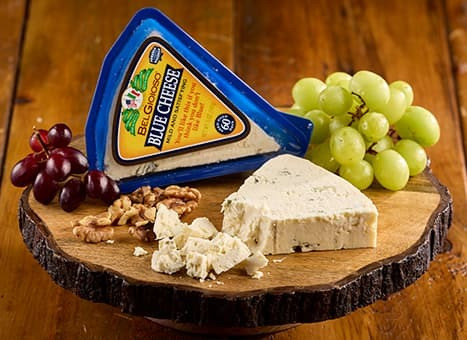
BelGioioso
Blue Cheese Wedge - 8 oz
Handcrafted in Green Bay, Wisconsin from fresh local milk gathered daily — BelGioioso Blue Cheese follows a 60-day aging process where each wheel is hand-pierced with small holes to allow air penetration and controlled mold development, producing the deeply veined, crumbly texture that grocery-aisle commodity blue cheese rarely achieves.
- Crumble over salads with candied pecans and pears, garnish grilled steak, finish a flatbread, or melt into soups — the firm, earthy, tangy character holds up across both hot and cold applications.
- Made from rBST-free cow's milk, aged 60 days in dedicated coolers with precise hole-piercing to develop characteristic blue veining — a traditional European method rarely replicated at commodity scale.
- Certified Gluten-Free and made from just four ingredients: cultured pasteurized milk, salt, enzymes, and mold.
BelGioioso has made Italian-style and European-tradition cheeses in Green Bay, Wisconsin since the 1980s, sourcing fresh cow's milk daily from local farms and processing it on-site — a short farm-to-vat window that most national blue cheese producers cannot match.
This Blue Cheese is produced using a traditional cave-aging technique adapted for BelGioioso's dedicated coolers: each wheel is pierced with fine holes throughout the aging cycle, inviting oxygen in and allowing Penicillium roqueforti — the same beneficial mold used in classic Roquefort and Gorgonzola — to develop along those channels. The result after 60 days is a firm, crumbly curd with deep blue-green veining, a full earthy aroma, and a bold, tangy finish. The milk source is rBST-free, and the cheese contains no artificial flavors, colors, or preservatives — only cultured pasteurized milk, salt, enzymes, and mold.
Crumble generously over wedge salads, roasted beet salads with walnuts, or a classic steakhouse chopped salad. Melt into cream sauce for a blue cheese burger, stir into potato leek soup, or layer onto flatbread with figs and prosciutto. Pairs naturally with red wine, IPAs, ripe pears, and cured meats. For a cheese board, set alongside grapes, figs, and roasted vegetables.
Diet suitability: Certified Gluten-Free. Store refrigerated; use within the date indicated on the package.
Ingredients: Cultured Pasteurized Milk, Salt, Enzymes, Mold.
Common Questions
How does BelGioioso Blue Cheese compare nutritionally to other national blue cheese brands?
A standard one-ounce serving of blue cheese delivers approximately 100 calories, 8 grams of fat, 6 grams of protein, and less than 1 gram of carbohydrates — figures that are broadly consistent across blue cheese styles. Where BelGioioso differs is in its sourcing: milk is collected daily from local Wisconsin farms and processed on-site, meaning the fat and protein have not degraded through long-distance transport or extended raw-milk holding times before culturing. Cheeses made from fresher milk tend to develop cleaner, more complex flavor without relying on longer fermentation to compensate for flavor loss — a subtle quality difference that shows up in the curd texture and the distinctness of the blue veining rather than in dramatic macro differences.
What exactly is Penicillium roqueforti and is it safe to eat?
Penicillium roqueforti is a food-grade mold strain used for centuries to produce blue-veined cheeses including Roquefort, Gorgonzola, and Stilton. It is entirely distinct from the Penicillium molds associated with the antibiotic penicillin, and consuming it does not introduce antibiotic compounds into your system. The mold works by colonizing the oxygen channels created when cheese wheels are pierced with fine needles during aging, producing the characteristic blue-green veining along those pathways. During the 60-day aging cycle, Penicillium roqueforti releases lipases and proteases — enzymes that break down milk fats and proteins into shorter-chain fatty acids and peptides, which are the direct source of blue cheese's sharp, earthy, and tangy flavor. Regulatory agencies including the FDA classify Penicillium roqueforti as GRAS (Generally Recognized as Safe).
Does blue cheese fit a ketogenic, paleo, or low-carb diet?
Blue cheese is one of the more diet-compatible cheeses for low-carb and ketogenic protocols: a one-ounce serving contains roughly 0.7 grams of carbohydrates, 8 grams of fat, and 6 grams of protein, making the fat-to-protein ratio favorable for ketosis. The fermentation process consumes most of the lactose present in the original milk, which is why aged cheeses like blue cheese carry far less carbohydrate than fresh cheeses like ricotta or cottage cheese. For paleo followers, aged cheese occupies a gray zone — it is dairy and technically excluded from strict paleo, but many practitioners include high-quality aged cheeses. Carnivore diet adherents who allow dairy can use blue cheese as a calorie-dense flavor addition. This product is also Certified Gluten-Free, so it fits celiac and gluten-intolerance protocols without modification.
What dishes can I use this blue cheese in as a substitute for milder cheeses, and do I need to adjust quantities?
Blue cheese is significantly more pungent than mild cheeses like mozzarella, mild cheddar, or Monterey Jack, so substitutions typically require reducing the quantity by 25 to 50 percent to avoid overwhelming the dish. In a cream sauce calling for 4 ounces of mild cheese, starting with 2 ounces of blue cheese and adjusting to taste is a reliable approach. It substitutes well for feta in roasted beet salads and grain bowls, for gorgonzola in pasta or flatbread recipes, and for goat cheese on charcuterie boards — in each case, expect a bolder, earthier result. When melting into sauces or soups, add blue cheese off direct heat or at the very end of cooking, as prolonged high heat can cause the fat to separate and the flavor to turn bitter. On a burger, crumble it directly onto the patty in the last 60 seconds of cooking so it softens without fully melting away.
How do I verify the rBST-free and Gluten-Free claims on this cheese?
The Gluten-Free claim on this product is backed by third-party certification, which requires testing to confirm the product contains fewer than 20 parts per million of gluten — the FDA's threshold for gluten-free labeling. That certification distinguishes it from products that carry a self-declared gluten-free label without independent verification. The rBST-free claim means the cows supplying milk were not treated with recombinant bovine somatotropin, a synthetic growth hormone used to increase milk output; the FDA requires that rBST-free labels also disclose that no significant difference has been shown between milk from rBST-treated and untreated cows. BelGioioso's Wisconsin-based production and daily local milk sourcing model is publicly documented in their company history and has been reported in trade publications, providing an auditable supply chain that most national commodity cheese brands do not have.
What is the significance of the 60-day aging period, and how does it affect flavor and texture?
Sixty days is the minimum aging period required by the FDA for cheeses made from pasteurized milk sold in the United States, and it is also the window during which Penicillium roqueforti does most of its flavor-building work. During this period, enzymatic activity breaks down casein proteins into smaller peptides and free amino acids, which contributes to the crumbly, crystalline texture rather than a smooth or rubbery curd. Simultaneously, lipase enzymes cleave triglycerides in the milk fat into free fatty acids — including butyric, caproic, and caprylic acid — which are the primary compounds responsible for the sharp, pungent notes characteristic of blue cheese. A shorter aging window produces a milder, creamier result; 60 days at controlled humidity and temperature is long enough to develop full veining and a firm, crumbly structure without tipping into the ammoniated sharpness of very long-aged blues.
Does the daily local milk sourcing actually make a measurable difference in the final cheese?
Fresh milk that is cultured quickly after collection has lower bacterial counts and higher fat globule integrity compared to milk that has been transported long distances and held for 24 to 48 hours before processing. In cheesemaking, fat globule integrity matters because damaged fat globules can release free fatty acids before controlled fermentation begins, producing off-flavors in the finished cheese. BelGioioso's same-day processing model — milk sourced from farms within the Green Bay, Wisconsin region and processed at their facility without intermediate storage — preserves those fat globules and gives the cheesemakers more control over the fermentation environment. The practical result is a more consistent curd structure and a cleaner baseline flavor, which allows the Penicillium roqueforti activity during aging to express itself without competing with background sourness or off-notes common in cheeses made from older milk.
This Blue Cheese is produced using a traditional cave-aging technique adapted for BelGioioso's dedicated coolers: each wheel is pierced with fine holes throughout the aging cycle, inviting oxygen in and allowing Penicillium roqueforti — the same beneficial mold used in classic Roquefort and Gorgonzola — to develop along those channels. The result after 60 days is a firm, crumbly curd with deep blue-green veining, a full earthy aroma, and a bold, tangy finish. The milk source is rBST-free, and the cheese contains no artificial flavors, colors, or preservatives — only cultured pasteurized milk, salt, enzymes, and mold.
Crumble generously over wedge salads, roasted beet salads with walnuts, or a classic steakhouse chopped salad. Melt into cream sauce for a blue cheese burger, stir into potato leek soup, or layer onto flatbread with figs and prosciutto. Pairs naturally with red wine, IPAs, ripe pears, and cured meats. For a cheese board, set alongside grapes, figs, and roasted vegetables.
Diet suitability: Certified Gluten-Free. Store refrigerated; use within the date indicated on the package.
Ingredients: Cultured Pasteurized Milk, Salt, Enzymes, Mold.
Common Questions
How does BelGioioso Blue Cheese compare nutritionally to other national blue cheese brands?
A standard one-ounce serving of blue cheese delivers approximately 100 calories, 8 grams of fat, 6 grams of protein, and less than 1 gram of carbohydrates — figures that are broadly consistent across blue cheese styles. Where BelGioioso differs is in its sourcing: milk is collected daily from local Wisconsin farms and processed on-site, meaning the fat and protein have not degraded through long-distance transport or extended raw-milk holding times before culturing. Cheeses made from fresher milk tend to develop cleaner, more complex flavor without relying on longer fermentation to compensate for flavor loss — a subtle quality difference that shows up in the curd texture and the distinctness of the blue veining rather than in dramatic macro differences.
What exactly is Penicillium roqueforti and is it safe to eat?
Penicillium roqueforti is a food-grade mold strain used for centuries to produce blue-veined cheeses including Roquefort, Gorgonzola, and Stilton. It is entirely distinct from the Penicillium molds associated with the antibiotic penicillin, and consuming it does not introduce antibiotic compounds into your system. The mold works by colonizing the oxygen channels created when cheese wheels are pierced with fine needles during aging, producing the characteristic blue-green veining along those pathways. During the 60-day aging cycle, Penicillium roqueforti releases lipases and proteases — enzymes that break down milk fats and proteins into shorter-chain fatty acids and peptides, which are the direct source of blue cheese's sharp, earthy, and tangy flavor. Regulatory agencies including the FDA classify Penicillium roqueforti as GRAS (Generally Recognized as Safe).
Does blue cheese fit a ketogenic, paleo, or low-carb diet?
Blue cheese is one of the more diet-compatible cheeses for low-carb and ketogenic protocols: a one-ounce serving contains roughly 0.7 grams of carbohydrates, 8 grams of fat, and 6 grams of protein, making the fat-to-protein ratio favorable for ketosis. The fermentation process consumes most of the lactose present in the original milk, which is why aged cheeses like blue cheese carry far less carbohydrate than fresh cheeses like ricotta or cottage cheese. For paleo followers, aged cheese occupies a gray zone — it is dairy and technically excluded from strict paleo, but many practitioners include high-quality aged cheeses. Carnivore diet adherents who allow dairy can use blue cheese as a calorie-dense flavor addition. This product is also Certified Gluten-Free, so it fits celiac and gluten-intolerance protocols without modification.
What dishes can I use this blue cheese in as a substitute for milder cheeses, and do I need to adjust quantities?
Blue cheese is significantly more pungent than mild cheeses like mozzarella, mild cheddar, or Monterey Jack, so substitutions typically require reducing the quantity by 25 to 50 percent to avoid overwhelming the dish. In a cream sauce calling for 4 ounces of mild cheese, starting with 2 ounces of blue cheese and adjusting to taste is a reliable approach. It substitutes well for feta in roasted beet salads and grain bowls, for gorgonzola in pasta or flatbread recipes, and for goat cheese on charcuterie boards — in each case, expect a bolder, earthier result. When melting into sauces or soups, add blue cheese off direct heat or at the very end of cooking, as prolonged high heat can cause the fat to separate and the flavor to turn bitter. On a burger, crumble it directly onto the patty in the last 60 seconds of cooking so it softens without fully melting away.
How do I verify the rBST-free and Gluten-Free claims on this cheese?
The Gluten-Free claim on this product is backed by third-party certification, which requires testing to confirm the product contains fewer than 20 parts per million of gluten — the FDA's threshold for gluten-free labeling. That certification distinguishes it from products that carry a self-declared gluten-free label without independent verification. The rBST-free claim means the cows supplying milk were not treated with recombinant bovine somatotropin, a synthetic growth hormone used to increase milk output; the FDA requires that rBST-free labels also disclose that no significant difference has been shown between milk from rBST-treated and untreated cows. BelGioioso's Wisconsin-based production and daily local milk sourcing model is publicly documented in their company history and has been reported in trade publications, providing an auditable supply chain that most national commodity cheese brands do not have.
What is the significance of the 60-day aging period, and how does it affect flavor and texture?
Sixty days is the minimum aging period required by the FDA for cheeses made from pasteurized milk sold in the United States, and it is also the window during which Penicillium roqueforti does most of its flavor-building work. During this period, enzymatic activity breaks down casein proteins into smaller peptides and free amino acids, which contributes to the crumbly, crystalline texture rather than a smooth or rubbery curd. Simultaneously, lipase enzymes cleave triglycerides in the milk fat into free fatty acids — including butyric, caproic, and caprylic acid — which are the primary compounds responsible for the sharp, pungent notes characteristic of blue cheese. A shorter aging window produces a milder, creamier result; 60 days at controlled humidity and temperature is long enough to develop full veining and a firm, crumbly structure without tipping into the ammoniated sharpness of very long-aged blues.
Does the daily local milk sourcing actually make a measurable difference in the final cheese?
Fresh milk that is cultured quickly after collection has lower bacterial counts and higher fat globule integrity compared to milk that has been transported long distances and held for 24 to 48 hours before processing. In cheesemaking, fat globule integrity matters because damaged fat globules can release free fatty acids before controlled fermentation begins, producing off-flavors in the finished cheese. BelGioioso's same-day processing model — milk sourced from farms within the Green Bay, Wisconsin region and processed at their facility without intermediate storage — preserves those fat globules and gives the cheesemakers more control over the fermentation environment. The practical result is a more consistent curd structure and a cleaner baseline flavor, which allows the Penicillium roqueforti activity during aging to express itself without competing with background sourness or off-notes common in cheeses made from older milk.
- __Storage_Location:
- Refrigerated
- __Volume:
- 400
- __Owner:
- TCFarm
- __badge:
- Gluten-Free