


Sale
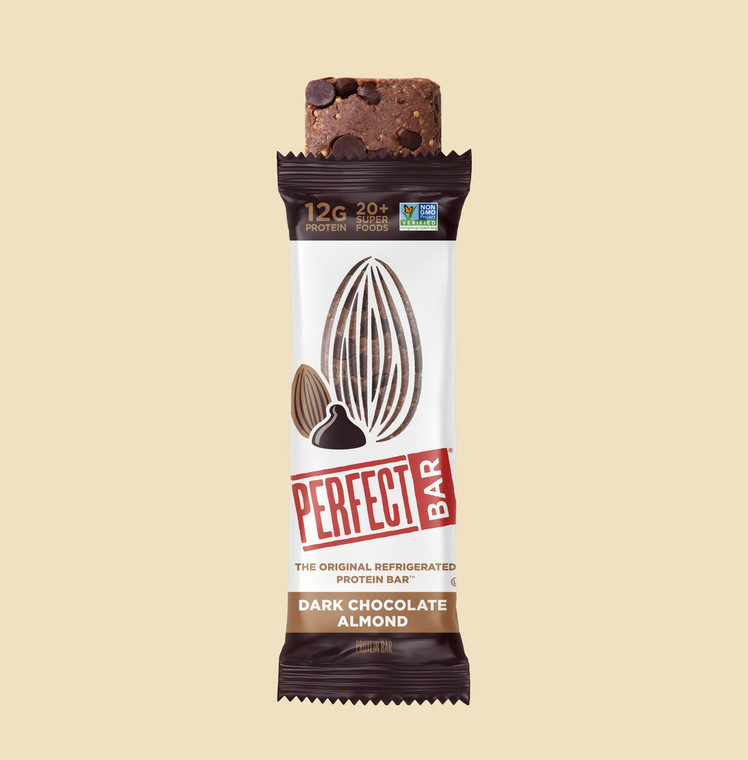
Dark Chocolate Almond Bar - 2.2 oz
Perfect Foods
$3.49
$2.99
(No reviews yet)

Write a Review
Perfect Foods
Dark Chocolate Almond Bar - 2.2 oz
Real food doesn't belong on a shelf — and Perfect Bar built their entire brand around that conviction. The Dark Chocolate Almond bar starts with freshly ground almond butter as its base, layered with fair-trade dark chocolate, organic honey, and a 20+ superfood blend that includes kale, flax, rose hip, kelp, dulse, and spinach — whole food ingredients that require refrigeration because they're not stabilized with emulsifiers or chemical preservatives.
- A genuinely different kind of protein bar: 12g of whole food protein sourced from freshly ground almonds, eggs, and milk — not isolated protein powders — with a cookie-dough texture that holds up as a desk snack, post-workout refuel, or school lunch addition.
- Rare ingredient standard: Certified Organic, Soy-Free, Gluten-Free, and Non-GMO — with fair-trade chocolate and a 20+ superfood blend (kale, kelp, dulse, flax, rose hip, and more) that most protein bars don't include at all, let alone from organic sources.
- Diet and lifestyle fit: Certified Gluten-Free and Soy-Free; suitable for active lifestyles, families prioritizing whole food snacking, and anyone avoiding artificial sweeteners — sweetened only with organic honey, no stevia or synthetic sugar substitutes.
Perfect Bar made its name by refusing to do what every other protein bar company does: swap real food for shelf-stable convenience. The Dark Chocolate Almond bar is built on a base of freshly ground almond butter — not processed almond meal or protein isolate — combined with organic honey as a binder, fair-trade dark chocolate chips, roasted almond pieces, and cocoa. The result is a dense, cookie-dough-textured bar that delivers 12g of whole food protein per 62g serving, 5g of dietary fiber, and a micronutrient profile that reflects its real-ingredient foundation: 60% DV Copper, 50% DV Vitamin E, 40% DV Riboflavin, and 30% DV Magnesium — nutrients that come from the ingredients themselves, not a vitamin premix.
The 20+ superfood blend is what separates this bar from competitors who use that phrase as marketing. Perfect Bar's list is specific and verifiable in the ingredient panel: kale, flax seed, rose hip, orange, lemon, papaya, tomato, apple, alfalfa, celery, kelp, dulse, carrot, spinach — all certified organic, all dried whole food powders, not extracts. These are the same ingredients that make refrigeration necessary: no chemical preservatives, no emulsifiers, no artificial stabilizers holding the bar together at room temperature.
Each serving (1 bar) contains 310 calories, 19g total fat, 25g total carbohydrate (11g added sugars from organic honey), and 12g protein. The fat profile reflects the almond butter and seed oil base — olive oil, flax seed oil, sesame seed oil, and pumpkin seed oil are all listed in the ingredient panel. Cholesterol is 10mg (from egg and milk solids), sodium is a notably low 40mg per bar.
Store in the refrigerator; bars can be kept at room temperature for up to one week for on-the-go convenience. Each box contains 8 full-size bars (62g each). Certified Gluten-Free, Organic, and Soy-Free. Contains almonds, milk, eggs, and sesame. Produced on equipment also handling peanuts and other tree nuts.
Ingredients: Almond Butter, Honey (Organic), Nonfat Dry Milk (Organic), Dark Chocolate (Organic) (Chocolate (Fair Trade), Cane Sugar (Fair Trade), Cocoa Butter (Fair Trade)), Almond Pieces, Cocoa (Organic), Dried Whole Egg Powder (Organic), Rice Protein (Organic), Vanilla Extract (Organic), Dried Whole Food Powders (Kale (Organic), Flax Seed (Organic), Rose Hip (Organic), Orange (Organic), Lemon (Organic), Papaya (Organic), Tomato (Organic), Apple (Organic), Alfalfa (Organic), Celery (Organic), Kelp (Organic), Dulse (Organic), Carrot (Organic), Spinach (Organic)), Olive Oil (Organic), Flax Seed Oil (Organic), Sesame Seed Oil (Organic), Pumpkin Seed Oil (Organic).
Common Questions
How does the protein in this bar compare to a conventional protein bar of similar size?
This bar delivers 12g of protein from a 62g serving, which works out to roughly 19% of calories from protein at 310 calories total. The key difference from most conventional bars is the protein source: here it comes from freshly ground almond butter, dried whole egg powder, nonfat dry milk, and rice protein — whole food sources rather than whey isolate or soy protein concentrate. Many conventional bars in the same size range use protein isolates that have been heat-processed and stripped of the cofactors naturally present in whole foods. The egg and milk solids also contribute 10mg cholesterol, which is nutritionally negligible but signals you are getting actual animal-derived protein rather than a processed fraction. The 5g of dietary fiber accompanying that protein is also higher than most isolate-based bars, which often contain 1-2g.
What does the 20-plus superfood powder blend actually contribute nutritionally, and is it a meaningful amount?
The 14 dried whole food powders — kale, flax seed, rose hip, orange, lemon, papaya, tomato, apple, alfalfa, celery, kelp, dulse, carrot, and spinach — appear near the end of the ingredient list, which by weight means they are present in smaller quantities than the primary ingredients. Their nutritional contribution is reflected in the bar's micronutrient panel: 60% DV Copper (largely from almonds and cocoa, but supported by the greens), 50% DV Vitamin E (from almond butter and seed oils), 40% DV Riboflavin (from the milk and egg solids plus greens), and 30% DV Magnesium. The sea vegetables — kelp and dulse — contribute iodine and trace minerals not commonly found in bar formats. The powders are dried whole food forms rather than extracts, meaning they retain the full spectrum of phytonutrients present in the original plant, even if total mass per serving is modest. Think of them as a broad-spectrum mineral and phytonutrient complement to the macro-dominant almond butter base, not a therapeutic dose of any single compound.
Why does this bar require refrigeration when most protein bars are shelf-stable?
Refrigeration is required because the bar contains no chemical preservatives, no artificial emulsifiers, and no stabilizers — the same properties that make most bars shelf-stable at room temperature for 12-18 months. The primary binder is organic honey, which is hygroscopic and antimicrobial but not sufficient on its own to preserve a bar made with freshly ground almond butter, egg solids, and milk solids at room temperature indefinitely. The fats from four cold-pressed seed oils — olive, flax, sesame, and pumpkin — are prone to oxidative rancidity without refrigeration. Perfect Bar states bars can be kept at room temperature for up to one week, which makes them practical for travel or daily carry, but the refrigerator is the intended storage environment for anything beyond that window. This is a meaningful quality signal: the refrigeration requirement is a direct consequence of using real, minimally processed ingredients.
Does this bar fit a gluten-free diet, and how confident can I be in that claim?
Yes, with meaningful verification behind it. The bar carries both an Organic certification and a Certified Gluten-Free certification, which is a third-party tested standard requiring the finished product to contain fewer than 20 parts per million of gluten — the threshold established by the FDA for gluten-free labeling. The ingredient list contains no wheat, barley, rye, or gluten-containing derivatives; rice protein is used as the grain-based protein source, and rice is naturally gluten-free. The allergen warning does disclose shared equipment with peanuts and other tree nuts, but makes no mention of wheat cross-contact, which is consistent with Certified Gluten-Free status. For people with celiac disease, the third-party certification is the relevant marker to look for, and this bar carries it. Those with a wheat sensitivity rather than celiac can take additional comfort from the entirely grain-free ingredient base outside of the rice protein.
Is this bar appropriate for paleo or keto eating patterns given its carbohydrate content?
For paleo, this bar is a reasonable fit: the ingredient list is built on almond butter, honey, eggs, and whole food powders with no grains, legumes, refined oils, or artificial ingredients — all consistent with paleo framework principles, though strict paleo practitioners sometimes exclude dairy, and this bar does contain nonfat dry milk. For keto, the fit is less clean: each bar contains 25g total carbohydrate with 5g fiber, yielding 20g net carbs, which represents a significant portion of the typical 20-50g daily net carb ceiling for ketosis. The 11g of added sugars from organic honey would also be a concern for anyone actively maintaining ketosis. The fat profile — 19g total fat from almond butter, four seed oils, and dark chocolate — is consistent with high-fat eating patterns, but the carbohydrate load makes this bar better suited to paleo or active low-carb contexts than strict therapeutic keto.
What do the Organic and Fair Trade certifications on the dark chocolate ingredients actually mean in practice?
The Organic certification on the bar as a whole means the ingredients were produced without synthetic pesticides, synthetic fertilizers, or GMOs, and that the operation has been audited and certified by a USDA-accredited certifying agent. The Fair Trade designation specifically on the dark chocolate components — chocolate, cane sugar, and cocoa butter, all marked with a dagger in the ingredient list — means the cacao farmers received a minimum price floor and a Fair Trade premium per metric ton that goes toward community development projects. Fair Trade USA and Fairtrade International both set these standards and conduct independent audits of the supply chain. In practical terms, this tells you the chocolate sourcing has been verified at the farm level for both environmental and labor standards, not just at the manufacturing level. Most bars that use the word 'fair trade' in marketing do not apply it to every chocolate-derived ingredient; here it is applied to all three chocolate components individually.
What is the fat composition of this bar, and what does the seed oil blend contribute beyond basic calories?
The bar contains 19g of total fat per serving, with the majority coming from almond butter — almonds are roughly 50% fat by weight, predominantly monounsaturated oleic acid. The four added cold-pressed seed oils each bring a distinct fatty acid profile: olive oil is primarily monounsaturated, flax seed oil is the richest plant source of alpha-linolenic acid (ALA, an omega-3 precursor at roughly 55% of its fat content), sesame seed oil contributes lignans with antioxidant properties alongside a balanced omega-6 to omega-3 ratio, and pumpkin seed oil adds phytosterols and a favorable unsaturated fat profile. The combined presence of four distinct oils is nutritionally meaningful because different fatty acids serve different physiological roles — membrane integrity, inflammation signaling, fat-soluble vitamin absorption — and a single oil cannot replicate the full spectrum. The bar's fat is not itemized by saturated versus unsaturated on the label beyond the total, but the ingredient base is heavily weighted toward unsaturated sources.
The 20+ superfood blend is what separates this bar from competitors who use that phrase as marketing. Perfect Bar's list is specific and verifiable in the ingredient panel: kale, flax seed, rose hip, orange, lemon, papaya, tomato, apple, alfalfa, celery, kelp, dulse, carrot, spinach — all certified organic, all dried whole food powders, not extracts. These are the same ingredients that make refrigeration necessary: no chemical preservatives, no emulsifiers, no artificial stabilizers holding the bar together at room temperature.
Each serving (1 bar) contains 310 calories, 19g total fat, 25g total carbohydrate (11g added sugars from organic honey), and 12g protein. The fat profile reflects the almond butter and seed oil base — olive oil, flax seed oil, sesame seed oil, and pumpkin seed oil are all listed in the ingredient panel. Cholesterol is 10mg (from egg and milk solids), sodium is a notably low 40mg per bar.
Store in the refrigerator; bars can be kept at room temperature for up to one week for on-the-go convenience. Each box contains 8 full-size bars (62g each). Certified Gluten-Free, Organic, and Soy-Free. Contains almonds, milk, eggs, and sesame. Produced on equipment also handling peanuts and other tree nuts.
Ingredients: Almond Butter, Honey (Organic), Nonfat Dry Milk (Organic), Dark Chocolate (Organic) (Chocolate (Fair Trade), Cane Sugar (Fair Trade), Cocoa Butter (Fair Trade)), Almond Pieces, Cocoa (Organic), Dried Whole Egg Powder (Organic), Rice Protein (Organic), Vanilla Extract (Organic), Dried Whole Food Powders (Kale (Organic), Flax Seed (Organic), Rose Hip (Organic), Orange (Organic), Lemon (Organic), Papaya (Organic), Tomato (Organic), Apple (Organic), Alfalfa (Organic), Celery (Organic), Kelp (Organic), Dulse (Organic), Carrot (Organic), Spinach (Organic)), Olive Oil (Organic), Flax Seed Oil (Organic), Sesame Seed Oil (Organic), Pumpkin Seed Oil (Organic).
Common Questions
How does the protein in this bar compare to a conventional protein bar of similar size?
This bar delivers 12g of protein from a 62g serving, which works out to roughly 19% of calories from protein at 310 calories total. The key difference from most conventional bars is the protein source: here it comes from freshly ground almond butter, dried whole egg powder, nonfat dry milk, and rice protein — whole food sources rather than whey isolate or soy protein concentrate. Many conventional bars in the same size range use protein isolates that have been heat-processed and stripped of the cofactors naturally present in whole foods. The egg and milk solids also contribute 10mg cholesterol, which is nutritionally negligible but signals you are getting actual animal-derived protein rather than a processed fraction. The 5g of dietary fiber accompanying that protein is also higher than most isolate-based bars, which often contain 1-2g.
What does the 20-plus superfood powder blend actually contribute nutritionally, and is it a meaningful amount?
The 14 dried whole food powders — kale, flax seed, rose hip, orange, lemon, papaya, tomato, apple, alfalfa, celery, kelp, dulse, carrot, and spinach — appear near the end of the ingredient list, which by weight means they are present in smaller quantities than the primary ingredients. Their nutritional contribution is reflected in the bar's micronutrient panel: 60% DV Copper (largely from almonds and cocoa, but supported by the greens), 50% DV Vitamin E (from almond butter and seed oils), 40% DV Riboflavin (from the milk and egg solids plus greens), and 30% DV Magnesium. The sea vegetables — kelp and dulse — contribute iodine and trace minerals not commonly found in bar formats. The powders are dried whole food forms rather than extracts, meaning they retain the full spectrum of phytonutrients present in the original plant, even if total mass per serving is modest. Think of them as a broad-spectrum mineral and phytonutrient complement to the macro-dominant almond butter base, not a therapeutic dose of any single compound.
Why does this bar require refrigeration when most protein bars are shelf-stable?
Refrigeration is required because the bar contains no chemical preservatives, no artificial emulsifiers, and no stabilizers — the same properties that make most bars shelf-stable at room temperature for 12-18 months. The primary binder is organic honey, which is hygroscopic and antimicrobial but not sufficient on its own to preserve a bar made with freshly ground almond butter, egg solids, and milk solids at room temperature indefinitely. The fats from four cold-pressed seed oils — olive, flax, sesame, and pumpkin — are prone to oxidative rancidity without refrigeration. Perfect Bar states bars can be kept at room temperature for up to one week, which makes them practical for travel or daily carry, but the refrigerator is the intended storage environment for anything beyond that window. This is a meaningful quality signal: the refrigeration requirement is a direct consequence of using real, minimally processed ingredients.
Does this bar fit a gluten-free diet, and how confident can I be in that claim?
Yes, with meaningful verification behind it. The bar carries both an Organic certification and a Certified Gluten-Free certification, which is a third-party tested standard requiring the finished product to contain fewer than 20 parts per million of gluten — the threshold established by the FDA for gluten-free labeling. The ingredient list contains no wheat, barley, rye, or gluten-containing derivatives; rice protein is used as the grain-based protein source, and rice is naturally gluten-free. The allergen warning does disclose shared equipment with peanuts and other tree nuts, but makes no mention of wheat cross-contact, which is consistent with Certified Gluten-Free status. For people with celiac disease, the third-party certification is the relevant marker to look for, and this bar carries it. Those with a wheat sensitivity rather than celiac can take additional comfort from the entirely grain-free ingredient base outside of the rice protein.
Is this bar appropriate for paleo or keto eating patterns given its carbohydrate content?
For paleo, this bar is a reasonable fit: the ingredient list is built on almond butter, honey, eggs, and whole food powders with no grains, legumes, refined oils, or artificial ingredients — all consistent with paleo framework principles, though strict paleo practitioners sometimes exclude dairy, and this bar does contain nonfat dry milk. For keto, the fit is less clean: each bar contains 25g total carbohydrate with 5g fiber, yielding 20g net carbs, which represents a significant portion of the typical 20-50g daily net carb ceiling for ketosis. The 11g of added sugars from organic honey would also be a concern for anyone actively maintaining ketosis. The fat profile — 19g total fat from almond butter, four seed oils, and dark chocolate — is consistent with high-fat eating patterns, but the carbohydrate load makes this bar better suited to paleo or active low-carb contexts than strict therapeutic keto.
What do the Organic and Fair Trade certifications on the dark chocolate ingredients actually mean in practice?
The Organic certification on the bar as a whole means the ingredients were produced without synthetic pesticides, synthetic fertilizers, or GMOs, and that the operation has been audited and certified by a USDA-accredited certifying agent. The Fair Trade designation specifically on the dark chocolate components — chocolate, cane sugar, and cocoa butter, all marked with a dagger in the ingredient list — means the cacao farmers received a minimum price floor and a Fair Trade premium per metric ton that goes toward community development projects. Fair Trade USA and Fairtrade International both set these standards and conduct independent audits of the supply chain. In practical terms, this tells you the chocolate sourcing has been verified at the farm level for both environmental and labor standards, not just at the manufacturing level. Most bars that use the word 'fair trade' in marketing do not apply it to every chocolate-derived ingredient; here it is applied to all three chocolate components individually.
What is the fat composition of this bar, and what does the seed oil blend contribute beyond basic calories?
The bar contains 19g of total fat per serving, with the majority coming from almond butter — almonds are roughly 50% fat by weight, predominantly monounsaturated oleic acid. The four added cold-pressed seed oils each bring a distinct fatty acid profile: olive oil is primarily monounsaturated, flax seed oil is the richest plant source of alpha-linolenic acid (ALA, an omega-3 precursor at roughly 55% of its fat content), sesame seed oil contributes lignans with antioxidant properties alongside a balanced omega-6 to omega-3 ratio, and pumpkin seed oil adds phytosterols and a favorable unsaturated fat profile. The combined presence of four distinct oils is nutritionally meaningful because different fatty acids serve different physiological roles — membrane integrity, inflammation signaling, fat-soluble vitamin absorption — and a single oil cannot replicate the full spectrum. The bar's fat is not itemized by saturated versus unsaturated on the label beyond the total, but the ingredient base is heavily weighted toward unsaturated sources.
- __Storage_Location:
- Refrigerated
- __Volume:
- 400
- __Owner:
- TCFarm
- __badge:
- for delivery by 10/14