


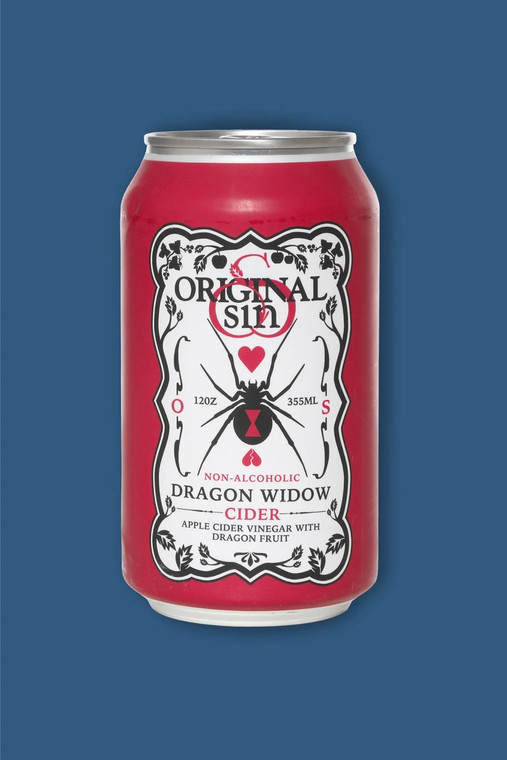
Dragon Widow - NA Cider - 12.0 oz
Original SinBelow are the available bulk discount rates for each individual item when you purchase a certain amount
- Buy 2 - 5 and get 5% off
- Buy 6 - 11 and get 10% off
- Buy 12 or above and get 20% off
Write a Review
Original Sin
Dragon Widow - NA Cider - 12.0 oz
- Drink anytime: works as a mocktail stand-in, a meal companion, or a mid-afternoon pick-me-up — no alcohol, no crash, no compromise on flavor complexity
- Functionally distinct: apple cider vinegar base + monk fruit sweetener delivers depth and tartness without a single gram of added sugar and only 20 calories per can
- Broadly inclusive: non-alcoholic, low-calorie, and zero added sugar — fits sober-curious, calorie-conscious, and sugar-aware lifestyles equally
Dragon Widow arrives from Original Sin Cider — a Hudson Valley cidery that built its reputation on real fruit and unapologetic flavor — as a fully non-alcoholic statement drink. This isn't watered-down juice or a soda knockoff. It's a carbonated NA cider built on 25% dragon fruit juice, anchored by an apple cider vinegar base, and sweetened only with monk fruit. The category it sits in — ACV-based functional beverages — is one of the fastest-growing in the drink market, and Dragon Widow shows why: bright, complex tartness with none of the sugar hangover.
Each 12 fl oz can clocks in at just 20 calories with zero added sugar. Monk fruit provides the sweetness without spiking glycemic load — it's a non-nutritive sweetener derived from a Southeast Asian melon, with no aftertaste and no artificial chemistry. The apple cider vinegar base adds a functional dimension most carbonated drinks entirely lack, and the dragon fruit puree gives the liquid its vivid color and tropical tartness that cuts through carbonation cleanly.
Serve straight from the can over ice, build it into a low-cal spritz with a splash of citrus, or use it as a mixer base for mocktail riffs. The tart-sweet balance means it pairs well with spiced, fatty, or rich foods — think tacos, charcuterie, or anything where you'd normally reach for a dry cider or a sparkling rosé.
Non-alcoholic. 20 calories per can. Zero added sugar. Suitable for sober-curious, calorie-conscious, sugar-aware, and alcohol-free lifestyles. Store at room temperature; refrigerate before serving.
INGREDIENTS — Water, apple juice concentrate, dragonfruit puree, apple cider vinegar, lemon juice concentrate, natural flavors, monk fruit juice concentrate.
Common Questions
How does Dragon Widow compare to a regular hard cider or a sugary sparkling drink in terms of calories and sugar?
A standard 12 oz hard cider typically contains 150–200 calories and 15–25 grams of sugar, depending on the brand. Dragon Widow comes in at 20 calories per 12 oz can with zero added sugar, which is roughly a 90% reduction in calories compared to most hard ciders and a near-total elimination of sugar load. Mainstream sparkling sodas in the same size range usually carry 35–45 grams of added sugar. The difference here isn't achieved by artificial sweeteners — monk fruit extract handles sweetness without contributing calories or glycemic impact, and the 25% dragon fruit juice provides natural flavor complexity that sugary drinks typically fake with flavoring compounds.
What is apple cider vinegar actually doing in a canned beverage, and is there real functional evidence behind it?
Apple cider vinegar contains acetic acid, which is the primary compound studied for its metabolic effects. Clinical research, including a frequently cited 2009 study published in Bioscience, Biotechnology, and Biochemistry, found that daily acetic acid consumption was associated with modest reductions in body weight, visceral fat, and triglyceride levels in obese subjects over 12 weeks. Acetic acid is also thought to slow gastric emptying, which can blunt post-meal blood glucose spikes — a mechanism relevant to people managing blood sugar. The concentration of ACV in a single can of Dragon Widow is not disclosed on the label, so the functional dose relative to those studies is not directly verifiable, but the ACV base provides structural tartness and a meaningful pH shift that distinguishes this from fruit-forward sodas with no functional dimension.
How does monk fruit sweetener work, and does it have any drawbacks compared to other zero-calorie sweeteners?
Monk fruit extract is derived from Siraitia grosvenorii, a melon native to southern China and northern Thailand. Its sweetness comes from compounds called mogrosides, particularly mogroside V, which are 150–250 times sweeter than sucrose by weight but are not metabolized by the body for energy, resulting in zero calories and zero glycemic response. Unlike sucralose or aspartame, monk fruit extract does not have the chemical synthesis pathway that draws scrutiny from some consumers, and it has Generally Recognized as Safe (GRAS) status with the FDA. The most commonly reported drawback with monk fruit is a faint fruity or slightly medicinal aftertaste at high concentrations, though this is less pronounced than stevia's characteristic bitterness and in a tart, carbonated cider base is typically masked well by the acidity.
Is Dragon Widow appropriate for keto, paleo, or low-sugar diet protocols?
At 20 calories and zero added sugar per can, Dragon Widow fits comfortably within the carbohydrate limits of a standard ketogenic protocol, which typically caps net carbs at 20–50 grams per day. Dragon fruit juice does contain naturally occurring sugars, though the total caloric content of the can suggests the contribution is minimal at the 25% juice inclusion level. Paleo diets generally permit whole fruit and fruit-derived products, and the ingredient list — fruit juice, sparkling water, ACV, and monk fruit — aligns with that framework. For anyone tracking glycemic load precisely, the presence of monk fruit rather than cane sugar, honey, or agave means this drink is unlikely to interfere with ketosis or blood sugar management goals, but individuals with specific medical dietary restrictions should review the full nutrition label directly.
How can Dragon Widow be used as a mocktail base or food pairing ingredient?
The tart-sweet profile built on ACV and dragon fruit makes Dragon Widow a functional substitute anywhere you'd use a dry sparkling cider or a sparkling rosé in a recipe. For mocktails, it works as a direct stand-in for the sparkling component in a Paloma riff — combine it with fresh grapefruit juice and a salted rim for a zero-alcohol version with real complexity. It also pairs naturally with fatty or spiced dishes because the acidity from the ACV base cuts through richness the same way a dry cider does with pork belly or aged cheese. For cooking applications, the ACV base means it can theoretically be reduced into a light gastrique or used as a braising liquid addition, though carbonation will dissipate with heat. Charcuterie boards, fish tacos, and anything with a chile-lime profile are natural pairings.
What is dragon fruit juice contributing beyond color, and does it have any nutritional significance at 25% inclusion?
Dragon fruit, botanically Hylocereus undatus for the white-fleshed variety and Hylocereus polyrhizus for the red-fleshed, contains betalains in the red-fleshed variety — a class of pigment compounds with antioxidant properties distinct from the anthocyanins found in berries. It also provides vitamin C, B vitamins including B1, B2, and B3, and iron in the whole fruit form. At 25% juice inclusion in a 12 oz can, the actual micronutrient contribution is relatively modest compared to eating the whole fruit, but the betalain content accounts for the vivid magenta color and contributes to the antioxidant profile. The tropical tartness dragon fruit delivers — lower acidity than citrus but more complex than apple — is what gives Dragon Widow its flavor differentiation from a standard ACV tonic or kombucha.
How can a buyer verify the ingredient claims, and what should they look for on the label?
The ingredient list as represented — dragon fruit juice at 25%, sparkling water, apple cider vinegar, and monk fruit extract — should appear on the Nutrition Facts panel and ingredient declaration on the can itself, which is the legally binding document under FDA 21 CFR labeling regulations. For the 20-calorie and zero added sugar claims, those figures must appear in the Nutrition Facts box and are subject to FDA enforcement for accuracy within defined tolerance thresholds. Original Sin Cider is an established Hudson Valley producer with a verifiable production history, which adds accountability to the claims. If you have a specific dietary need such as managing fructose intolerance or following a medical protocol, confirm the total carbohydrate and sugar alcohol figures directly from the can's Nutrition Facts panel rather than relying on marketing summary figures.
- __Storage_Location:
- Dry
- __Volume:
- 400
- __Owner:
- TCFarm