

Sale
Kettle Corn - 7 oz
Cadia
$3.29
$2.96
Below are the available bulk discount rates for each individual item when you purchase a certain amount
- Buy 2 - 5 and get 2% off
- Buy 6 - 11 and get 4% off
- Buy 12 or above and get 8% off
(No reviews yet)

Write a Review
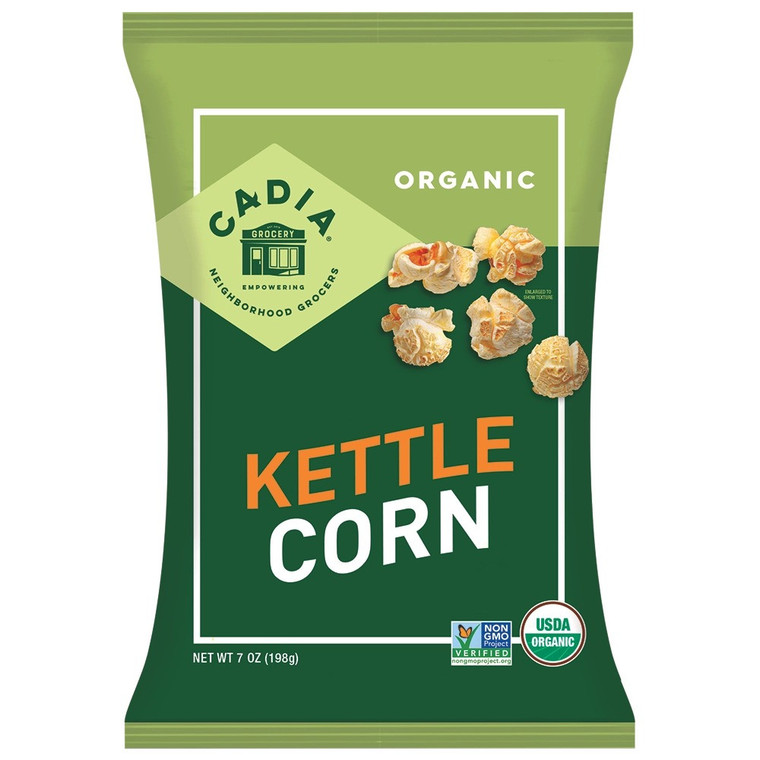
Cadia
Kettle Corn - 7 oz
Cadia's organic kettle corn is popped from organic, non-GMO corn and finished with organic sugar and a whisper of sea salt — the classic sweet-and-salty balance without a single synthetic pesticide in the field it came from. It's sold exclusively through independent neighborhood grocers, so every bag keeps your snack budget circulating in your own community instead of a corporate supply chain.
- A better-for-you movie night, road trip, or lunchbox snack with the sweet-salty crunch kettle corn is known for
- Made with organic sunflower and/or safflower oil and organic corn grown without synthetic pesticides or engineered seed
- 100% whole grain and vegetarian-friendly, sourced with sustainability standards grocery-aisle popcorn rarely meets
Picture the bag opening: the corn is still warm-smelling, sweet from organic sugar, salted just enough to keep you reaching back in. That's Cadia's organic kettle corn — a snack built on a short, traceable ingredient list and a supply chain that runs through independently-owned grocers instead of big-box distribution.
Each 7 oz bag is popped from organic, non-GMO corn and tossed with organic sunflower and/or safflower oil, organic sugar, and sea salt — nothing synthetic in the growing or the finishing. The corn is 100% whole grain, so you get the fiber and texture of the whole kernel in every handful, not a stripped-down version of it.
Keep a bag in the pantry for movie nights, pack a portion for the car, or set a bowl out for guests who assume kettle corn always comes with a long ingredient list — this one doesn't. It's a vegetarian-friendly snack that fits into a whole-grain, clean-label way of eating without asking you to give up the sweet-salty crunch you're actually craving. Because it's made from corn and organic sugar, this kettle corn isn't a fit for keto, paleo, or carnivore diets, but it's a solid choice if you're eating vegetarian or simply looking for whole-grain, organic snacking.
Store in a cool, dry place and reseal the bag to keep the corn crisp between servings.
Ingredients: Organic Popcorn, Organic Sugar, Organic Sunflower and/or Safflower Oil, and Sea Salt.
Common Questions
How does Cadia's kettle corn compare nutritionally to conventional bagged kettle corn?
A typical 1-ounce serving of Cadia organic kettle corn runs about 130 calories, 5 grams of fat, 21 grams of carbohydrates, 8 grams of sugar, 2 grams of fiber, and 1 gram of protein. Conventional kettle corn brands land in a similar calorie range but often use canola or partially processed vegetable oil blends and cane sugar sourced without organic certification, plus the corn itself is frequently grown from GMO seed stock. The macro numbers look alike on paper, but the ingredient sourcing behind them differs: Cadia's version is built on organic, non-GMO popcorn and organic sugar, so you're not trading flavor for a longer or less transparent ingredient list. If you're comparing labels side by side, check for whether the oil is specified as organic sunflower or safflower versus a generic 'vegetable oil' blend, since that's usually the tell.
What does '100% whole grain' actually mean for popcorn, and why does it matter?
Popcorn kernels are naturally a whole grain because popping doesn't strip away the bran or germ the way milling does to wheat or corn used for flour and cereal. That means each kernel retains its fiber, including a compound class called polyphenols concentrated in the hull, along with small amounts of iron and B vitamins. The 2 grams of fiber per serving comes from that intact kernel structure, which is part of why popcorn digests more slowly than puffed or extruded snacks made from ground corn starch. This isn't a marketing claim exclusive to Cadia; it's true of any air-popped or kettle-popped corn made from real kernels rather than reconstituted corn meal.
Does this fit into a keto, paleo, or carnivore diet?
No, not as formulated. A single serving carries 21 grams of carbohydrates and 8 grams of sugar from the organic cane sugar used in the kettle-corn coating, which puts it well outside standard keto macros (typically under 20-30 grams of total carbs per day) and outside carnivore eating entirely, since it's plant-based and grain-based. Paleo followers generally exclude corn and refined sugar as well, so kettle corn doesn't fit that framework either. It's better suited to a whole-food, vegetarian, or flexitarian pattern where whole grains and moderate added sugar are acceptable, and it works as an occasional treat rather than a daily macro-tracked staple.
Can I use kettle corn in recipes beyond snacking straight from the bag?
Yes. It holds up well folded into a snack mix with roasted nuts and dried fruit, crushed and sprinkled over vanilla or chocolate ice cream for texture, or layered into a s'mores-style bark with melted dark chocolate and pretzels. It also works crumbled over a fall harvest salad with roasted squash and pumpkin seeds, where the sweet-salty crunch stands in for candied nuts. Because the kernels are already cooked and coated, there's no additional cooking needed; just avoid adding it to anything hot enough to melt the sugar coating if you want to keep the crunch.
How can I verify the organic and non-GMO claims on this bag?
The USDA Organic seal on the package means the popcorn, sugar, and oil were grown without synthetic pesticides, synthetic fertilizers, or GMO seed, and the facility is inspected annually by a USDA-accredited certifying agent to maintain that status. You can look up the certifying body's records or ask the retailer for the certificate number if you want to confirm it independently, since organic certification is a documented, auditable process rather than a self-declared label. The ingredient list itself is short enough to check against the claim: organic popcorn, organic sugar, organic sunflower and/or safflower oil, and sea salt, with nothing else added. If a product claims organic but lists non-organic sugar or an unspecified oil blend, that's a sign the certification may only cover part of the formulation.
Why does the brand emphasize independently-owned grocers instead of big-box distribution?
Cadia built its supply chain around independent and co-op grocers rather than mass retail distribution, which generally means shorter time between production and shelf placement and less reliance on the volume discounts that push big-box suppliers toward cheaper, less traceable ingredients. It doesn't change the nutrition facts, but it does mean the sourcing relationships behind the organic corn and sugar are easier to trace back to a specific supplier rather than a commodity blend. For buyers who care about where their food comes from beyond the ingredient list, that distribution choice is part of the transparency the brand is selling alongside the product itself.
Each 7 oz bag is popped from organic, non-GMO corn and tossed with organic sunflower and/or safflower oil, organic sugar, and sea salt — nothing synthetic in the growing or the finishing. The corn is 100% whole grain, so you get the fiber and texture of the whole kernel in every handful, not a stripped-down version of it.
Keep a bag in the pantry for movie nights, pack a portion for the car, or set a bowl out for guests who assume kettle corn always comes with a long ingredient list — this one doesn't. It's a vegetarian-friendly snack that fits into a whole-grain, clean-label way of eating without asking you to give up the sweet-salty crunch you're actually craving. Because it's made from corn and organic sugar, this kettle corn isn't a fit for keto, paleo, or carnivore diets, but it's a solid choice if you're eating vegetarian or simply looking for whole-grain, organic snacking.
Store in a cool, dry place and reseal the bag to keep the corn crisp between servings.
Ingredients: Organic Popcorn, Organic Sugar, Organic Sunflower and/or Safflower Oil, and Sea Salt.
Common Questions
How does Cadia's kettle corn compare nutritionally to conventional bagged kettle corn?
A typical 1-ounce serving of Cadia organic kettle corn runs about 130 calories, 5 grams of fat, 21 grams of carbohydrates, 8 grams of sugar, 2 grams of fiber, and 1 gram of protein. Conventional kettle corn brands land in a similar calorie range but often use canola or partially processed vegetable oil blends and cane sugar sourced without organic certification, plus the corn itself is frequently grown from GMO seed stock. The macro numbers look alike on paper, but the ingredient sourcing behind them differs: Cadia's version is built on organic, non-GMO popcorn and organic sugar, so you're not trading flavor for a longer or less transparent ingredient list. If you're comparing labels side by side, check for whether the oil is specified as organic sunflower or safflower versus a generic 'vegetable oil' blend, since that's usually the tell.
What does '100% whole grain' actually mean for popcorn, and why does it matter?
Popcorn kernels are naturally a whole grain because popping doesn't strip away the bran or germ the way milling does to wheat or corn used for flour and cereal. That means each kernel retains its fiber, including a compound class called polyphenols concentrated in the hull, along with small amounts of iron and B vitamins. The 2 grams of fiber per serving comes from that intact kernel structure, which is part of why popcorn digests more slowly than puffed or extruded snacks made from ground corn starch. This isn't a marketing claim exclusive to Cadia; it's true of any air-popped or kettle-popped corn made from real kernels rather than reconstituted corn meal.
Does this fit into a keto, paleo, or carnivore diet?
No, not as formulated. A single serving carries 21 grams of carbohydrates and 8 grams of sugar from the organic cane sugar used in the kettle-corn coating, which puts it well outside standard keto macros (typically under 20-30 grams of total carbs per day) and outside carnivore eating entirely, since it's plant-based and grain-based. Paleo followers generally exclude corn and refined sugar as well, so kettle corn doesn't fit that framework either. It's better suited to a whole-food, vegetarian, or flexitarian pattern where whole grains and moderate added sugar are acceptable, and it works as an occasional treat rather than a daily macro-tracked staple.
Can I use kettle corn in recipes beyond snacking straight from the bag?
Yes. It holds up well folded into a snack mix with roasted nuts and dried fruit, crushed and sprinkled over vanilla or chocolate ice cream for texture, or layered into a s'mores-style bark with melted dark chocolate and pretzels. It also works crumbled over a fall harvest salad with roasted squash and pumpkin seeds, where the sweet-salty crunch stands in for candied nuts. Because the kernels are already cooked and coated, there's no additional cooking needed; just avoid adding it to anything hot enough to melt the sugar coating if you want to keep the crunch.
How can I verify the organic and non-GMO claims on this bag?
The USDA Organic seal on the package means the popcorn, sugar, and oil were grown without synthetic pesticides, synthetic fertilizers, or GMO seed, and the facility is inspected annually by a USDA-accredited certifying agent to maintain that status. You can look up the certifying body's records or ask the retailer for the certificate number if you want to confirm it independently, since organic certification is a documented, auditable process rather than a self-declared label. The ingredient list itself is short enough to check against the claim: organic popcorn, organic sugar, organic sunflower and/or safflower oil, and sea salt, with nothing else added. If a product claims organic but lists non-organic sugar or an unspecified oil blend, that's a sign the certification may only cover part of the formulation.
Why does the brand emphasize independently-owned grocers instead of big-box distribution?
Cadia built its supply chain around independent and co-op grocers rather than mass retail distribution, which generally means shorter time between production and shelf placement and less reliance on the volume discounts that push big-box suppliers toward cheaper, less traceable ingredients. It doesn't change the nutrition facts, but it does mean the sourcing relationships behind the organic corn and sugar are easier to trace back to a specific supplier rather than a commodity blend. For buyers who care about where their food comes from beyond the ingredient list, that distribution choice is part of the transparency the brand is selling alongside the product itself.
- __Storage_Location:
- Dry
- __Volume:
- 5400
- __Owner:
- TCFarm
- __badge:
- for delivery by 10/21