


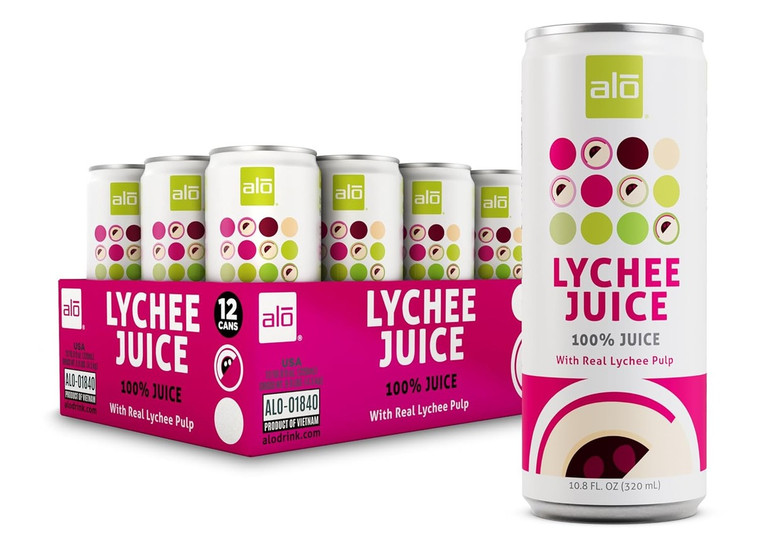
Lychee Aloe Vera Juice - 10.8 fl oz
AloBelow are the available bulk discount rates for each individual item when you purchase a certain amount
- Buy 2 - 5 and get 5% off
- Buy 6 - 11 and get 10% off
- Buy 12 or above and get 20% off
Write a Review
Alo
Lychee Aloe Vera Juice - 10.8 fl oz
Real aloe vera pulp meets the floral sweetness of lychee — ALO's slim-can format delivers a hydrating, plant-based beverage built around actual aloe vera inner leaf gel with pulp, not a reconstituted powder or concentrate. The kind of drink you can sip straight from the can or pour over ice without wondering what's in it.
- Perfect for: a light, refreshing mid-afternoon drink, post-workout rehydration, or a sophisticated swap for sugary sodas and artificially flavored sparkling waters
- What sets it apart: contains real aloe vera inner leaf gel with visible pulp — a texture and functional ingredient most mainstream canned beverages skip entirely; aloin-free for easy digestion
- Diet-friendly: plant-based, gluten-free, and suitable for vegan lifestyles; Non-GMO Project Verified
ALO's Lychee Aloe Vera Juice Drink packs real aloe vera inner leaf gel — pulp and all — into a sleek 10.82 fl oz slim can. While most shelf-stable juice drinks are built on water, sugar, and natural flavor concentrates, ALO anchors this one with a functional botanical ingredient that has centuries of use behind it. The lychee flavor isn't synthetic backdrop: it layers a delicate floral sweetness over the mild, slightly viscous aloe base, creating a drinking experience that's noticeably different from conventional juice.
Each can is aloin-free, meaning the bitter, potentially irritating outer-leaf compound has been removed — leaving the inner leaf gel that hydration-focused consumers actually want. The formula is certified Non-GMO Project Verified and carries no artificial colors, flavors, or preservatives. It's sweetened with cane sugar, not high-fructose corn syrup or synthetic sweeteners, keeping the ingredient list readable.
ALO is sold in a pack of 12 cans, making it practical for stocking at home, in an office, or for events where you want something more intentional than a mainstream soft drink on the table. Store at room temperature; refrigerate after opening and consume promptly.
INGREDIENTS: Lychee Juice, Lychee Pulp
Common Questions
What exactly is aloe vera inner leaf gel, and how is it different from the whole-leaf aloe used in some other drinks?
The aloe plant has two distinct layers: the outer leaf, which contains a compound called aloin (a anthraquinone glycoside), and the inner leaf, which holds the clear, mucilaginous gel. Aloin is a potent laxative and can cause gastrointestinal irritation, which is why the FDA has restricted its use in over-the-counter products. ALO uses only the inner leaf gel, which has been processed to be aloin-free, so you get the hydrating, slightly viscous texture without the harsh compounds. The inner leaf gel contains polysaccharides, primarily acemannan, which is the fraction most studied for its potential to support gut lining integrity and immune modulation. This distinction matters when comparing aloe drinks — whole-leaf products that haven't been adequately decolorized may still carry residual aloin.
How much sugar is in each can, and how does that compare to a typical mainstream juice drink?
The exact gram count should be confirmed on the current Nutrition Facts panel, but ALO's lychee variety is sweetened with cane sugar and lychee juice, with no added high-fructose corn syrup or synthetic sweeteners. For context, a standard 12 fl oz can of a mainstream fruit-flavored drink like Minute Maid Lemonade contains around 40 grams of added sugar, while a comparable 12 fl oz serving of many juice cocktails runs 35–45 grams. ALO's 10.82 fl oz slim can format inherently limits the sugar load versus a standard 12 oz serving. The cane sugar used here has the same fructose-glucose ratio as table sugar, so it isn't metabolically unique, but it avoids the processing concerns some consumers associate with corn-derived sweeteners. Always check the label panel for the most current values, as formulations can change.
What does the Non-GMO Project Verified certification actually guarantee for a product like this?
Non-GMO Project Verified means the product has gone through third-party evaluation by the Non-GMO Project, a nonprofit that maintains its own standard separate from USDA organic rules. For a beverage like this, that process involves tracing the supply chain of each ingredient — including the aloe vera, cane sugar, and any natural flavors — to confirm they don't come from genetically engineered source crops. Cane sugar verification matters specifically because a significant portion of U.S. sugar comes from genetically engineered sugar beets, and the Non-GMO Project distinguishes between the two. The certification requires ongoing testing and supplier documentation, not just a one-time audit. It doesn't make claims about pesticide use or nutritional content — that's where organic certification adds a separate layer of assurance.
Is this drink appropriate for someone following a vegan or gluten-free diet?
Yes on both counts. The product carries explicit Vegan and Gluten-Free certifications, meaning it has been reviewed against defined standards rather than just labeled by the brand without verification. From an ingredient standpoint, there are no animal-derived components — no honey, no gelatin-based stabilizers, no dairy. Gluten is not a concern inherent to aloe vera or lychee juice, but cross-contamination in manufacturing is always the real question for sensitive individuals, which certification helps address. People with celiac disease or non-celiac gluten sensitivity should still confirm the current certification status on the label, as manufacturing conditions can change between production runs.
What is acemannan, and is there actual research behind the claimed benefits of aloe vera inner leaf gel?
Acemannan is a long-chain polysaccharide found predominantly in aloe vera inner leaf gel and is the compound most studied in clinical and preclinical research. Studies published in journals including the Journal of Environmental Science and Health and Phytotherapy Research have examined acemannan's potential immunomodulatory and wound-healing properties, particularly in topical and oral applications. Human clinical evidence for beverage-dose aloe consumption is less robust than for topical use, and the amounts delivered in a single can are unlikely to match therapeutic concentrations studied in trials. That said, the inner leaf gel does contribute a measurable viscosity from its polysaccharide content, and some peer-reviewed work suggests modest benefits for gut comfort at regular dietary intake levels. The honest framing is that aloe vera inner leaf gel has a plausible functional basis, but treating this drink as a medical supplement would outpace the current evidence.
How does lychee juice as an ingredient compare nutritionally to more common juice bases like apple or white grape?
Lychee is notably higher in vitamin C relative to its calorie load compared to apple or white grape juice — fresh lychee contains roughly 71.5 mg of vitamin C per 100 grams, which is more than a comparable weight of orange. Apple juice and white grape juice are frequently used in blended beverages primarily because they are inexpensive, flavor-neutral, and high in fructose — they contribute sweetness and body without adding a distinctive taste. Lychee juice brings a floral, slightly rose-like flavor profile that is genuinely characteristic rather than background filler, which is why it works alongside the mild aloe base rather than disappearing into it. The ascorbic acid (vitamin C) listed separately in ALO's ingredient stack likely serves dual purposes: as an antioxidant preservative to protect color and freshness, and as a minor nutritional contributor.
Can this be used as a mixer or in recipes, and does heat or blending affect the aloe gel?
ALO Lychee works well as a chilled mixer for non-alcoholic mocktails or light cocktails — its floral lychee notes pair naturally with sparkling water, mint, cucumber, and spirits like gin or vodka if alcohol is involved. It can also be blended into smoothies without any significant flavor clash; the aloe contributes a slightly silky mouthfeel that smoothies often benefit from. Heat is worth avoiding: acemannan and other aloe polysaccharides begin to break down above approximately 70°C (158°F), so using this as a warm tea base or heating it in cooking applications would degrade the functional components that distinguish it from plain juice. For cold preparations — chia pudding liquids, popsicle bases, or fruit salad dressings — it performs well and holds its character. The slim can format means a single can is portioned for one to two servings in most recipe contexts.
- __Owner:
- TCFarm
- __Storage_Location:
- Dry
- __Volume:
- 500
- __badge:
- for delivery by 10/21