


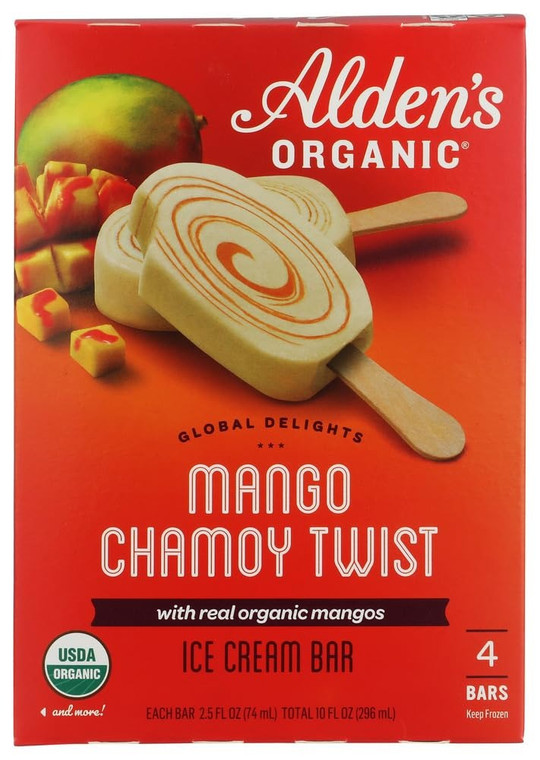
Mango Chamoy Twist Ice Cream Bars - 10 oz
Aldens OrganicWrite a Review
Aldens Organic
Mango Chamoy Twist Ice Cream Bars - 10 oz
- A bold flavor experience: Mango Chamoy Twist bars combine ripe mango ice cream with the sweet-sour-spicy profile of chamoy — a format rarely executed with organic ingredients, making these a standout for adventurous frozen dessert lovers.
- Certified Organic ingredients: Alden's is a dedicated organic ice cream brand, meaning every ingredient meets USDA Organic standards — no synthetic pesticides, no artificial colors or flavors, no artificial preservatives.
- A better-for-you frozen bar: Suitable for those avoiding artificial additives; check packaging for soy, dairy, and gluten suitability before purchasing if managing specific dietary restrictions.
Alden's Organic has been one of the most consistent forces in certified organic ice cream, and their Mango Chamoy Twist Ice Cream Bars bring that commitment to one of the most exciting flavor profiles in the frozen aisle. Chamoy — the tangy, sweet, mildly spicy Mexican condiment traditionally drizzled over fruit — is having a cultural moment, and Alden's is one of the very few brands executing it within a fully USDA Organic framework.
Each box contains organic mango ice cream bars with a chamoy-inspired swirl or coating — a combination of fruity brightness and the signature puckery depth that chamoy lovers recognize immediately. At 10 oz per box, these are a premium specialty item in the organic frozen dessert category, priced at a level that reflects the cost of sourcing organic dairy and organic fruit ingredients.
From a values standpoint, Alden's Organic certification means every ingredient has been audited by a USDA-accredited certifier: no synthetic pesticides or herbicides in the supply chain, no GMO ingredients, and no artificial colors, flavors, or preservatives — claims that are verifiable, not just marketing language. For shoppers who have navigated the frozen dessert aisle and found that most chamoy-flavored novelties rely on artificial dyes and corn syrup derivatives, these bars represent a genuinely different option.
Store frozen. Confirm allergen and dietary suitability on the package label before purchasing if managing dairy, soy, or gluten restrictions.
INGREDIENTS — Milk*, Cream*, Cane Sugar*, Mango Chamoy Variegate* (Sugar*, Water, Mango*, Tapioca Starch*, Natural Flavor*, Citric Acid, Annatto* (Color), Ground Cayenne Pepper*, Locust Bean Gum*, Salt), Mango*, Tapioca Syrup*, Natural Mango Flavor* With Other Natural Flavors*, Citric Acid, Guar Gum*, Locust Bean Gum*, Annatto Extract* (Color).
Common Questions
What exactly is chamoy and why does it taste the way it does?
Chamoy is a condiment with roots in Mexican culinary tradition, built from a combination of dried chili peppers, citrus (typically lime), a stone fruit base (often apricot, plum, or tamarind), and sugar. The flavor is genuinely multi-dimensional: the dried chili provides mild heat and a faint smokiness, the citrus delivers sharp acidity, and the fruit base adds sweetness and body. That layered contrast — sweet, sour, salty, and spicy simultaneously — is what makes chamoy distinctive and why it pairs so naturally with fresh mango, which has enough sweetness and brightness to stand up to it. In this product, the chamoy element functions as a swirl or coating against the mango ice cream base, so each bite delivers that push-pull between creamy fruit sweetness and tangy depth.
How does an organic chamoy differ from the chamoy sauces and candies commonly sold in stores?
Most commercially available chamoy products — including many popular sauces and chamoy-coated candies — use artificial food dyes (commonly Red 40 and Yellow 6), high-fructose corn syrup, sodium benzoate as a preservative, and non-organic dried chili. USDA Organic certification prohibits all of those inputs. Alden's organic chamoy component must be built from certified organic ingredients — meaning organic dried chili, organic lime, organic cane sugar, and an organic fruit base — with no synthetic preservatives or artificial colors allowed at any stage of the supply chain. The flavor profile will be slightly less artificially amplified than candy-style chamoy, which is often engineered to be aggressively sour and bright red, but it reflects what chamoy actually tastes like when made from real ingredients.
What does USDA Organic certification actually verify, and who does the auditing?
USDA Organic is a federal standard administered by the National Organic Program (NOP) under the USDA Agricultural Marketing Service. Certification is not self-declared — it requires annual inspections and documentation audits conducted by a USDA-accredited third-party certifying agent, of which there are roughly 80 accredited in the United States. The standard prohibits synthetic pesticides, synthetic herbicides, synthetic fertilizers, GMO ingredients, and artificial additives including colors, flavors, and most preservatives. For a multi-ingredient product like these ice cream bars, every ingredient in the formulation — dairy, fruit, stabilizers, and the chamoy component — must individually trace back to certified organic sources. You can look up any certified operation in the USDA's public Organic Integrity Database at ams.usda.gov to verify that a brand or supplier holds an active certificate.
Are these bars suitable for people avoiding dairy, and what allergens should I watch for?
These are ice cream bars made with organic dairy — specifically organic skim milk and organic cream — so they are not suitable for people avoiding dairy or following a vegan diet. Dairy is a top-8 allergen in the United States and must be declared on the label. Depending on the full formulation and manufacturing facility, there may also be soy lecithin present (common in frozen desserts as an emulsifier) and potential cross-contact with tree nuts or wheat. The ingredient list and allergen statement on the physical package are the authoritative source, since formulations can change — always confirm on the label if you are managing a food allergy or intolerance rather than relying solely on online product descriptions.
How do these bars compare to other premium organic ice cream novelties in terms of what you're actually getting for the price?
At 10 oz per box, these fall into the premium organic novelty tier alongside brands like Julie's Organic and Cado, where per-ounce cost is higher than conventional frozen bars but reflects the certified organic supply chain overhead. The specific differentiation here is the chamoy flavor profile — as of now, very few USDA Organic certified frozen novelty products attempt this flavor combination, making this a specialty item rather than a commodity. Most chamoy-flavored frozen novelties on the market are conventional products using artificial dye and corn syrup, so the comparison isn't really price-per-ounce against a conventional chamoy bar — it's whether you want the flavor in an organic, no-artificial-additive format, which currently has very limited competition.
What stabilizers are used in these bars and why are they there?
The formulation is understood to include organic tapioca starch, organic locust bean gum, and organic guar gum — all of which are approved for use in USDA Organic products. Stabilizers in ice cream serve a structural function: they slow the growth of ice crystals during storage and freeze-thaw cycles, which is what keeps ice cream bars from becoming grainy or icy over their shelf life. Locust bean gum is derived from the seeds of the carob tree and has been used in frozen desserts for decades; guar gum comes from guar beans. Both are plant-derived and non-synthetic, which is why they pass the USDA Organic standard. Tapioca starch functions similarly, adding body and helping maintain texture without the need for synthetic emulsifiers.
Can I refreeze these bars if they partially thaw during grocery transport?
Partial thawing and refreezing of ice cream bars is generally safe from a food safety standpoint since dairy-based frozen novelties don't carry the same bacterial risk as thawed raw meat or fish — the sugar and fat content, along with the pasteurization of the dairy base, reduce that concern. However, the texture and eating quality will degrade noticeably: refrozen ice cream develops larger ice crystals, resulting in a coarser, less creamy mouthfeel, and any coating or chamoy swirl may separate or become gummy. If the bars are still cold and have only softened (not fully liquefied), placing them back in the freezer promptly is acceptable. If they've completely melted, the structural integrity of the bar itself — the stick, shape, and coating — will not recover properly.
- __Storage_Location:
- FrozenICE
- __Volume:
- 400
- __Owner:
- TCFarm
- __badge:
- Organic