


Sale
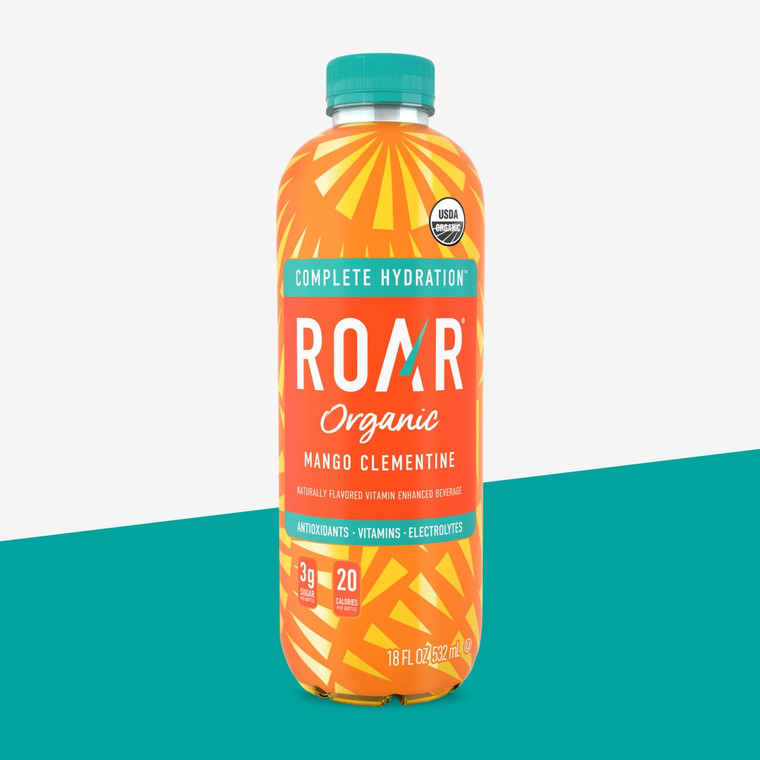
Mango Clementine Hydration Drink - 18 fl oz
Roar Beverages
$2.49
$2.29
Below are the available bulk discount rates for each individual item when you purchase a certain amount
- Buy 2 - 5 and get 5% off
- Buy 6 - 11 and get 10% off
- Buy 12 or above and get 20% off
(No reviews yet)

Write a Review
Roar Beverages
Mango Clementine Hydration Drink - 18 fl oz
20 calories, under 3g of sugar, and a full B-vitamin complex — ROAR Organic's Mango Clementine is built for people who want real hydration without the sugar load that comes with conventional sports drinks. The base is organic coconut water, which delivers naturally occurring electrolytes, layered with potassium citrate and sea salt for a complete electrolyte profile. Antioxidant vitamins A, C, and E round out the formula, so every bottle does more than just rehydrate.
- Anytime hydration: low enough in sugar and calories to drink before, during, or after activity — or simply as a daily alternative to plain water when you want something with more function
- What sets it apart: organic coconut water electrolyte base, B-vitamins (B-5, B-6, B-12), and antioxidant vitamins A, C, and E in a single 20-calorie bottle — no artificial colors, no synthetic sweeteners beyond organic erythritol and stevia
- Diet-compatible: USDA Organic, vegan, gluten-free, and keto-friendly — free from caffeine and artificial flavors
ROAR Organic's Mango Clementine Electrolyte Drink is what happens when a brand refuses to accept the trade-off between function and clean ingredients. Most electrolyte drinks either load up on sugar to taste good or rely on artificial sweeteners and synthetic dyes to stay low-calorie. ROAR threads that needle with organic coconut water as the electrolyte base, a precise blend of potassium citrate and sea salt, and just enough organic cane sugar and erythritol to deliver a bright, tropical flavor without spiking your blood sugar.
Each bottle clocks in at 20 calories and under 3g of sugar — numbers that make it genuinely viable at any point in the day, not just mid-workout. The formula goes further than basic electrolyte replacement: B-vitamins B-5, B-6, and B-12 support energy metabolism, while vitamins A, C, and E provide dietary antioxidant support. That's a meaningful stack for a drink most people would grab instead of water.
The flavor profile is citrus-forward and tropical: ripe mango paired with zesty clementine, colored naturally with beta carotene rather than artificial dyes. It's sweetened with a combination of organic erythritol, a small amount of organic cane sugar, and organic stevia leaf extract — a trio that keeps the flavor honest without the chemical aftertaste that plagues many zero-sugar sports drinks.
Customers who've made ROAR a regular part of their routine consistently point to the flavor and the clean label. Kara H., a verified buyer who researched electrolyte brands extensively for her parents' daily hydration needs, landed on ROAR after a "deep dive into different brands" — specifically looking for products that "first taste good and second be healthy choices."
ROAR Mango Clementine is USDA Organic, vegan, gluten-free, and keto-friendly. Contains no caffeine. Store at room temperature; refrigerate after opening.
Ingredients: Filtered Water, Organic Coconut Water From Concentrate (Water Sufficient To Reconstitute, Organic Coconut Water Concentrate), Organic Erythritol, Organic Cane Sugar, Organic Natural Flavors, Citric Acid, Sea Salt, Beta Carotene For Color, Ascorbic Acid (Vitamin C), Potassium Citrate, L-Malic Acid, Organic Stevia Leaf Extract, Dl-Alpha-Tocopheryl Acetate (Vitamin E), Retinyl Palmitate (Vitamin A), D-Calcium Pantothenate (Vitamin B-5), Pyridoxine Hydrochloride (Vitamin B-6), Cyanocobalamin (Vitamin B-12)
Common Questions
How does the sugar content in ROAR Mango Clementine compare to conventional sports drinks?
A standard 12 oz serving of Gatorade contains about 21 grams of sugar and 80 calories, while a comparable serving of Powerade clocks in around 19 grams of sugar. ROAR Mango Clementine contains under 3 grams of sugar and 20 calories per bottle, making it roughly 85-90% lower in sugar than the category leaders. That reduction is achieved without relying entirely on artificial sweeteners — the formula uses a combination of organic erythritol, a small amount of organic cane sugar, and organic stevia leaf extract to maintain flavor integrity. For people managing blood sugar, following a low-carb diet, or simply trying to avoid sugar spikes during daily hydration, that gap is practically significant.
What does erythritol actually do in this drink, and is it safe?
Erythritol is a sugar alcohol that occurs naturally in small amounts in fruits like grapes and pears. It provides roughly 0.24 calories per gram compared to sugar's 4 calories per gram, so it contributes negligible caloric load while still activating sweet taste receptors on the tongue. Unlike other sugar alcohols such as sorbitol or maltitol, erythritol is absorbed in the small intestine before reaching the colon, which is why it typically causes far less gastrointestinal distress — a well-documented benefit in peer-reviewed literature including studies published in the European Journal of Clinical Nutrition. It has a glycemic index of zero, meaning it does not trigger an insulin response. The FDA classifies erythritol as Generally Recognized as Safe (GRAS), and ROAR uses a USDA Organic-certified form, meaning it is derived from non-GMO fermented sources.
Does this drink fit a ketogenic diet, and how does the carbohydrate count break down?
ROAR Mango Clementine carries a keto-friendly certification, and the macros support that designation. The under-3-gram sugar figure comes primarily from the small amount of organic cane sugar used alongside erythritol, while erythritol itself is not counted toward net carbs because it is not metabolized into glucose. For strict keto tracking, the net carbohydrate count per bottle is low enough to fit within the standard 20-50 gram daily net carb ceiling followed by most ketogenic protocols. The 20-calorie total also makes it viable during intermittent fasting windows for those following protocols where very low-calorie beverages are permitted. The absence of caffeine and artificial sweeteners is an additional consideration for people following clean keto approaches.
What role do the B-vitamins in this drink actually play, and are the amounts meaningful?
The formula includes three B-vitamins: B-5 (D-Calcium Pantothenate), B-6 (Pyridoxine Hydrochloride), and B-12 (Cyanocobalamin). B-5 is a precursor to coenzyme A, a molecule essential for converting carbohydrates, fats, and proteins into ATP — the cell's primary energy currency. B-6 supports amino acid metabolism and is involved in the synthesis of neurotransmitters including serotonin and dopamine. B-12 is critical for red blood cell formation and neurological function, and is the vitamin most commonly deficient in vegan populations since it is found almost exclusively in animal products — making its inclusion in a vegan-certified drink particularly relevant. While the exact milligram amounts per serving are not disclosed on the public label, the presence of all three in a single beverage provides a meaningful complement to dietary intake, especially for active individuals or those with absorption concerns.
What does the USDA Organic certification actually verify for this product?
USDA Organic certification is issued by accredited third-party certifying agents and requires that at least 95% of the ingredients by weight are certified organic, excluding water and salt. For ROAR Mango Clementine, that means the coconut water base, erythritol, cane sugar, natural flavors, and stevia leaf extract must all come from certified organic sources — which means no synthetic pesticides, no synthetic fertilizers, no genetically modified organisms, and no irradiation in their production. The certification is not self-reported; it requires annual inspections, detailed record-keeping, and a documented supply chain audit. Citric acid, L-Malic acid, and certain processing aids may be used under USDA Organic rules if they appear on the National List of Allowed and Prohibited Substances. Consumers can verify any brand's organic certificate by requesting the certificate number and cross-referencing it with the USDA Organic Integrity Database at ams.usda.gov.
Why does ROAR use coconut water as the electrolyte base instead of just adding potassium and sodium salts directly?
Coconut water naturally contains potassium, magnesium, and a small amount of sodium in a matrix that also includes naturally occurring sugars and amino acids. The theoretical advantage of a whole-food electrolyte base is that the minerals arrive alongside co-factors that may support absorption, though ROAR's formula also adds potassium citrate and sea salt to reach targeted electrolyte levels independent of what the coconut water concentrate alone provides. Potassium citrate specifically is absorbed efficiently in the small intestine and is the form most commonly used in clinical rehydration contexts. Sea salt contributes sodium and trace chloride, both of which are lost in sweat and are necessary for fluid retention at the cellular level — sodium in particular activates the sodium-glucose cotransporter (SGLT1) pathway that facilitates water uptake in the intestine. Using coconut water from concentrate as the base also contributes to the natural flavor profile, reducing the reliance on added flavoring agents to achieve a palatable taste.
Is beta carotene used as a colorant safe, and how does it differ from synthetic dyes used in competing drinks?
Beta carotene is a carotenoid pigment found naturally in mangoes, carrots, and other orange and yellow produce, and it is what gives ROAR Mango Clementine its color. Unlike synthetic dyes such as Yellow 5 (tartrazine) or Red 40 (Allura Red), which are petroleum-derived and require FDA-mandated warning labels in the European Union due to hyperactivity concerns in children, beta carotene is a naturally occurring antioxidant compound. In the body, beta carotene is converted to vitamin A via retinyl palmitate pathways — which is also a separately listed ingredient in this formula — depending on the body's current vitamin A status, making it a self-regulating precursor rather than a direct dose. The FDA classifies beta carotene as GRAS for use as a colorant, and its use is permitted under USDA Organic standards. For consumers avoiding synthetic additives, beta carotene represents a substantive rather than cosmetic distinction from conventional sports drinks.
Each bottle clocks in at 20 calories and under 3g of sugar — numbers that make it genuinely viable at any point in the day, not just mid-workout. The formula goes further than basic electrolyte replacement: B-vitamins B-5, B-6, and B-12 support energy metabolism, while vitamins A, C, and E provide dietary antioxidant support. That's a meaningful stack for a drink most people would grab instead of water.
The flavor profile is citrus-forward and tropical: ripe mango paired with zesty clementine, colored naturally with beta carotene rather than artificial dyes. It's sweetened with a combination of organic erythritol, a small amount of organic cane sugar, and organic stevia leaf extract — a trio that keeps the flavor honest without the chemical aftertaste that plagues many zero-sugar sports drinks.
Customers who've made ROAR a regular part of their routine consistently point to the flavor and the clean label. Kara H., a verified buyer who researched electrolyte brands extensively for her parents' daily hydration needs, landed on ROAR after a "deep dive into different brands" — specifically looking for products that "first taste good and second be healthy choices."
- "Delicious!" — Nancy R., Verified Buyer
- "Love ROAR Drinks" — Margie R., Verified Buyer
- "This is the best drink ever." — Margaret D., Verified Buyer
ROAR Mango Clementine is USDA Organic, vegan, gluten-free, and keto-friendly. Contains no caffeine. Store at room temperature; refrigerate after opening.
Ingredients: Filtered Water, Organic Coconut Water From Concentrate (Water Sufficient To Reconstitute, Organic Coconut Water Concentrate), Organic Erythritol, Organic Cane Sugar, Organic Natural Flavors, Citric Acid, Sea Salt, Beta Carotene For Color, Ascorbic Acid (Vitamin C), Potassium Citrate, L-Malic Acid, Organic Stevia Leaf Extract, Dl-Alpha-Tocopheryl Acetate (Vitamin E), Retinyl Palmitate (Vitamin A), D-Calcium Pantothenate (Vitamin B-5), Pyridoxine Hydrochloride (Vitamin B-6), Cyanocobalamin (Vitamin B-12)
Common Questions
How does the sugar content in ROAR Mango Clementine compare to conventional sports drinks?
A standard 12 oz serving of Gatorade contains about 21 grams of sugar and 80 calories, while a comparable serving of Powerade clocks in around 19 grams of sugar. ROAR Mango Clementine contains under 3 grams of sugar and 20 calories per bottle, making it roughly 85-90% lower in sugar than the category leaders. That reduction is achieved without relying entirely on artificial sweeteners — the formula uses a combination of organic erythritol, a small amount of organic cane sugar, and organic stevia leaf extract to maintain flavor integrity. For people managing blood sugar, following a low-carb diet, or simply trying to avoid sugar spikes during daily hydration, that gap is practically significant.
What does erythritol actually do in this drink, and is it safe?
Erythritol is a sugar alcohol that occurs naturally in small amounts in fruits like grapes and pears. It provides roughly 0.24 calories per gram compared to sugar's 4 calories per gram, so it contributes negligible caloric load while still activating sweet taste receptors on the tongue. Unlike other sugar alcohols such as sorbitol or maltitol, erythritol is absorbed in the small intestine before reaching the colon, which is why it typically causes far less gastrointestinal distress — a well-documented benefit in peer-reviewed literature including studies published in the European Journal of Clinical Nutrition. It has a glycemic index of zero, meaning it does not trigger an insulin response. The FDA classifies erythritol as Generally Recognized as Safe (GRAS), and ROAR uses a USDA Organic-certified form, meaning it is derived from non-GMO fermented sources.
Does this drink fit a ketogenic diet, and how does the carbohydrate count break down?
ROAR Mango Clementine carries a keto-friendly certification, and the macros support that designation. The under-3-gram sugar figure comes primarily from the small amount of organic cane sugar used alongside erythritol, while erythritol itself is not counted toward net carbs because it is not metabolized into glucose. For strict keto tracking, the net carbohydrate count per bottle is low enough to fit within the standard 20-50 gram daily net carb ceiling followed by most ketogenic protocols. The 20-calorie total also makes it viable during intermittent fasting windows for those following protocols where very low-calorie beverages are permitted. The absence of caffeine and artificial sweeteners is an additional consideration for people following clean keto approaches.
What role do the B-vitamins in this drink actually play, and are the amounts meaningful?
The formula includes three B-vitamins: B-5 (D-Calcium Pantothenate), B-6 (Pyridoxine Hydrochloride), and B-12 (Cyanocobalamin). B-5 is a precursor to coenzyme A, a molecule essential for converting carbohydrates, fats, and proteins into ATP — the cell's primary energy currency. B-6 supports amino acid metabolism and is involved in the synthesis of neurotransmitters including serotonin and dopamine. B-12 is critical for red blood cell formation and neurological function, and is the vitamin most commonly deficient in vegan populations since it is found almost exclusively in animal products — making its inclusion in a vegan-certified drink particularly relevant. While the exact milligram amounts per serving are not disclosed on the public label, the presence of all three in a single beverage provides a meaningful complement to dietary intake, especially for active individuals or those with absorption concerns.
What does the USDA Organic certification actually verify for this product?
USDA Organic certification is issued by accredited third-party certifying agents and requires that at least 95% of the ingredients by weight are certified organic, excluding water and salt. For ROAR Mango Clementine, that means the coconut water base, erythritol, cane sugar, natural flavors, and stevia leaf extract must all come from certified organic sources — which means no synthetic pesticides, no synthetic fertilizers, no genetically modified organisms, and no irradiation in their production. The certification is not self-reported; it requires annual inspections, detailed record-keeping, and a documented supply chain audit. Citric acid, L-Malic acid, and certain processing aids may be used under USDA Organic rules if they appear on the National List of Allowed and Prohibited Substances. Consumers can verify any brand's organic certificate by requesting the certificate number and cross-referencing it with the USDA Organic Integrity Database at ams.usda.gov.
Why does ROAR use coconut water as the electrolyte base instead of just adding potassium and sodium salts directly?
Coconut water naturally contains potassium, magnesium, and a small amount of sodium in a matrix that also includes naturally occurring sugars and amino acids. The theoretical advantage of a whole-food electrolyte base is that the minerals arrive alongside co-factors that may support absorption, though ROAR's formula also adds potassium citrate and sea salt to reach targeted electrolyte levels independent of what the coconut water concentrate alone provides. Potassium citrate specifically is absorbed efficiently in the small intestine and is the form most commonly used in clinical rehydration contexts. Sea salt contributes sodium and trace chloride, both of which are lost in sweat and are necessary for fluid retention at the cellular level — sodium in particular activates the sodium-glucose cotransporter (SGLT1) pathway that facilitates water uptake in the intestine. Using coconut water from concentrate as the base also contributes to the natural flavor profile, reducing the reliance on added flavoring agents to achieve a palatable taste.
Is beta carotene used as a colorant safe, and how does it differ from synthetic dyes used in competing drinks?
Beta carotene is a carotenoid pigment found naturally in mangoes, carrots, and other orange and yellow produce, and it is what gives ROAR Mango Clementine its color. Unlike synthetic dyes such as Yellow 5 (tartrazine) or Red 40 (Allura Red), which are petroleum-derived and require FDA-mandated warning labels in the European Union due to hyperactivity concerns in children, beta carotene is a naturally occurring antioxidant compound. In the body, beta carotene is converted to vitamin A via retinyl palmitate pathways — which is also a separately listed ingredient in this formula — depending on the body's current vitamin A status, making it a self-regulating precursor rather than a direct dose. The FDA classifies beta carotene as GRAS for use as a colorant, and its use is permitted under USDA Organic standards. For consumers avoiding synthetic additives, beta carotene represents a substantive rather than cosmetic distinction from conventional sports drinks.
- __Storage_Location:
- Dry
- __Volume:
- 400
- __Owner:
- TCFarm
- __badge:
- for delivery by 10/21