

Nacho Cheese Tortilla Chips - 7.5 oz
Boulder Canyon
$6.49
(No reviews yet)

Write a Review
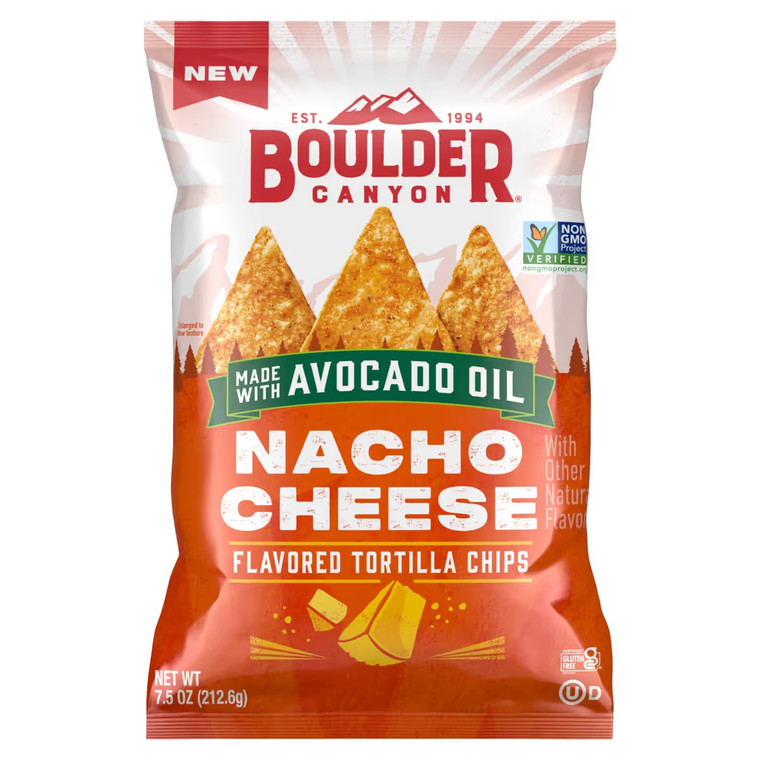
Boulder Canyon
Nacho Cheese Tortilla Chips - 7.5 oz
Bold nacho flavor, built on avocado oil — not the vegetable oil shortcuts that dominate the chip aisle. Boulder Canyon's Nacho Cheese Tortilla Chips fry each sturdy corn chip in avocado oil, which delivers a lighter, cleaner finish that lets the tangy, chili-forward cheese seasoning land without the heavy grease aftertaste common in mass-market tortilla chips. Every chip carries that seasoning all the way through — no bare patches, no one-note powder.
- Built for any occasion: Eat straight from the bag, pile high for loaded nachos, or use as a sturdy dipper — the thick-cut corn base holds up under toppings and heavy dips without crumbling.
- Avocado oil frying sets it apart: Unlike chips fried in standard vegetable (corn, soybean, or sunflower) oil, Boulder Canyon uses avocado oil — a fat with a higher smoke point and a more neutral, clean flavor profile that lets the seasoning speak instead of the frying oil.
- Diet & certification credentials: Non-GMO Project Verified, Certified Gluten-Free, and Kosher — making these a crowd-safe snack for mixed-dietary gatherings.
Boulder Canyon has long done one thing differently in the tortilla chip category: choosing the frying oil not for cost but for what it does to the final chip. These Nacho Cheese Tortilla Chips start with a sturdy, thick-cut corn base fried in avocado oil — a deliberate departure from the corn, soybean, and sunflower oil blends that fuel most grocery-aisle chips. The result is a cleaner finish on the palate, which means the bold, tangy nacho cheese seasoning isn't competing with a heavy grease character — it's the star.
The seasoning itself is layered: chili pepper for warmth, garlic and onion powder for savory depth, lime juice solids and citric acid for bright tang, and extractives of paprika for that signature orange hue. The seasoning clings to every chip rather than pooling at the bag's bottom, thanks to the even coating that avocado oil's surface properties help achieve. Each chip is thick enough to scoop, sturdy enough to load with toppings, and snappy enough to satisfy the crunch that makes tortilla chips worth eating in the first place.
These chips carry three verified third-party certifications: Non-GMO Project Verified (corn and all seasoning ingredients sourced from non-genetically engineered crops), Certified Gluten-Free (safe for celiac and gluten-sensitive consumers), and Kosher (certified under rabbinical supervision). That combination makes them one of the few nacho cheese tortilla chips genuinely suitable for shared snacking across a wide range of dietary needs.
Serve straight from the bag, build a loaded nacho tray, or pair with guacamole, black bean dip, or a sharp salsa verde. Store in a cool, dry place; reseal after opening to maintain crunch.
Ingredients: Corn Flour, Avocado Oil, Chili Pepper, Maltodextrin, Dextrose, Yeast Extract, Sea Salt, Spices, Corn Syrup Solids, Garlic Powder, Onion Powder, White Distilled Vinegar, Citric Acid, Lime Juice Solids, Natural Flavors, Extractives Of Paprika (For Color), And Ascorbic Acid.
Common Questions
How does avocado oil compare to the corn or soybean oil used in most tortilla chips?
Avocado oil has a fatty acid profile that is roughly 70% monounsaturated fat (primarily oleic acid), compared to around 28% for corn oil and 24% for soybean oil. Monounsaturated fats are more stable at frying temperatures and produce fewer oxidation byproducts than the polyunsaturated fats that dominate corn and soybean oils. That stability translates to a cleaner, lighter finish on the palate rather than the lingering grease character associated with chips fried in less stable oils. Avocado oil also has a smoke point around 520°F, well above the 375°F typical for commercial chip frying, which means it performs without breaking down and generating off-flavors. The practical difference most people notice is that the seasoning flavor comes through more clearly because it isn't competing with the oil's own taste.
What does Non-GMO Project Verified actually mean for a chip like this, and how is it enforced?
Non-GMO Project Verified is a third-party certification administered by the Non-GMO Project, a nonprofit organization based in Bellingham, Washington. To carry the butterfly seal, a product must have every at-risk ingredient — meaning any ingredient with a commercially available GMO counterpart — evaluated and confirmed to test below a 0.9% GMO threshold, which aligns with the European Union's labeling standard. For a corn-based chip this is significant because the vast majority of corn grown in the United States is genetically engineered; the Non-GMO Project's standard requires ongoing testing and annual re-verification rather than a one-time approval. The certification covers the corn flour as well as ingredients like maltodextrin, dextrose, and corn syrup solids, all of which are corn-derived and would otherwise be high-risk for GMO content. Consumers can verify a specific product's certification status directly at nongmoproject.org using the product name or UPC.
Are these chips safe for someone with celiac disease, not just a general gluten sensitivity?
Yes, these chips carry a Certified Gluten-Free designation, which goes beyond a manufacturer's self-declared gluten-free label. The most widely recognized gluten-free certification programs, including GFCO (Gluten-Free Certification Organization), require finished products to test below 10 parts per million of gluten, which is half the 20 ppm threshold set by the FDA for gluten-free labeling. Corn flour is naturally gluten-free, but cross-contamination during manufacturing is the real risk for celiac patients, and third-party certification specifically addresses facility practices and batch testing to control for that. All other ingredients in this product — avocado oil, chili pepper, citric acid, lime juice solids, and the remaining seasonings — are inherently gluten-free. Someone managing celiac disease should still check for any facility allergen disclosures on the current package, as manufacturing lines can change, but the certification is a meaningful and independently verified assurance.
What is the role of maltodextrin and dextrose in the seasoning, and are they a concern for low-carb diets?
Maltodextrin and dextrose are both fast-digesting carbohydrates used in dry seasoning blends primarily as carrier agents — they help powdered flavors bind together, flow evenly during production, and adhere uniformly to the chip surface. Dextrose is essentially glucose, and maltodextrin has a glycemic index between 85 and 105, higher than table sugar, meaning both are rapidly absorbed. In the context of a seasoning blend, they appear in small quantities relative to the total chip weight, but they do contribute to the net carbohydrate count per serving. For strict ketogenic dieters tracking net carbs closely, the presence of these ingredients is worth factoring into daily totals rather than ignoring. The chips are not marketed as keto-friendly, and the corn flour base itself is a significant carbohydrate source, so this product is generally more compatible with paleo-leaning or standard diets than with therapeutic ketosis protocols.
What does Kosher certification cover, and why does it matter for non-Jewish consumers?
Kosher certification verifies that a product's ingredients, production equipment, and manufacturing process meet the requirements of Jewish dietary law as supervised by a recognized rabbinical authority. For a product like this, it means the ingredients contain no non-kosher animal derivatives, production equipment is not shared with prohibited ingredients without proper cleaning protocols, and the facility has been inspected and approved. The certification symbol on the package identifies which certifying agency performed the supervision — common ones include OU (Orthodox Union), OK, KOF-K, and Star-K. For non-Jewish consumers, Kosher certification functions as an independent production-standards audit, and it's particularly relevant for vegetarians who want confirmation that no hidden animal-derived processing aids were used. It also provides an additional layer of assurance for consumers who keep Halal, since many Kosher-certified products are also Halal-compatible, though they are not identical standards.
What is ascorbic acid doing in a tortilla chip, and is it functioning as a vitamin C source?
Ascorbic acid in this context is functioning as an antioxidant preservative, not as a nutritional vitamin C supplement. When added to fried snack foods, ascorbic acid helps slow lipid oxidation — the chemical process by which fats in the oil and on the chip surface react with oxygen and develop stale, rancid off-flavors over time. The quantity used for preservation is typically measured in parts per million and contributes a negligible amount of vitamin C relative to a meaningful dietary dose, which is 65 to 90 mg per day for adults according to the National Institutes of Health. Ascorbic acid is also sometimes used in combination with citric acid (which is already present here via lime juice solids and added citric acid) to create a mildly acidic environment that further inhibits oxidation. Its presence is essentially a freshness mechanism that extends shelf life and helps the seasoning's flavors stay bright from first chip to last.
How does the layered seasoning in these chips actually achieve the tangy nacho cheese flavor without using dairy?
Classic nacho cheese flavor is built from three sensory pillars: savory umami depth, sharp tang, and a mild heat that signals 'cheese' to the palate even without actual dairy. In this formulation, yeast extract supplies the umami and savory backbone, performing a similar function to the cheddar cheese powder in dairy-based nacho seasonings. The tang comes from white distilled vinegar, citric acid, and lime juice solids, which together replicate the lactic acid sharpness of aged cheese. Chili pepper adds warmth, garlic and onion powder add savory complexity, and extractives of paprika provide both color and a faint sweetness that rounds the flavor. Because avocado oil helps the seasoning adhere evenly rather than falling to the bag bottom, the flavor distribution is consistent from chip to chip rather than concentrated on the most heavily coated pieces. The result is a recognizable nacho cheese flavor that happens to be dairy-free, though the product is not specifically certified or marketed as vegan.
The seasoning itself is layered: chili pepper for warmth, garlic and onion powder for savory depth, lime juice solids and citric acid for bright tang, and extractives of paprika for that signature orange hue. The seasoning clings to every chip rather than pooling at the bag's bottom, thanks to the even coating that avocado oil's surface properties help achieve. Each chip is thick enough to scoop, sturdy enough to load with toppings, and snappy enough to satisfy the crunch that makes tortilla chips worth eating in the first place.
These chips carry three verified third-party certifications: Non-GMO Project Verified (corn and all seasoning ingredients sourced from non-genetically engineered crops), Certified Gluten-Free (safe for celiac and gluten-sensitive consumers), and Kosher (certified under rabbinical supervision). That combination makes them one of the few nacho cheese tortilla chips genuinely suitable for shared snacking across a wide range of dietary needs.
Serve straight from the bag, build a loaded nacho tray, or pair with guacamole, black bean dip, or a sharp salsa verde. Store in a cool, dry place; reseal after opening to maintain crunch.
Ingredients: Corn Flour, Avocado Oil, Chili Pepper, Maltodextrin, Dextrose, Yeast Extract, Sea Salt, Spices, Corn Syrup Solids, Garlic Powder, Onion Powder, White Distilled Vinegar, Citric Acid, Lime Juice Solids, Natural Flavors, Extractives Of Paprika (For Color), And Ascorbic Acid.
Common Questions
How does avocado oil compare to the corn or soybean oil used in most tortilla chips?
Avocado oil has a fatty acid profile that is roughly 70% monounsaturated fat (primarily oleic acid), compared to around 28% for corn oil and 24% for soybean oil. Monounsaturated fats are more stable at frying temperatures and produce fewer oxidation byproducts than the polyunsaturated fats that dominate corn and soybean oils. That stability translates to a cleaner, lighter finish on the palate rather than the lingering grease character associated with chips fried in less stable oils. Avocado oil also has a smoke point around 520°F, well above the 375°F typical for commercial chip frying, which means it performs without breaking down and generating off-flavors. The practical difference most people notice is that the seasoning flavor comes through more clearly because it isn't competing with the oil's own taste.
What does Non-GMO Project Verified actually mean for a chip like this, and how is it enforced?
Non-GMO Project Verified is a third-party certification administered by the Non-GMO Project, a nonprofit organization based in Bellingham, Washington. To carry the butterfly seal, a product must have every at-risk ingredient — meaning any ingredient with a commercially available GMO counterpart — evaluated and confirmed to test below a 0.9% GMO threshold, which aligns with the European Union's labeling standard. For a corn-based chip this is significant because the vast majority of corn grown in the United States is genetically engineered; the Non-GMO Project's standard requires ongoing testing and annual re-verification rather than a one-time approval. The certification covers the corn flour as well as ingredients like maltodextrin, dextrose, and corn syrup solids, all of which are corn-derived and would otherwise be high-risk for GMO content. Consumers can verify a specific product's certification status directly at nongmoproject.org using the product name or UPC.
Are these chips safe for someone with celiac disease, not just a general gluten sensitivity?
Yes, these chips carry a Certified Gluten-Free designation, which goes beyond a manufacturer's self-declared gluten-free label. The most widely recognized gluten-free certification programs, including GFCO (Gluten-Free Certification Organization), require finished products to test below 10 parts per million of gluten, which is half the 20 ppm threshold set by the FDA for gluten-free labeling. Corn flour is naturally gluten-free, but cross-contamination during manufacturing is the real risk for celiac patients, and third-party certification specifically addresses facility practices and batch testing to control for that. All other ingredients in this product — avocado oil, chili pepper, citric acid, lime juice solids, and the remaining seasonings — are inherently gluten-free. Someone managing celiac disease should still check for any facility allergen disclosures on the current package, as manufacturing lines can change, but the certification is a meaningful and independently verified assurance.
What is the role of maltodextrin and dextrose in the seasoning, and are they a concern for low-carb diets?
Maltodextrin and dextrose are both fast-digesting carbohydrates used in dry seasoning blends primarily as carrier agents — they help powdered flavors bind together, flow evenly during production, and adhere uniformly to the chip surface. Dextrose is essentially glucose, and maltodextrin has a glycemic index between 85 and 105, higher than table sugar, meaning both are rapidly absorbed. In the context of a seasoning blend, they appear in small quantities relative to the total chip weight, but they do contribute to the net carbohydrate count per serving. For strict ketogenic dieters tracking net carbs closely, the presence of these ingredients is worth factoring into daily totals rather than ignoring. The chips are not marketed as keto-friendly, and the corn flour base itself is a significant carbohydrate source, so this product is generally more compatible with paleo-leaning or standard diets than with therapeutic ketosis protocols.
What does Kosher certification cover, and why does it matter for non-Jewish consumers?
Kosher certification verifies that a product's ingredients, production equipment, and manufacturing process meet the requirements of Jewish dietary law as supervised by a recognized rabbinical authority. For a product like this, it means the ingredients contain no non-kosher animal derivatives, production equipment is not shared with prohibited ingredients without proper cleaning protocols, and the facility has been inspected and approved. The certification symbol on the package identifies which certifying agency performed the supervision — common ones include OU (Orthodox Union), OK, KOF-K, and Star-K. For non-Jewish consumers, Kosher certification functions as an independent production-standards audit, and it's particularly relevant for vegetarians who want confirmation that no hidden animal-derived processing aids were used. It also provides an additional layer of assurance for consumers who keep Halal, since many Kosher-certified products are also Halal-compatible, though they are not identical standards.
What is ascorbic acid doing in a tortilla chip, and is it functioning as a vitamin C source?
Ascorbic acid in this context is functioning as an antioxidant preservative, not as a nutritional vitamin C supplement. When added to fried snack foods, ascorbic acid helps slow lipid oxidation — the chemical process by which fats in the oil and on the chip surface react with oxygen and develop stale, rancid off-flavors over time. The quantity used for preservation is typically measured in parts per million and contributes a negligible amount of vitamin C relative to a meaningful dietary dose, which is 65 to 90 mg per day for adults according to the National Institutes of Health. Ascorbic acid is also sometimes used in combination with citric acid (which is already present here via lime juice solids and added citric acid) to create a mildly acidic environment that further inhibits oxidation. Its presence is essentially a freshness mechanism that extends shelf life and helps the seasoning's flavors stay bright from first chip to last.
How does the layered seasoning in these chips actually achieve the tangy nacho cheese flavor without using dairy?
Classic nacho cheese flavor is built from three sensory pillars: savory umami depth, sharp tang, and a mild heat that signals 'cheese' to the palate even without actual dairy. In this formulation, yeast extract supplies the umami and savory backbone, performing a similar function to the cheddar cheese powder in dairy-based nacho seasonings. The tang comes from white distilled vinegar, citric acid, and lime juice solids, which together replicate the lactic acid sharpness of aged cheese. Chili pepper adds warmth, garlic and onion powder add savory complexity, and extractives of paprika provide both color and a faint sweetness that rounds the flavor. Because avocado oil helps the seasoning adhere evenly rather than falling to the bag bottom, the flavor distribution is consistent from chip to chip rather than concentrated on the most heavily coated pieces. The result is a recognizable nacho cheese flavor that happens to be dairy-free, though the product is not specifically certified or marketed as vegan.
- __Owner:
- TCFarm
- __Storage_Location:
- Dry
- __Volume:
- 400
- __badge:
- Non-GMO