


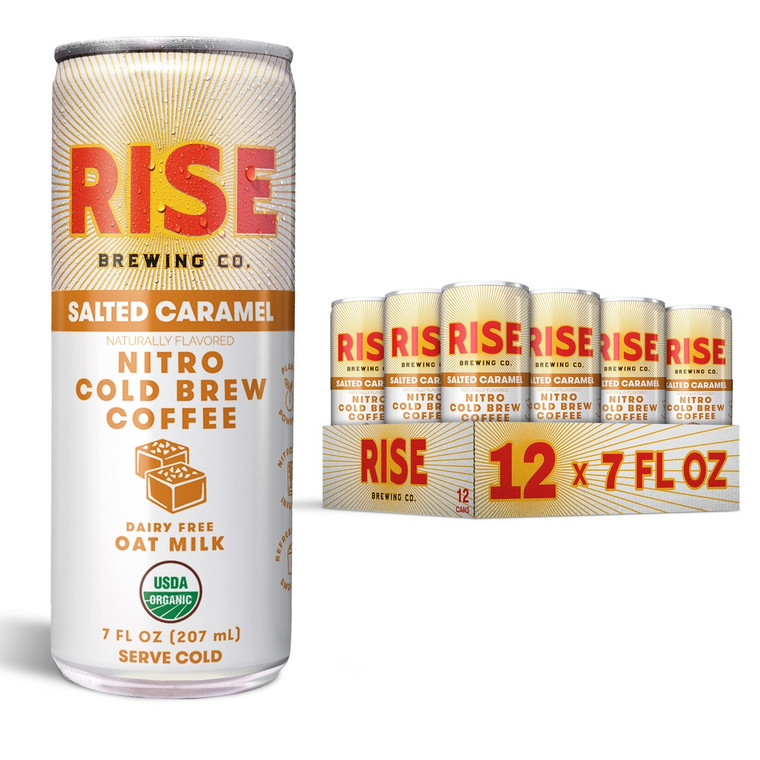
Nitro Cold Brew Coffee Salted Caramel Latte - 7 fl oz
Rise Brewing Co
$3.19
(No reviews yet)

Write a Review
Rise Brewing Co
Nitro Cold Brew Coffee Salted Caramel Latte - 7 fl oz
Coffeehouse-quality nitrogen-infused cold brew — without the line, the dairy, or the compromise. Rise Brewing Co.'s Salted Caramel Nitro Cold Brew delivers a cascade of micro-bubbles that create a genuinely creamy, velvety texture from the nitrogen alone — no milk, no cream, no stabilizers. It's award-winning for a reason: the salted caramel balance is dialed in to be complex without tipping into candy-sweet territory.
- Ready to drink, anywhere: Crack it open at your desk, in the car, or post-workout — 90 mg of caffeine from organic cold brew coffee, in a format that needs nothing added and nothing heated.
- Nitrogen infusion, certified organic ingredients: The cascading nitro pour is what separates this from every shelf-stable RTD coffee. No blender, no frother — the can does the work. Certified Organic and Non-GMO.
- Built for dairy-free and plant-based lifestyles: Fully vegan and dairy-free — verified by certification, not just by omission.
Rise Brewing Co. set out to answer a specific question: why should a creamy, nitrogen-infused latte require a trip to a coffee shop? The Salted Caramel Nitro Cold Brew Latte answers it in a 7 oz can — organic cold brew steeped slow, nitrogen-charged for a silky cascade finish, and flavored with a salted caramel profile that reviewers consistently describe as balanced rather than cloying.
Each 7 oz serving delivers 90 mg of natural caffeine from cold-brewed organic coffee — enough for a real lift without the jitter-edge of heavily concentrated espresso shots. The nitrogen infusion creates micro-bubbles that lend a creamy mouthfeel typically achieved only with milk or cream — here, it's entirely plant-based and dairy-free, making it a natural fit for vegan and dairy-free lifestyles, though those following strict keto, paleo, or carnivore protocols should review the carbohydrate content from the organic cane sugar before making it a regular. Sold in multi-can packs, it's designed to be your reliable weekday ritual, not a one-off treat.
Most ready-to-drink coffees on a grocery shelf fall into two camps: watery iced coffees loaded with dairy and sweeteners, or hyper-caffeinated concentrates that don't drink like real coffee. Rise sits in neither category. Certified Organic ingredients, Non-GMO, fully vegan — this is a category of one at the intersection of barista technique and clean-label standards. The nitrogen canister isn't a gimmick; it's the mechanism that makes this canned nitro cold brew structurally different from anything you'll find in a standard refrigerated grab-and-go case.
One important note on serving: Do not shake the can. Nitrogen-infused carbonation will release rapidly if agitated. Tilt, crack, and pour (or drink directly) for the intended cascading effect. Cans are shelf-stable at room temperature until opened and are best enjoyed chilled — simply refrigerate ahead of time or serve over ice, and consume promptly once opened. Rise sources its coffee through organic-certified supply chains committed to Non-GMO standards, though a specific single-origin growing region is not designated for this blend.
Shoppers who've tried it speak plainly about why they kept coming back. Customers describe it as a genuine convert-maker — the kind of organic ready-to-drink coffee that replaces a café habit rather than supplementing it:
Certified Organic, Non-GMO, dairy-free, and vegan. Store at room temperature; refrigerate before serving for best experience. Do not freeze.
Ingredients: Water, organic oats, organic coffee, organic sunflower oil, less than 2% of potassium carbonate, organic cane sugar, sea salt, organic natural caramel flavor.
Common Questions
How does 90 mg of caffeine in this can compare to a standard cup of coffee or espresso?
A standard 8 oz brewed cup of coffee contains roughly 80-100 mg of caffeine, so the 90 mg in this 7 oz can is roughly equivalent to a single cup of drip coffee. A single shot of espresso typically delivers 60-75 mg, while a double shot runs 120-150 mg. Most ready-to-drink canned coffees in grocery stores range from 100-300 mg per can, often using concentrated robusta beans or added caffeine to hit those numbers. Rise uses cold-brewed organic coffee as its only caffeine source, meaning the 90 mg comes from the natural extraction of coffee solubles at low temperature over an extended steep time — not from added caffeine isolates or high-caffeine robusta blends.
What exactly does nitrogen infusion do to a cold brew coffee, and why does it make the drink taste creamier?
Nitrogen gas (N2) is nearly insoluble in liquid compared to CO2, which means when it's forced into cold brew under pressure, it creates extremely fine, dense micro-bubbles rather than the large carbonation bubbles you'd get from sparkling water or soda. Those micro-bubbles produce a thick, velvety mouthfeel — the same mechanism used in nitrogen-infused Guinness stout — that mimics the texture of milk fat or cream without any dairy. The cascading visual effect when poured is caused by nitrogen bubbles rising through the denser liquid and pulling the brew into a swirling pour. This is why the can must not be shaken: agitating a pressurized nitrogen vessel before opening causes rapid, uncontrolled gas release and destroys the micro-bubble structure responsible for the texture.
What makes this drink dairy-free and vegan, and how does it achieve a creamy texture without milk?
The creaminess in this latte comes entirely from the nitrogen infusion process rather than from any dairy or dairy substitute acting as a fat emulsifier. Many plant-based RTD coffees use oat milk, coconut cream, or cashew milk to approximate dairy texture, but nitrogen-infused cold brew can achieve a comparable mouthfeel through gas physics alone. The product is certified dairy-free and vegan, meaning the supply chain and processing facility meet third-party standards for the absence of animal-derived ingredients and cross-contamination protocols. For people with lactose intolerance, milk protein allergies, or those following a fully plant-based diet, the certification provides a documented assurance beyond the brand's self-reporting.
What do the Organic and Non-GMO certifications actually mean for a canned coffee beverage, and how can I verify them?
USDA Certified Organic on a coffee product means the coffee beans were grown without synthetic pesticides, synthetic fertilizers, or prohibited substances on land that has been verified clean for at least three years, and that the entire processing chain — roasting, brewing, canning — was audited by an accredited certifying agency. Non-GMO Project Verified is a separate third-party program run by the Non-GMO Project that tests for the presence of genetically engineered material and requires ongoing supply chain documentation. You can verify both by looking up Rise Brewing Co. in the USDA Organic Integrity Database at ams.usda.gov and in the Non-GMO Project's product finder at nongmoproject.org. These are not self-declared labels — both require annual third-party audits and can be revoked if supply chain documentation lapses.
Is this coffee suitable for someone following a keto or low-carb diet?
The exact carbohydrate count is not confirmed from the manufacturer's nutritional panel, so we cannot state a specific gram count here. However, salted caramel flavored lattes — even organic ones — typically contain added cane sugar, which contributes carbohydrates that would count against a strict keto threshold of 20-50 g net carbs per day. Anyone following a therapeutic ketogenic protocol should check the Nutrition Facts panel on the can for total carbohydrates and added sugars before incorporating it regularly. For paleo adherents, the organic and non-GMO certifications align well with sourcing principles, but the presence of any grain-based milk (such as oat milk, if used) would disqualify it under strict paleo rules. Confirming the full ingredient list directly from Rise Brewing Co.'s website or the can label is the most reliable path before making a diet-fit determination.
Why does Rise describe this as award-winning, and what category of RTD coffee is it competing in?
Rise Brewing Co. has received recognition within the specialty beverage and natural food industry for its nitro cold brew line, competing in the ready-to-drink (RTD) coffee segment — a category that grew to over $4 billion in U.S. retail sales by the early 2020s. Within that category, nitrogen-infused cold brew occupies a premium tier distinct from standard iced coffee, sweetened canned lattes, and espresso-based RTD drinks. The specific competitive differentiator here is the intersection of nitrogen infusion, certified organic ingredients, and full dairy-free vegan compliance — a combination that remains uncommon among mass-market RTD coffee brands. Most mass-market nitro cold brews either omit the dairy-free certification or skip the organic sourcing, positioning Rise in a narrower premium segment with fewer direct competitors.
How should I store and serve this can to get the best nitrogen cascade effect?
Store the can at room temperature until you're ready to drink it, then refrigerate it until cold — the nitrogen cascade is most visually pronounced and the mouthfeel most pronounced when the liquid is cold. Do not freeze the can, as this can damage the pressurized nitrogen system and alter the beverage's structure. When you're ready to open it, do not shake the can under any circumstances — nitrogen-pressurized cans release gas rapidly when agitated, which disrupts the micro-bubble structure and diminishes the creamy texture. Simply tilt the can, open it, and either pour slowly into a glass to watch the cascade or drink directly from the can. The 7 oz format is sized as a single serving, so there's no need to reseal or store a partial can.
Each 7 oz serving delivers 90 mg of natural caffeine from cold-brewed organic coffee — enough for a real lift without the jitter-edge of heavily concentrated espresso shots. The nitrogen infusion creates micro-bubbles that lend a creamy mouthfeel typically achieved only with milk or cream — here, it's entirely plant-based and dairy-free, making it a natural fit for vegan and dairy-free lifestyles, though those following strict keto, paleo, or carnivore protocols should review the carbohydrate content from the organic cane sugar before making it a regular. Sold in multi-can packs, it's designed to be your reliable weekday ritual, not a one-off treat.
Most ready-to-drink coffees on a grocery shelf fall into two camps: watery iced coffees loaded with dairy and sweeteners, or hyper-caffeinated concentrates that don't drink like real coffee. Rise sits in neither category. Certified Organic ingredients, Non-GMO, fully vegan — this is a category of one at the intersection of barista technique and clean-label standards. The nitrogen canister isn't a gimmick; it's the mechanism that makes this canned nitro cold brew structurally different from anything you'll find in a standard refrigerated grab-and-go case.
One important note on serving: Do not shake the can. Nitrogen-infused carbonation will release rapidly if agitated. Tilt, crack, and pour (or drink directly) for the intended cascading effect. Cans are shelf-stable at room temperature until opened and are best enjoyed chilled — simply refrigerate ahead of time or serve over ice, and consume promptly once opened. Rise sources its coffee through organic-certified supply chains committed to Non-GMO standards, though a specific single-origin growing region is not designated for this blend.
Shoppers who've tried it speak plainly about why they kept coming back. Customers describe it as a genuine convert-maker — the kind of organic ready-to-drink coffee that replaces a café habit rather than supplementing it:
- "Salted Caramel is my favorite flavor and I highly recommend it!" — Zachary Vinci, Verified Buyer
- "I love that this dairy free latte has the perfect balance of sweet caramel and rich coffee notes - a great on the go option!!" — Ashley Perez, Verified Buyer
- "Such a good and refreshing flavor, not overly sweet or artificial tasting" — Haley, Verified Buyer
Certified Organic, Non-GMO, dairy-free, and vegan. Store at room temperature; refrigerate before serving for best experience. Do not freeze.
Ingredients: Water, organic oats, organic coffee, organic sunflower oil, less than 2% of potassium carbonate, organic cane sugar, sea salt, organic natural caramel flavor.
Common Questions
How does 90 mg of caffeine in this can compare to a standard cup of coffee or espresso?
A standard 8 oz brewed cup of coffee contains roughly 80-100 mg of caffeine, so the 90 mg in this 7 oz can is roughly equivalent to a single cup of drip coffee. A single shot of espresso typically delivers 60-75 mg, while a double shot runs 120-150 mg. Most ready-to-drink canned coffees in grocery stores range from 100-300 mg per can, often using concentrated robusta beans or added caffeine to hit those numbers. Rise uses cold-brewed organic coffee as its only caffeine source, meaning the 90 mg comes from the natural extraction of coffee solubles at low temperature over an extended steep time — not from added caffeine isolates or high-caffeine robusta blends.
What exactly does nitrogen infusion do to a cold brew coffee, and why does it make the drink taste creamier?
Nitrogen gas (N2) is nearly insoluble in liquid compared to CO2, which means when it's forced into cold brew under pressure, it creates extremely fine, dense micro-bubbles rather than the large carbonation bubbles you'd get from sparkling water or soda. Those micro-bubbles produce a thick, velvety mouthfeel — the same mechanism used in nitrogen-infused Guinness stout — that mimics the texture of milk fat or cream without any dairy. The cascading visual effect when poured is caused by nitrogen bubbles rising through the denser liquid and pulling the brew into a swirling pour. This is why the can must not be shaken: agitating a pressurized nitrogen vessel before opening causes rapid, uncontrolled gas release and destroys the micro-bubble structure responsible for the texture.
What makes this drink dairy-free and vegan, and how does it achieve a creamy texture without milk?
The creaminess in this latte comes entirely from the nitrogen infusion process rather than from any dairy or dairy substitute acting as a fat emulsifier. Many plant-based RTD coffees use oat milk, coconut cream, or cashew milk to approximate dairy texture, but nitrogen-infused cold brew can achieve a comparable mouthfeel through gas physics alone. The product is certified dairy-free and vegan, meaning the supply chain and processing facility meet third-party standards for the absence of animal-derived ingredients and cross-contamination protocols. For people with lactose intolerance, milk protein allergies, or those following a fully plant-based diet, the certification provides a documented assurance beyond the brand's self-reporting.
What do the Organic and Non-GMO certifications actually mean for a canned coffee beverage, and how can I verify them?
USDA Certified Organic on a coffee product means the coffee beans were grown without synthetic pesticides, synthetic fertilizers, or prohibited substances on land that has been verified clean for at least three years, and that the entire processing chain — roasting, brewing, canning — was audited by an accredited certifying agency. Non-GMO Project Verified is a separate third-party program run by the Non-GMO Project that tests for the presence of genetically engineered material and requires ongoing supply chain documentation. You can verify both by looking up Rise Brewing Co. in the USDA Organic Integrity Database at ams.usda.gov and in the Non-GMO Project's product finder at nongmoproject.org. These are not self-declared labels — both require annual third-party audits and can be revoked if supply chain documentation lapses.
Is this coffee suitable for someone following a keto or low-carb diet?
The exact carbohydrate count is not confirmed from the manufacturer's nutritional panel, so we cannot state a specific gram count here. However, salted caramel flavored lattes — even organic ones — typically contain added cane sugar, which contributes carbohydrates that would count against a strict keto threshold of 20-50 g net carbs per day. Anyone following a therapeutic ketogenic protocol should check the Nutrition Facts panel on the can for total carbohydrates and added sugars before incorporating it regularly. For paleo adherents, the organic and non-GMO certifications align well with sourcing principles, but the presence of any grain-based milk (such as oat milk, if used) would disqualify it under strict paleo rules. Confirming the full ingredient list directly from Rise Brewing Co.'s website or the can label is the most reliable path before making a diet-fit determination.
Why does Rise describe this as award-winning, and what category of RTD coffee is it competing in?
Rise Brewing Co. has received recognition within the specialty beverage and natural food industry for its nitro cold brew line, competing in the ready-to-drink (RTD) coffee segment — a category that grew to over $4 billion in U.S. retail sales by the early 2020s. Within that category, nitrogen-infused cold brew occupies a premium tier distinct from standard iced coffee, sweetened canned lattes, and espresso-based RTD drinks. The specific competitive differentiator here is the intersection of nitrogen infusion, certified organic ingredients, and full dairy-free vegan compliance — a combination that remains uncommon among mass-market RTD coffee brands. Most mass-market nitro cold brews either omit the dairy-free certification or skip the organic sourcing, positioning Rise in a narrower premium segment with fewer direct competitors.
How should I store and serve this can to get the best nitrogen cascade effect?
Store the can at room temperature until you're ready to drink it, then refrigerate it until cold — the nitrogen cascade is most visually pronounced and the mouthfeel most pronounced when the liquid is cold. Do not freeze the can, as this can damage the pressurized nitrogen system and alter the beverage's structure. When you're ready to open it, do not shake the can under any circumstances — nitrogen-pressurized cans release gas rapidly when agitated, which disrupts the micro-bubble structure and diminishes the creamy texture. Simply tilt the can, open it, and either pour slowly into a glass to watch the cascade or drink directly from the can. The 7 oz format is sized as a single serving, so there's no need to reseal or store a partial can.
- __Storage_Location:
- Dry
- __Volume:
- 400
- __Owner:
- TCFarm
- __badge:
- Organic