


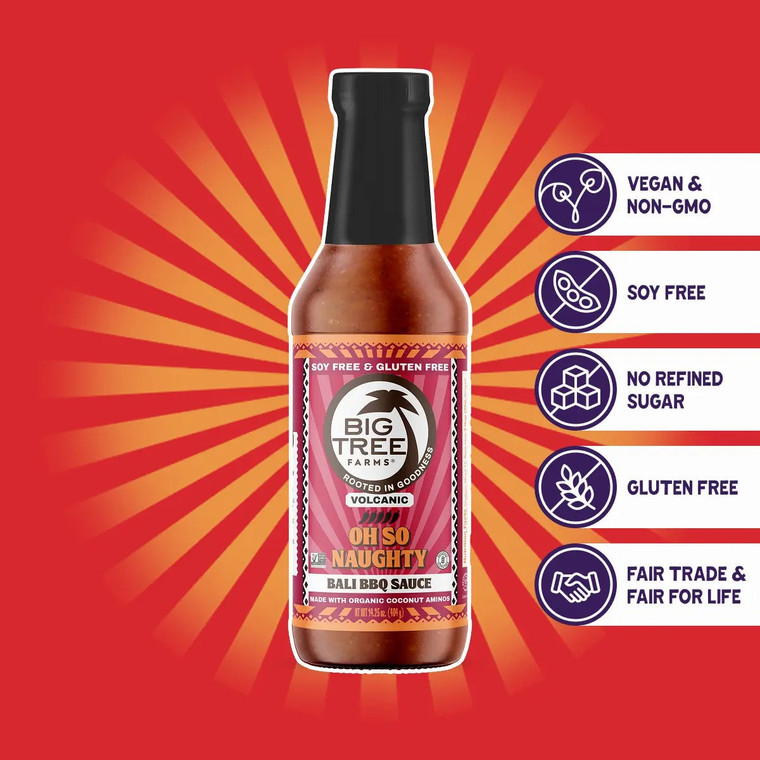
Oh So Naughty Bali Bbq Sauce - 14.25 oz
Big Tree FarmsWrite a Review
Big Tree Farms
Oh So Naughty Bali Bbq Sauce - 14.25 oz
- Works far beyond the grill: use as a BBQ glaze, stir into noodle or grain bowls, drop into chili or curry, or toss with cruciferous vegetables to add heat and depth
- Built on Coco Aminos + coconut nectar — the base is sweetened and seasoned without cane sugar or soy sauce, giving depth without the processed sweetness of conventional BBQ sauces
- Fits paleo, soy-free, and grain-free lifestyles — the formula skips gluten, soy, and refined sugar by design, not as an afterthought
Most hot sauces and BBQ sauces chase heat as a stunt. Oh So Naughty's XXX Hot Bali BBQ Sauce chases authenticity — the kind of heat Chef Maya grew up with in Indonesia and co-founder Geoff experienced over three decades living in Bali. The Original Naughty formula was already built on 7 Pot Brain Strain, ginger, garlic, tamarind, and lemongrass. But side-by-side with real Indonesian cooking, it fell short. This version is the correction.
The 7 Pot Brain Strain is the structural backbone here: a chili related to the Trinidad Moruga Scorpion, named because one pepper can theoretically spice seven cooking pots. Amplifying it wasn't enough — the team harnessed the heat with aromatics, coconut nectar for balanced sweetness, and Coco Aminos in place of conventional soy sauce. The heat doesn't hit the front of your palate immediately. You taste the sauce's layered Balinese flavors first — tamarind brightness, lemongrass lift, ginger warmth — and then the 7 Pot Brain Strain shifts in and builds. That delay is intentional and is what separates this from face-melting novelty sauces that sacrifice flavor for shock.
Versatility is built into the formula. Use it as a glaze on grilled proteins, as the heat element in a stir-fry or grain bowl, stirred into chili or curry by the drop or the spoonful, or tossed with roasted or raw cruciferous vegetables for a sauce that adds both acid-brightness and fire. The Coco Aminos base also makes it a natural fit for marinades where a soy-heavy sauce would overpower.
Formulated without gluten, soy, or refined cane sugar, this sauce fits paleo, soy-free, and grain-free eating patterns. Store in a dry, cool place before opening; refrigerate after opening.
INGREDIENTS -
Common Questions
How hot is the 7 Pot Brain Strain chili compared to other well-known hot peppers?
The 7 Pot Brain Strain is a hybrid of the Trinidad Moruga Scorpion and typically measures between 1,000,000 and 1,350,000 Scoville Heat Units (SHU), placing it in the same tier as the Carolina Reaper and well above the habanero, which tops out around 350,000 SHU. For reference, a standard jalapeño sits between 2,500 and 8,000 SHU, meaning the 7 Pot Brain Strain is roughly 150 to 500 times hotter by that measure. Its name comes from Trinidadian folklore: a single pepper was said to be potent enough to season seven pots of stew. In this sauce, that pepper is the structural backbone, but it's balanced with tamarind, lemongrass, ginger, and coconut nectar so the heat builds progressively rather than arriving as an immediate assault.
What is Coco Aminos and how does it differ from soy sauce in a recipe?
Coco Aminos is a liquid condiment made from the fermented sap of coconut blossoms, producing a dark, savory sauce with roughly 17 amino acids and about 73 milligrams of sodium per teaspoon — compared to standard soy sauce, which typically contains 280 to 320 milligrams of sodium per teaspoon. It contains no soy, no gluten, and no wheat, making it suitable for paleo, soy-free, and grain-free diets. Flavor-wise, it is slightly sweeter and milder than soy sauce with less of the sharp fermented edge, which is why it works well in marinades and sauces where soy would otherwise dominate. In this formula, Coco Aminos provides the umami depth and salinity without the allergen load that conventional soy-based sauces carry.
What does the tamarind in this sauce actually do flavor-wise, and is it the same tamarind used in Indonesian cooking?
Tamarind is a sour, slightly sweet fruit paste made from the pulp of Tamarindus indica pods, and it provides acidity through tartaric acid — a compound rare in most fruits — rather than the citric acid you'd find in lemon or lime. In Indonesian cuisine, tamarind (known locally as asam jawa) is a foundational souring agent used in dishes like soto, gulai, and various sambals, offering a deeper, more complex tartness than vinegar-based acids. In a BBQ sauce context, that tartness does two things: it brightens the overall flavor profile by cutting through the richness of proteins, and it balances the sweetness of the coconut nectar so the sauce doesn't tip into cloying territory. Its presence here is one of the markers that distinguishes this formula from American-style BBQ sauces built around tomato paste and distilled white vinegar.
Is this sauce compatible with paleo, keto, or soy-free diets?
The sauce is formulated without gluten, soy, or refined cane sugar, which satisfies the elimination criteria for paleo and soy-free eating patterns. The sweetness comes from coconut nectar, which has a glycemic index of approximately 35 compared to refined cane sugar's GI of 60 to 65, though it still contains carbohydrates — so strict keto users should account for serving size and total net carbs per tablespoon when tracking macros. Carnivore dieters who include condiments should be aware it contains plant-derived ingredients including chili, tamarind, and lemongrass, which some strict carnivore protocols exclude. For paleo and grain-free adherents, the Coco Aminos base replaces conventional soy sauce cleanly, and the absence of corn syrup or industrial sweeteners keeps it within most paleo frameworks.
What are the best ways to use this as a cooking ingredient rather than just a table sauce?
Because the heat in this sauce builds gradually rather than front-loading, it integrates well into cooked dishes without burning off into pure bitterness the way some high-capsaicin sauces do. As a glaze, brush it onto chicken thighs, pork ribs, salmon, or cauliflower steaks in the last 5 to 10 minutes of grill or oven time so the coconut nectar caramelizes without scorching. In stir-fries or grain bowls, it works as the heat and acid element — one to two tablespoons typically replaces the combination of chili paste and soy sauce a recipe might otherwise call for. Stirred into chili or curry by the teaspoon, it adds Balinese aromatic complexity alongside heat without requiring you to source lemongrass, galangal, or tamarind separately. For marinades, the Coco Aminos base tenderizes proteins via amino acid action while the tamarind's tartaric acid provides additional enzymatic breakdown, making it effective even for tougher cuts with a 2 to 4 hour soak.
How does the flavor profile of this sauce compare to other Indonesian-style sambals or Bali-inspired condiments on the market?
Most commercially available Indonesian-style sauces in the Western market are built on a sambal oelek base — raw chili, vinegar, and salt — which delivers direct, uncomplicated heat without the aromatic layering of a full Balinese spice paste. This sauce incorporates lemongrass, ginger, garlic, and tamarind, which are the foundational aromatics of bumbu, the spice paste underlying most Balinese cooking, giving it significantly more aromatic complexity than sambal oelek products. The 7 Pot Brain Strain provides substantially more heat than the red cayenne or fresno chilies used in most shelf-stable Indonesian-inspired sauces, while the coconut nectar adds a sweetness that mirrors the palm sugar commonly used in Indonesian cooking. The result is closer in structure to a cooked Balinese chili condiment than to the raw chili pastes most Western consumers associate with Indonesian heat.
How should this sauce be stored, and how long does it remain usable after opening?
Before opening, store in a cool, dry place away from direct sunlight; the high acidity from tamarind and the antimicrobial properties of garlic and ginger provide natural preservation at ambient temperatures. After opening, refrigerate and use within 90 days for optimal flavor integrity — the aromatic compounds in lemongrass and ginger begin to oxidize and flatten over time, even under refrigeration. Visually inspect for any separation beyond normal oil or water stratification, off odors, or mold at the jar neck before each use. The coconut nectar and Coco Aminos in the formula both have low water activity levels, which slows microbial growth, but refrigeration after opening is still the correct practice for any opened fermented or sugar-containing condiment.
- __Storage_Location:
- Dry
- __Volume:
- 400
- __Owner:
- TCFarm
- __badge:
- for delivery by 10/21