

Sale
Organic Edamame - 10 oz
Sno Pac Foods
$4.89
$3.79
(No reviews yet)

Write a Review
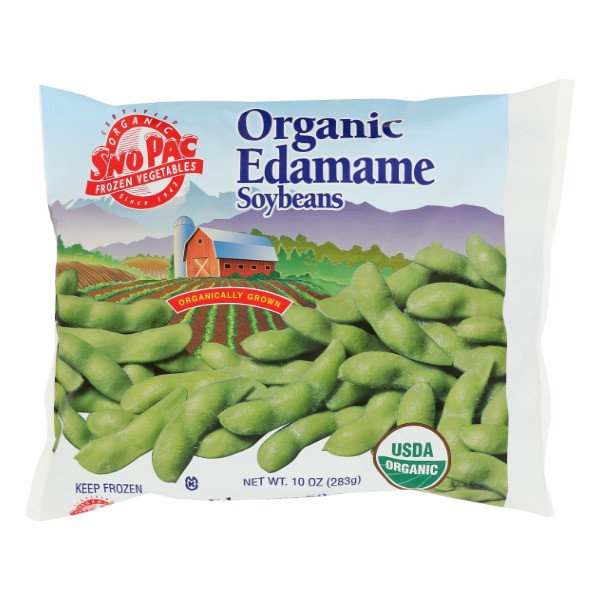
Sno Pac Foods
Organic Edamame - 10 oz
Sno Pac's organic edamame is one ingredient — certified organic soybeans — picked and frozen at peak maturity to lock in 11 grams of plant protein and 5 grams of fiber per serving. Grown without synthetic pesticides, herbicides, or GMO seed, these whole soybeans deliver the clean, green flavor and firm bite that grocery-store conventional edamame simply can't match on provenance or farming standards.
- Steam or boil straight from frozen for a quick high-protein snack, stir into grain bowls, fried rice, or grain salads, or puree into edamame hummus for a party-ready dip.
- 11g protein and 5g dietary fiber per 175g serving with only 100 calories and 5mg sodium — one of the most nutrient-dense frozen vegetables in the case, certified USDA Organic.
- Certified Organic, gluten-free, dairy-free, and vegan — fits plant-based, flexitarian, and allergen-sensitive diets. Keep frozen until use; no additives, no preservatives, no added sodium.
Sno Pac has been farming and freezing organic vegetables in the Upper Midwest for decades, and their edamame reflects that singular focus: one ingredient, sourced from certified organic fields, quick-frozen to preserve the natural sweetness and satisfying chew of soybeans harvested at their optimal stage of maturity.
Each 10 oz bag contains approximately two 175g servings of whole edamame — just the beans, no pods, no salt, no fillers. At 100 calories per serving, each portion delivers 11 grams of complete plant protein, 5 grams of dietary fiber (18% DV), 8 grams of total carbohydrate, and only 5mg of sodium. The complete amino acid profile of soybeans makes this one of the rare plant foods that can genuinely anchor a protein-forward meal without supplementation.
Nutritional highlights per serving (175g): 100 calories · 5g total fat · 0g saturated fat · 0mg cholesterol · 5mg sodium · 8g carbohydrates · 5g dietary fiber · 2g total sugars (0g added) · 11g protein.
From frozen, steam for 4–5 minutes or boil for 3–4 minutes and serve lightly salted as a snack. Stir into vegetable fried rice, toss into a miso-dressed grain bowl, fold into a cold soba noodle salad, or blend with garlic, lemon, and olive oil for a vibrant edamame dip. Because no salt is added in processing, you control the seasoning entirely — an advantage over most pre-salted frozen edamame options.
Certified USDA Organic, certified gluten-free, dairy-free, and vegan. Store frozen; do not refreeze after thawing.
Ingredients: Organic Soybeans.
Common Questions
How does organic frozen edamame compare nutritionally to conventional frozen edamame?
The core macronutrient profile is broadly similar between organic and conventional frozen edamame — both typically land near 100 calories, 11 grams of protein, and 5 grams of fiber per 175g serving. The meaningful difference lies in what is absent rather than what is present: certified organic soybeans are grown without synthetic pesticides, herbicides like glyphosate, or synthetic fertilizers, and organic certification prohibits GMO seed varieties. Conventional soybeans are one of the most heavily genetically engineered crops in the U.S., with over 90% of the domestic crop planted with GMO varieties as of recent USDA data. If non-GMO status and reduced synthetic pesticide residue are priorities, organic certification is currently the most reliable guarantee, since USDA Organic rules explicitly prohibit both.
What makes soybean protein nutritionally special compared to other plant proteins?
Soybeans are one of very few plant-based foods that provide all nine essential amino acids in proportions adequate to support human protein synthesis — a quality measured by the PDCAAS (Protein Digestibility-Corrected Amino Acid Score), where soy scores a 1.0, the maximum possible, putting it on par with eggs and casein. Most other plant proteins, including peas, rice, and wheat gluten, score meaningfully lower and are deficient in at least one essential amino acid, typically lysine or methionine. The 11 grams of protein per 175g serving here comes from whole soybeans rather than soy isolate or concentrate, meaning it arrives alongside the food's natural fiber and micronutrients rather than in stripped form. This is why edamame can genuinely anchor a protein-forward meal without needing to pair complementary plant proteins the way you would with beans and rice.
Is edamame appropriate for gluten-free, vegan, or dairy-free diets, and what about soy allergies?
This product carries certified gluten-free, vegan, and dairy-free status, and the sole ingredient is organic soybeans with no additives, cross-contaminating grains, or animal-derived processing aids. For the vast majority of people following those protocols, it is a straightforward fit. The important caveat is soy allergy: soy is one of the nine major food allergens recognized by the FDA, and edamame — being immature whole soybeans — is not appropriate for anyone with a soy allergy or sensitivity. People with thyroid conditions sometimes ask about soy's goitrogenic compounds (isoflavones that can mildly interfere with thyroid hormone synthesis); current clinical consensus is that moderate consumption poses no meaningful risk for people with normal thyroid function, though individuals on thyroid medication are generally advised to discuss soy intake with their physician.
Does edamame fit a keto or low-carb diet?
Edamame occupies an unusual position for keto: at 8 grams of total carbohydrate and 5 grams of fiber per 175g serving, the net carbohydrate count comes to approximately 3 grams per serving — low enough that many people following a ketogenic protocol (which typically targets under 20–50g net carbs daily) include it in moderate portions without disrupting ketosis. Strict carnivore diets exclude all plant foods by definition, so edamame would not be compatible there. Paleo compatibility is debated within that community — legumes are traditionally excluded from classic paleo frameworks on the basis of lectin and phytate content, though some practitioners following more flexible versions do include legumes. If you are tracking macros precisely, the 5g of fat, 11g of protein, and 3g net carbs per serving make it one of the more macro-efficient plant foods available.
How can edamame be used as a protein substitute in dishes that typically call for meat or other proteins?
Edamame holds its texture well after cooking, which makes it more versatile as a protein stand-in than softer legumes like lentils or split peas. In vegetable fried rice, it replaces diced chicken or shrimp with minimal adaptation — add it in the last 2 minutes of stir-frying since it is already cooked from frozen. For cold noodle salads (soba, rice noodles, udon), it functions as a direct protein element the way sliced grilled chicken or poached shrimp would, dressed with sesame, soy, or miso-based sauces. Blended with garlic, lemon juice, tahini, and olive oil, it becomes an edamame hummus that substitutes for chickpea hummus with a slightly sweeter, grassier flavor and comparable protein density. In grain bowls or Buddha bowls, a 175g serving adds 11g of protein alongside farro, quinoa, or brown rice without changing the cooking workflow at all, since the edamame only needs a 3–5 minute steam or boil directly from frozen.
What does USDA Organic certification actually guarantee for soybeans specifically?
USDA Organic certification requires that soybeans be grown on land that has been free of prohibited synthetic substances for at least three years prior to harvest, and that no synthetic pesticides, synthetic fertilizers, sewage sludge, or ionizing radiation are used in production. Critically for soybeans, organic certification also prohibits the use of genetically engineered (GMO) seed — this is a firm rule, not a marketing claim. The certification is administered through USDA-accredited third-party certifying agents who conduct annual on-site inspections and review input records; it is not self-certified by the farmer or brand. Sno Pac carries this certification and has operated in the organic space for decades, which means their fields and practices have been subject to repeated audit cycles rather than a one-time review.
Why does the absence of added salt in processing matter, and how should I season edamame at home?
Most commercially frozen edamame — especially the single-serve microwave bags — are salted during processing, with sodium counts often landing between 200 and 450mg per serving. At 5mg of sodium per 175g serving, this product contains essentially no added sodium, which matters for anyone managing blood pressure, following a low-sodium diet, or simply preferring control over their own seasoning. At home, the standard approach is a light sprinkle of coarse sea salt or flaky salt (like Maldon) tossed over the hot beans immediately after steaming, when the surface moisture helps the salt adhere. Beyond plain salt, edamame takes well to toasted sesame oil and a pinch of chili flake, a squeeze of lime with smoked salt, or a light dusting of furikake for a Japanese-style preparation.
Each 10 oz bag contains approximately two 175g servings of whole edamame — just the beans, no pods, no salt, no fillers. At 100 calories per serving, each portion delivers 11 grams of complete plant protein, 5 grams of dietary fiber (18% DV), 8 grams of total carbohydrate, and only 5mg of sodium. The complete amino acid profile of soybeans makes this one of the rare plant foods that can genuinely anchor a protein-forward meal without supplementation.
Nutritional highlights per serving (175g): 100 calories · 5g total fat · 0g saturated fat · 0mg cholesterol · 5mg sodium · 8g carbohydrates · 5g dietary fiber · 2g total sugars (0g added) · 11g protein.
From frozen, steam for 4–5 minutes or boil for 3–4 minutes and serve lightly salted as a snack. Stir into vegetable fried rice, toss into a miso-dressed grain bowl, fold into a cold soba noodle salad, or blend with garlic, lemon, and olive oil for a vibrant edamame dip. Because no salt is added in processing, you control the seasoning entirely — an advantage over most pre-salted frozen edamame options.
Certified USDA Organic, certified gluten-free, dairy-free, and vegan. Store frozen; do not refreeze after thawing.
Ingredients: Organic Soybeans.
Common Questions
How does organic frozen edamame compare nutritionally to conventional frozen edamame?
The core macronutrient profile is broadly similar between organic and conventional frozen edamame — both typically land near 100 calories, 11 grams of protein, and 5 grams of fiber per 175g serving. The meaningful difference lies in what is absent rather than what is present: certified organic soybeans are grown without synthetic pesticides, herbicides like glyphosate, or synthetic fertilizers, and organic certification prohibits GMO seed varieties. Conventional soybeans are one of the most heavily genetically engineered crops in the U.S., with over 90% of the domestic crop planted with GMO varieties as of recent USDA data. If non-GMO status and reduced synthetic pesticide residue are priorities, organic certification is currently the most reliable guarantee, since USDA Organic rules explicitly prohibit both.
What makes soybean protein nutritionally special compared to other plant proteins?
Soybeans are one of very few plant-based foods that provide all nine essential amino acids in proportions adequate to support human protein synthesis — a quality measured by the PDCAAS (Protein Digestibility-Corrected Amino Acid Score), where soy scores a 1.0, the maximum possible, putting it on par with eggs and casein. Most other plant proteins, including peas, rice, and wheat gluten, score meaningfully lower and are deficient in at least one essential amino acid, typically lysine or methionine. The 11 grams of protein per 175g serving here comes from whole soybeans rather than soy isolate or concentrate, meaning it arrives alongside the food's natural fiber and micronutrients rather than in stripped form. This is why edamame can genuinely anchor a protein-forward meal without needing to pair complementary plant proteins the way you would with beans and rice.
Is edamame appropriate for gluten-free, vegan, or dairy-free diets, and what about soy allergies?
This product carries certified gluten-free, vegan, and dairy-free status, and the sole ingredient is organic soybeans with no additives, cross-contaminating grains, or animal-derived processing aids. For the vast majority of people following those protocols, it is a straightforward fit. The important caveat is soy allergy: soy is one of the nine major food allergens recognized by the FDA, and edamame — being immature whole soybeans — is not appropriate for anyone with a soy allergy or sensitivity. People with thyroid conditions sometimes ask about soy's goitrogenic compounds (isoflavones that can mildly interfere with thyroid hormone synthesis); current clinical consensus is that moderate consumption poses no meaningful risk for people with normal thyroid function, though individuals on thyroid medication are generally advised to discuss soy intake with their physician.
Does edamame fit a keto or low-carb diet?
Edamame occupies an unusual position for keto: at 8 grams of total carbohydrate and 5 grams of fiber per 175g serving, the net carbohydrate count comes to approximately 3 grams per serving — low enough that many people following a ketogenic protocol (which typically targets under 20–50g net carbs daily) include it in moderate portions without disrupting ketosis. Strict carnivore diets exclude all plant foods by definition, so edamame would not be compatible there. Paleo compatibility is debated within that community — legumes are traditionally excluded from classic paleo frameworks on the basis of lectin and phytate content, though some practitioners following more flexible versions do include legumes. If you are tracking macros precisely, the 5g of fat, 11g of protein, and 3g net carbs per serving make it one of the more macro-efficient plant foods available.
How can edamame be used as a protein substitute in dishes that typically call for meat or other proteins?
Edamame holds its texture well after cooking, which makes it more versatile as a protein stand-in than softer legumes like lentils or split peas. In vegetable fried rice, it replaces diced chicken or shrimp with minimal adaptation — add it in the last 2 minutes of stir-frying since it is already cooked from frozen. For cold noodle salads (soba, rice noodles, udon), it functions as a direct protein element the way sliced grilled chicken or poached shrimp would, dressed with sesame, soy, or miso-based sauces. Blended with garlic, lemon juice, tahini, and olive oil, it becomes an edamame hummus that substitutes for chickpea hummus with a slightly sweeter, grassier flavor and comparable protein density. In grain bowls or Buddha bowls, a 175g serving adds 11g of protein alongside farro, quinoa, or brown rice without changing the cooking workflow at all, since the edamame only needs a 3–5 minute steam or boil directly from frozen.
What does USDA Organic certification actually guarantee for soybeans specifically?
USDA Organic certification requires that soybeans be grown on land that has been free of prohibited synthetic substances for at least three years prior to harvest, and that no synthetic pesticides, synthetic fertilizers, sewage sludge, or ionizing radiation are used in production. Critically for soybeans, organic certification also prohibits the use of genetically engineered (GMO) seed — this is a firm rule, not a marketing claim. The certification is administered through USDA-accredited third-party certifying agents who conduct annual on-site inspections and review input records; it is not self-certified by the farmer or brand. Sno Pac carries this certification and has operated in the organic space for decades, which means their fields and practices have been subject to repeated audit cycles rather than a one-time review.
Why does the absence of added salt in processing matter, and how should I season edamame at home?
Most commercially frozen edamame — especially the single-serve microwave bags — are salted during processing, with sodium counts often landing between 200 and 450mg per serving. At 5mg of sodium per 175g serving, this product contains essentially no added sodium, which matters for anyone managing blood pressure, following a low-sodium diet, or simply preferring control over their own seasoning. At home, the standard approach is a light sprinkle of coarse sea salt or flaky salt (like Maldon) tossed over the hot beans immediately after steaming, when the surface moisture helps the salt adhere. Beyond plain salt, edamame takes well to toasted sesame oil and a pinch of chili flake, a squeeze of lime with smoked salt, or a light dusting of furikake for a Japanese-style preparation.
- __Owner:
- TCFarm
- __Storage_Location:
- Frozen
- __Volume:
- 400
- __badge:
- Organic