


Sale
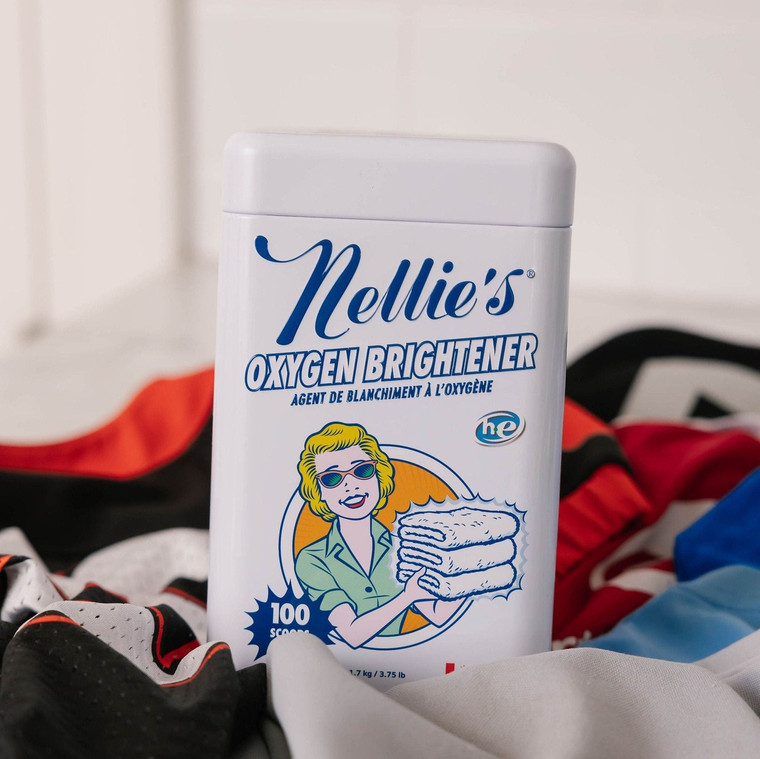
Oxygen Brightener Laundry Booster - 100 Loads
Nellies All Natural
$28.99
$25.29
(No reviews yet)

Write a Review
Nellies All Natural
Oxygen Brightener Laundry Booster - 100 Loads
Bleach belongs in the past. Nellie's Oxygen Brightener uses the power of oxygen — not chlorine — to penetrate stains, strip embedded dirt and odor, and restore brightness to both whites and colors. Made in Canada with a formula that is chlorine-free, color-safe, septic-safe, and hypoallergenic, it's the laundry booster that works harder without the harsh chemistry conventional bleach demands.
- Versatile laundry booster: Works alongside your laundry soda to lift stains, eliminate odors, and brighten an entire load — or mix into a targeted paste or spray for direct spot treatment on fabrics, shoes, and more.
- Chlorine-free, septic-safe formula: Oxygen activation does the heavy lifting without bleaching out colors or introducing chlorine compounds harmful to plumbing, septic systems, or the waterways downstream.
- Hypoallergenic and skin-considerate: Formulated without dyes or skin-sensitizing chlorine chemistry — a meaningful difference for households with sensitive skin or allergy concerns.
Nellie's Oxygen Brightener is the bleach alternative that actually delivers — a Canadian-made, oxygen-powered laundry booster designed to penetrate stains, release embedded odors, and keep both whites crisp and colors vivid without a drop of chlorine.
Each 100-scoop tin is built for real laundry loads. The formula pairs seamlessly with Nellie's Laundry Soda as a booster, and dissolves readily for use as a concentrated spray or soak for stubborn spot stains. As a natural stain remover and laundry booster, the active oxygen release mechanism works by breaking the molecular bonds that hold soil, grime, and odor compounds to fabric — a fundamentally different mechanism than chlorine bleach, which oxidizes by brute force and can degrade fabric fibers and strip color over time.
The formula is certified chlorine-free, color-safe, septic-safe, and hypoallergenic — making it suitable for households with septic systems, those washing brightly colored or delicate items, and anyone managing sensitivity to conventional bleach chemistry. Crafted in Canada and shipped directly to your door by local drivers, so you can feel confident about where your household products come from and how they arrive.
Customers consistently describe the Oxygen Brightener as a step above other oxy-cleaners on the market — effective on whites and colors alike, and versatile enough to replace a dedicated stain spray entirely.
Store in a cool, dry location with the lid sealed between uses; the powder is shelf stable and maintains potency when kept away from moisture. This is a cleaning product and is not intended for consumption, so diet-specific suitability (keto, paleo, carnivore) is not applicable here.
Ingredients: Sodium Carbonate, Sodium Percarbonate, Sodium Sulfate, Linear Alcohol Ethoxylate
Common Questions
How does oxygen brightening actually work compared to chlorine bleach?
Sodium percarbonate — the active ingredient in this formula — releases hydrogen peroxide and sodium carbonate when dissolved in water. That hydrogen peroxide then breaks apart into water and reactive oxygen ions, which attack the carbon-based bonds that hold stain molecules, soil, and odor compounds to fabric fibers. Chlorine bleach works differently: it oxidizes by force using hypochlorite ions, which are effective but non-selective — they degrade the cellulose and protein bonds in fabric alongside the stain, and strip synthetic dyes over repeated use. Oxygen-based cleaning is a targeted mechanism, which is why this formula carries a color-safe certification while chlorine bleach does not.
Is this safe to use on colored and dark fabrics without fading them?
Yes — the formula is certified color-safe, which reflects the chemistry rather than just a marketing claim. Chlorine bleach attacks chromophores, the molecular structures responsible for color in dyes, which causes irreversible fading. Sodium percarbonate's reactive oxygen targets organic soil and odor compounds rather than dye structures, making it far less likely to alter fabric color when used as directed. The color-safe certification applies to both the powder used as a laundry booster and the dissolved spray or soak application for spot treatment.
What does hypoallergenic mean in the context of this formula, and who is it suitable for?
Hypoallergenic means the formula is formulated without common sensitizing agents — specifically chlorine, optical brighteners, synthetic fragrances, and phosphates, all of which are frequent triggers for contact dermatitis and respiratory irritation. The four ingredients — Sodium Carbonate, Sodium Percarbonate, Sodium Sulfate, and Linear Alcohol Ethoxylate — are well-characterized compounds with low dermal sensitization profiles. This makes the product appropriate for households with individuals who experience skin reactions to conventional bleach or heavily fragranced laundry products, including children's clothing and bedding where residue contact with skin is prolonged.
How do I use this as a spray for spot stains rather than in the wash?
Dissolve the powder in warm water first — sodium percarbonate requires water to activate and release oxygen, so it won't work as a dry application. A concentrated mix of roughly one scoop per cup of warm water creates a solution strong enough for spot treatment. Apply it directly to the stain, agitate lightly with a brush or cloth, and allow it to dwell for 5 to 30 minutes depending on the stain's age and severity — verified buyer Jimnmnmothy specifically noted a dwell period after spraying and agitating on white running shoes. Rinse thoroughly before laundering, or launder immediately after the dwell period.
Is this formula safe for septic systems, and why do some cleaning products cause septic problems?
The septic-safe certification means the formula has been assessed to be safe for homes using septic tanks rather than municipal sewer systems. Conventional chlorine bleach is problematic for septic systems because high concentrations of hypochlorite kill the anaerobic bacteria colonies that break down waste inside the tank — those bacteria are the functional core of how a septic system works. Sodium percarbonate breaks down into water, oxygen, and sodium carbonate (a mild salt), leaving no persistent chemical residue that would disrupt bacterial populations. The linear alcohol ethoxylate surfactant in this formula is also biodegradable, which matters for both septic safety and environmental impact.
What role does each ingredient play in the cleaning process?
Sodium percarbonate is the active cleaning agent — it's the source of the oxygen release that lifts stains and neutralizes odors. Sodium carbonate, also called soda ash or washing soda, acts as a water softener and pH booster, raising the wash water to an alkaline level around pH 11 that improves the effectiveness of both the percarbonate and the surfactant. Sodium sulfate is an inert filler that gives the powder its granular flow properties and prevents clumping. Linear alcohol ethoxylate is a non-ionic surfactant that reduces surface tension, helping the activated solution penetrate fabric fibers and carry loosened soil away during rinsing.
Can this replace a dedicated stain remover spray, or is it only a laundry additive?
It functions effectively in both roles. As a laundry booster, one scoop added alongside detergent handles general brightening and odor removal across a full load. As a spot treatment, a concentrated solution mixed with warm water acts as a direct stain remover comparable to commercial spray products like OxiClean spray — verified buyer Lisa specifically noted using it as a cost-effective replacement for oxy spray. The key difference from pre-formulated sprays is that you mix the solution fresh each time, since activated sodium percarbonate loses potency within a few hours once dissolved; the dry powder in the sealed tin, however, is shelf stable and retains its activity for an extended period when stored cool and dry.
Each 100-scoop tin is built for real laundry loads. The formula pairs seamlessly with Nellie's Laundry Soda as a booster, and dissolves readily for use as a concentrated spray or soak for stubborn spot stains. As a natural stain remover and laundry booster, the active oxygen release mechanism works by breaking the molecular bonds that hold soil, grime, and odor compounds to fabric — a fundamentally different mechanism than chlorine bleach, which oxidizes by brute force and can degrade fabric fibers and strip color over time.
The formula is certified chlorine-free, color-safe, septic-safe, and hypoallergenic — making it suitable for households with septic systems, those washing brightly colored or delicate items, and anyone managing sensitivity to conventional bleach chemistry. Crafted in Canada and shipped directly to your door by local drivers, so you can feel confident about where your household products come from and how they arrive.
Customers consistently describe the Oxygen Brightener as a step above other oxy-cleaners on the market — effective on whites and colors alike, and versatile enough to replace a dedicated stain spray entirely.
- "Cost effective to use an 'oxy clean' spray replacement!" — Lisa, Verified Buyer
Store in a cool, dry location with the lid sealed between uses; the powder is shelf stable and maintains potency when kept away from moisture. This is a cleaning product and is not intended for consumption, so diet-specific suitability (keto, paleo, carnivore) is not applicable here.
Ingredients: Sodium Carbonate, Sodium Percarbonate, Sodium Sulfate, Linear Alcohol Ethoxylate
Common Questions
How does oxygen brightening actually work compared to chlorine bleach?
Sodium percarbonate — the active ingredient in this formula — releases hydrogen peroxide and sodium carbonate when dissolved in water. That hydrogen peroxide then breaks apart into water and reactive oxygen ions, which attack the carbon-based bonds that hold stain molecules, soil, and odor compounds to fabric fibers. Chlorine bleach works differently: it oxidizes by force using hypochlorite ions, which are effective but non-selective — they degrade the cellulose and protein bonds in fabric alongside the stain, and strip synthetic dyes over repeated use. Oxygen-based cleaning is a targeted mechanism, which is why this formula carries a color-safe certification while chlorine bleach does not.
Is this safe to use on colored and dark fabrics without fading them?
Yes — the formula is certified color-safe, which reflects the chemistry rather than just a marketing claim. Chlorine bleach attacks chromophores, the molecular structures responsible for color in dyes, which causes irreversible fading. Sodium percarbonate's reactive oxygen targets organic soil and odor compounds rather than dye structures, making it far less likely to alter fabric color when used as directed. The color-safe certification applies to both the powder used as a laundry booster and the dissolved spray or soak application for spot treatment.
What does hypoallergenic mean in the context of this formula, and who is it suitable for?
Hypoallergenic means the formula is formulated without common sensitizing agents — specifically chlorine, optical brighteners, synthetic fragrances, and phosphates, all of which are frequent triggers for contact dermatitis and respiratory irritation. The four ingredients — Sodium Carbonate, Sodium Percarbonate, Sodium Sulfate, and Linear Alcohol Ethoxylate — are well-characterized compounds with low dermal sensitization profiles. This makes the product appropriate for households with individuals who experience skin reactions to conventional bleach or heavily fragranced laundry products, including children's clothing and bedding where residue contact with skin is prolonged.
How do I use this as a spray for spot stains rather than in the wash?
Dissolve the powder in warm water first — sodium percarbonate requires water to activate and release oxygen, so it won't work as a dry application. A concentrated mix of roughly one scoop per cup of warm water creates a solution strong enough for spot treatment. Apply it directly to the stain, agitate lightly with a brush or cloth, and allow it to dwell for 5 to 30 minutes depending on the stain's age and severity — verified buyer Jimnmnmothy specifically noted a dwell period after spraying and agitating on white running shoes. Rinse thoroughly before laundering, or launder immediately after the dwell period.
Is this formula safe for septic systems, and why do some cleaning products cause septic problems?
The septic-safe certification means the formula has been assessed to be safe for homes using septic tanks rather than municipal sewer systems. Conventional chlorine bleach is problematic for septic systems because high concentrations of hypochlorite kill the anaerobic bacteria colonies that break down waste inside the tank — those bacteria are the functional core of how a septic system works. Sodium percarbonate breaks down into water, oxygen, and sodium carbonate (a mild salt), leaving no persistent chemical residue that would disrupt bacterial populations. The linear alcohol ethoxylate surfactant in this formula is also biodegradable, which matters for both septic safety and environmental impact.
What role does each ingredient play in the cleaning process?
Sodium percarbonate is the active cleaning agent — it's the source of the oxygen release that lifts stains and neutralizes odors. Sodium carbonate, also called soda ash or washing soda, acts as a water softener and pH booster, raising the wash water to an alkaline level around pH 11 that improves the effectiveness of both the percarbonate and the surfactant. Sodium sulfate is an inert filler that gives the powder its granular flow properties and prevents clumping. Linear alcohol ethoxylate is a non-ionic surfactant that reduces surface tension, helping the activated solution penetrate fabric fibers and carry loosened soil away during rinsing.
Can this replace a dedicated stain remover spray, or is it only a laundry additive?
It functions effectively in both roles. As a laundry booster, one scoop added alongside detergent handles general brightening and odor removal across a full load. As a spot treatment, a concentrated solution mixed with warm water acts as a direct stain remover comparable to commercial spray products like OxiClean spray — verified buyer Lisa specifically noted using it as a cost-effective replacement for oxy spray. The key difference from pre-formulated sprays is that you mix the solution fresh each time, since activated sodium percarbonate loses potency within a few hours once dissolved; the dry powder in the sealed tin, however, is shelf stable and retains its activity for an extended period when stored cool and dry.
- __Storage_Location:
- Dry
- __Volume:
- 400
- __Owner:
- TCFarm
- __badge:
- for delivery by 10/21