


Peachy Mimosa Twist Energy Drink - 12 fl oz
Yerbae
$2.79
(No reviews yet)

Write a Review
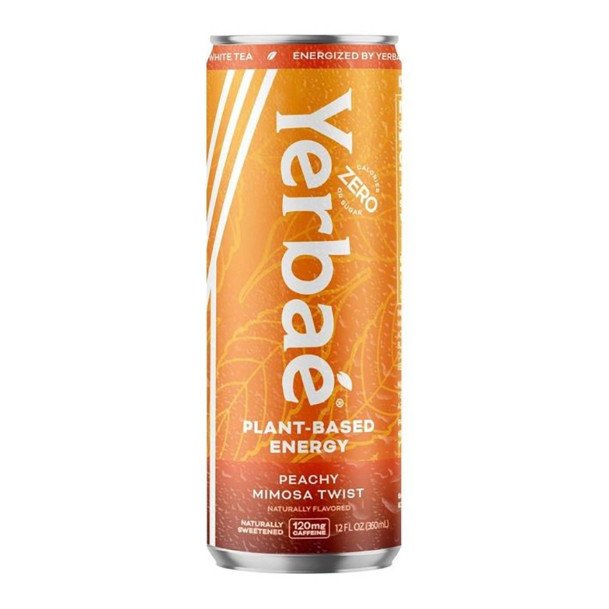
Yerbae
Peachy Mimosa Twist Energy Drink - 12 fl oz
Yerbae's Peachy Mimosa Twist delivers a sparkling lift from a plant-based caffeine blend — yerba mate, white tea, and added caffeine — with zero sugar and no artificial sweeteners. It's the effervescent, fruit-forward energy drink built for people who want functional focus without the synthetic ingredient list that defines most canned energy drinks.
- Bright, festive sparkling water format — mimosa-inspired peach flavor makes it a convincing soft drink swap for daytime sipping, brunches, or alcohol-free occasions.
- Plant-sourced energy trio: yerba mate + white tea + caffeine form the proprietary functional blend — no taurine, no artificial stimulants, no neon dye list.
- Zero sugar, stevia-sweetened, vegan-friendly — fits keto, paleo, and clean-label lifestyles; citric acid and sea salt round out the formula.
Yerbae built this can around a simple premise: sparkling water energy drinks shouldn't read like a chemistry textbook. The Peachy Mimosa Twist starts with carbonated water and layers in a proprietary functional blend of yerba mate, white tea, and caffeine — three plant-derived energy sources that provide a smoother, more sustained lift than synthetic stimulant stacks. Stevia leaf extract handles the sweetness; a touch of sea salt rounds the flavor and supports electrolyte balance. That's the entire formula.
Most mainstream energy drinks lean on taurine, artificial colors, sucralose, and a parade of synthetic B-vitamin megadoses to signal "energy." Yerbae skips all of it. The result is a 12 fl oz can that holds up as a genuine sparkling water — light, dry, and effervescent — with functional energy underneath. The peach-mimosa profile is bright and slightly tart, not syrupy, making it a natural fit anywhere you'd reach for a sparkling water or a festive non-alcoholic drink.
Sweetened exclusively with stevia leaf extract (zero grams of sugar), this drink is compatible with keto and paleo frameworks. No dairy, no gluten-containing ingredients, no soy. Store at room temperature; refrigerate before serving for best experience.
Ingredients: Carbonated Water, Natural Flavors, Citric Acid, Proprietary Functional Blend (Yerbae Mate, White Tea, Caffeine), Stevia Leaf Extract, Sea Salt.
Common Questions
How much caffeine is in a can, and how does the yerba mate plus white tea combination affect how that caffeine feels?
Yerbae lists approximately 160mg of caffeine per 12 fl oz can, sourced from the proprietary blend of yerba mate, white tea, and added caffeine. Yerba mate contains caffeine alongside theobromine and theophylline — two methylxanthines that dilate blood vessels and have a milder, longer-acting stimulant profile than caffeine alone, which is why mate drinkers commonly report less of a sharp spike-and-crash pattern. White tea contributes a smaller caffeine fraction plus L-theanine, an amino acid shown in clinical research to smooth the stimulant curve by moderating the rate at which caffeine binds to adenosine receptors. The combined effect of these three plant-derived sources tends to produce a more gradual onset and a longer window of alertness compared to a single-source synthetic caffeine hit of the same milligram total.
What does stevia leaf extract actually do to blood sugar, and is this drink safe for people monitoring glucose?
Stevia leaf extract is derived from the Stevia rebaudiana plant and contains glycoside compounds — primarily stevioside and rebaudioside A — that bind sweet receptors on the tongue without being metabolized into glucose. Multiple randomized controlled trials, including a 2003 study published in Metabolism, found that stevioside consumption did not raise blood glucose or insulin levels in participants compared to placebo. Because this drink contains zero grams of sugar and uses stevia as its only sweetener, its glycemic impact is effectively zero, making it compatible with blood sugar management protocols. Individuals on medication for diabetes should still consult a clinician, as some research suggests stevia glycosides may have mild insulin-sensitizing effects at higher doses.
Is this drink actually keto and paleo compatible, and what specifically disqualifies most mainstream energy drinks from those frameworks?
This drink contains zero grams of sugar, zero carbohydrates from sweeteners, and no grains, legumes, dairy, or artificial additives — all of which makes it compatible with strict ketogenic and paleo frameworks. Most mainstream energy drinks fail keto and paleo screening on multiple counts: a standard 16 oz Red Bull contains 51 grams of sugar and uses sucralose alongside that sugar, while many others use corn-derived maltodextrin as a filler, or synthetic B-vitamin megadoses (B6 at 250% DV, B12 at 80% DV) that paleo frameworks flag as non-ancestral supplementation. This formula's only sweetener is stevia leaf extract, which does not trigger an insulin response and is generally accepted within both keto and paleo communities. The sea salt addition provides trace sodium without any carbohydrate loading.
How does this compare to other sparkling water energy drinks like Celsius or Bubly Burst on ingredient complexity?
This drink's formula runs six ingredients: carbonated water, natural flavors, citric acid, the proprietary functional blend, stevia leaf extract, and sea salt. Celsius, by comparison, lists 13 ingredients in its standard formula, including taurine, guarana extract, ginger root, green tea extract, multiple synthetic B vitamins (B2, B3, B5, B6, B7, B12), and vitamin C — a supplementation stack approach that adds complexity and synthetic compounds. Bubly Burst Energy contains added synthetic B vitamins and uses a blend of citric and malic acids alongside natural caffeine. Yerbae's approach strips the formula to carbonated water, a single plant-based energy mechanism, one organic-origin sweetener, and a flavor system — closer to a functional sparkling water than a traditional energy drink in both ingredient count and synthetic additive load.
What are natural flavors in this context, and how can a buyer assess whether they're a concern?
Under FDA regulation 21 CFR 101.22, the term 'natural flavors' covers any flavoring derived from a plant or animal source through physical, microbiological, or fermentation processes — meaning the peachy mimosa character here comes from concentrated fruit-derived aromatic compounds rather than synthetic petrochemical analogs. The practical concern some consumers raise is that 'natural flavors' can include carrier solvents like propylene glycol or ethanol, and the specific source plant is not required to be disclosed. Buyers with strict dietary restrictions (vegan, allergy-sensitive) can contact Yerbae directly to request allergen disclosure documentation, which manufacturers are legally required to provide upon request. The remaining five ingredients in this formula are fully transparent and chemically straightforward, so natural flavors represents the only opacity in the label.
Does the sea salt in this drink actually provide meaningful electrolyte value, or is it primarily there for flavor?
Sea salt in a drink formulation at this scale (listed last, indicating the smallest quantity by weight) contributes a sodium level typically in the range of 35-75mg per can — meaningful enough to influence flavor by suppressing bitterness from stevia and enhancing perceived sweetness, but below the threshold of a true electrolyte replenishment product. For reference, a sports hydration drink like Liquid IV delivers 500mg of sodium per serving alongside potassium and glucose for cotransport. The sea salt here is better understood as a flavor-balancing tool and a minor electrolyte contribution that helps round out the drinking experience, not a post-workout recovery solution. If sodium replenishment is a primary goal, this drink's contribution would be supplementary rather than central.
Can this drink substitute for sparkling wine or a mimosa in a social setting, and what flavor profile should someone expect?
The peach-mimosa flavor profile is built around the combination of peach-derived aromatics and a citrus tartness from citric acid that approximates the bright, slightly acidic character of orange juice in a traditional mimosa. The carbonation level in a 12 fl oz energy drink can is comparable to most sparkling wines (roughly 3-4 volumes of CO2), so the effervescent mouthfeel tracks well. There is no alcohol, no residual sugar sweetness that wine provides, and no tannin — the stevia sweetness is clean and fades quickly, which gives the drink a drier finish than many juice-based mocktails. In practice it works well as a non-alcoholic brunch drink or a sparkling water alternative at
Most mainstream energy drinks lean on taurine, artificial colors, sucralose, and a parade of synthetic B-vitamin megadoses to signal "energy." Yerbae skips all of it. The result is a 12 fl oz can that holds up as a genuine sparkling water — light, dry, and effervescent — with functional energy underneath. The peach-mimosa profile is bright and slightly tart, not syrupy, making it a natural fit anywhere you'd reach for a sparkling water or a festive non-alcoholic drink.
Sweetened exclusively with stevia leaf extract (zero grams of sugar), this drink is compatible with keto and paleo frameworks. No dairy, no gluten-containing ingredients, no soy. Store at room temperature; refrigerate before serving for best experience.
Ingredients: Carbonated Water, Natural Flavors, Citric Acid, Proprietary Functional Blend (Yerbae Mate, White Tea, Caffeine), Stevia Leaf Extract, Sea Salt.
Common Questions
How much caffeine is in a can, and how does the yerba mate plus white tea combination affect how that caffeine feels?
Yerbae lists approximately 160mg of caffeine per 12 fl oz can, sourced from the proprietary blend of yerba mate, white tea, and added caffeine. Yerba mate contains caffeine alongside theobromine and theophylline — two methylxanthines that dilate blood vessels and have a milder, longer-acting stimulant profile than caffeine alone, which is why mate drinkers commonly report less of a sharp spike-and-crash pattern. White tea contributes a smaller caffeine fraction plus L-theanine, an amino acid shown in clinical research to smooth the stimulant curve by moderating the rate at which caffeine binds to adenosine receptors. The combined effect of these three plant-derived sources tends to produce a more gradual onset and a longer window of alertness compared to a single-source synthetic caffeine hit of the same milligram total.
What does stevia leaf extract actually do to blood sugar, and is this drink safe for people monitoring glucose?
Stevia leaf extract is derived from the Stevia rebaudiana plant and contains glycoside compounds — primarily stevioside and rebaudioside A — that bind sweet receptors on the tongue without being metabolized into glucose. Multiple randomized controlled trials, including a 2003 study published in Metabolism, found that stevioside consumption did not raise blood glucose or insulin levels in participants compared to placebo. Because this drink contains zero grams of sugar and uses stevia as its only sweetener, its glycemic impact is effectively zero, making it compatible with blood sugar management protocols. Individuals on medication for diabetes should still consult a clinician, as some research suggests stevia glycosides may have mild insulin-sensitizing effects at higher doses.
Is this drink actually keto and paleo compatible, and what specifically disqualifies most mainstream energy drinks from those frameworks?
This drink contains zero grams of sugar, zero carbohydrates from sweeteners, and no grains, legumes, dairy, or artificial additives — all of which makes it compatible with strict ketogenic and paleo frameworks. Most mainstream energy drinks fail keto and paleo screening on multiple counts: a standard 16 oz Red Bull contains 51 grams of sugar and uses sucralose alongside that sugar, while many others use corn-derived maltodextrin as a filler, or synthetic B-vitamin megadoses (B6 at 250% DV, B12 at 80% DV) that paleo frameworks flag as non-ancestral supplementation. This formula's only sweetener is stevia leaf extract, which does not trigger an insulin response and is generally accepted within both keto and paleo communities. The sea salt addition provides trace sodium without any carbohydrate loading.
How does this compare to other sparkling water energy drinks like Celsius or Bubly Burst on ingredient complexity?
This drink's formula runs six ingredients: carbonated water, natural flavors, citric acid, the proprietary functional blend, stevia leaf extract, and sea salt. Celsius, by comparison, lists 13 ingredients in its standard formula, including taurine, guarana extract, ginger root, green tea extract, multiple synthetic B vitamins (B2, B3, B5, B6, B7, B12), and vitamin C — a supplementation stack approach that adds complexity and synthetic compounds. Bubly Burst Energy contains added synthetic B vitamins and uses a blend of citric and malic acids alongside natural caffeine. Yerbae's approach strips the formula to carbonated water, a single plant-based energy mechanism, one organic-origin sweetener, and a flavor system — closer to a functional sparkling water than a traditional energy drink in both ingredient count and synthetic additive load.
What are natural flavors in this context, and how can a buyer assess whether they're a concern?
Under FDA regulation 21 CFR 101.22, the term 'natural flavors' covers any flavoring derived from a plant or animal source through physical, microbiological, or fermentation processes — meaning the peachy mimosa character here comes from concentrated fruit-derived aromatic compounds rather than synthetic petrochemical analogs. The practical concern some consumers raise is that 'natural flavors' can include carrier solvents like propylene glycol or ethanol, and the specific source plant is not required to be disclosed. Buyers with strict dietary restrictions (vegan, allergy-sensitive) can contact Yerbae directly to request allergen disclosure documentation, which manufacturers are legally required to provide upon request. The remaining five ingredients in this formula are fully transparent and chemically straightforward, so natural flavors represents the only opacity in the label.
Does the sea salt in this drink actually provide meaningful electrolyte value, or is it primarily there for flavor?
Sea salt in a drink formulation at this scale (listed last, indicating the smallest quantity by weight) contributes a sodium level typically in the range of 35-75mg per can — meaningful enough to influence flavor by suppressing bitterness from stevia and enhancing perceived sweetness, but below the threshold of a true electrolyte replenishment product. For reference, a sports hydration drink like Liquid IV delivers 500mg of sodium per serving alongside potassium and glucose for cotransport. The sea salt here is better understood as a flavor-balancing tool and a minor electrolyte contribution that helps round out the drinking experience, not a post-workout recovery solution. If sodium replenishment is a primary goal, this drink's contribution would be supplementary rather than central.
Can this drink substitute for sparkling wine or a mimosa in a social setting, and what flavor profile should someone expect?
The peach-mimosa flavor profile is built around the combination of peach-derived aromatics and a citrus tartness from citric acid that approximates the bright, slightly acidic character of orange juice in a traditional mimosa. The carbonation level in a 12 fl oz energy drink can is comparable to most sparkling wines (roughly 3-4 volumes of CO2), so the effervescent mouthfeel tracks well. There is no alcohol, no residual sugar sweetness that wine provides, and no tannin — the stevia sweetness is clean and fades quickly, which gives the drink a drier finish than many juice-based mocktails. In practice it works well as a non-alcoholic brunch drink or a sparkling water alternative at
- __Owner:
- TCFarm
- __Storage_Location:
- Dry
- __Volume:
- 1000
- __badge:
- Zero Sugar