

Sale
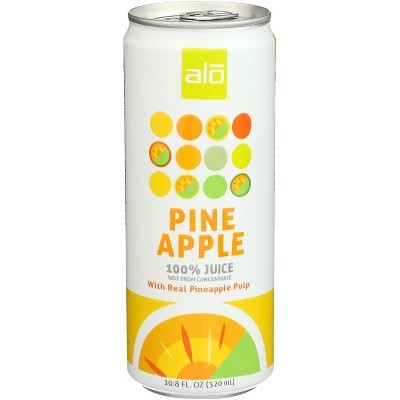
Pineapple Aloe Vera Juice - 10.8 fl oz
Alo
$2.79
$2.49
Below are the available bulk discount rates for each individual item when you purchase a certain amount
- Buy 2 - 5 and get 5% off
- Buy 6 - 11 and get 10% off
- Buy 12 or above and get 20% off
(No reviews yet)

Write a Review
Alo
Pineapple Aloe Vera Juice - 10.8 fl oz
Alo's Pineapple Juice with Pulp is exactly what it sounds like — real pineapple juice and real pineapple pulp, nothing more. While most shelf-stable juice drinks stretch flavor with added water, sweeteners, or concentrates, this bottle delivers the actual fruit in two forms: the clarified juice and the fibrous pulp that most processing strips away.
- Drink it straight, pour over ice, or use as a base for smoothies, marinades, and tropical cocktails — the pulp gives it a texture that processed juices can't match.
- Two-ingredient simplicity: Pineapple Juice and Pineapple Pulp — no added sugars, no concentrates, no preservatives, no artificial anything.
- Naturally suitable for vegan, gluten-free, and dairy-free lifestyles; store at room temperature until opened.
Alo's Pineapple Juice with Pulp is a study in restraint: two ingredients, one fruit, zero shortcuts. The juice brings brightness and natural sweetness; the pulp brings body, texture, and the fibrous character that tells you this came from an actual pineapple rather than a flavor lab.
Each 10.8 fl oz bottle is shelf-stable and single-serve — sized for a lunch bag, a desk drawer, or a post-workout reach. The inclusion of pulp isn't a gimmick; it's what separates this from clear, filtered juice that's had everything interesting processed out of it. Pulp retains some of the bromelain enzyme naturally present in pineapple, along with dietary fiber that filtered juice loses entirely.
Pineapple is one of the few fruits that contain bromelain, a proteolytic enzyme associated with supporting digestion of proteins and reducing post-exercise inflammation in some studies. While no therapeutic claims are made here, the presence of pulp means more of the whole-fruit profile is intact compared to clarified juice.
Use it straight from the bottle, over ice, blended into a smoothie, or as the acid component in a marinade for chicken, pork, or shrimp — bromelain's protein-cleaving action makes pineapple juice a genuine tenderizer, not just a flavor agent. It also mixes cleanly into non-alcoholic cocktails and mocktail builds where a clear juice would fall flat on texture.
Suitable for vegan, gluten-free, and dairy-free diets. Store at room temperature; refrigerate after opening and consume within a few days.
Ingredients: Pineapple Juice, Pineapple Pulp.
Common Questions
How does pineapple juice with pulp differ nutritionally from filtered, clarified pineapple juice?
Filtered pineapple juice is processed to remove suspended solids, which strips out dietary fiber and reduces the concentration of bromelain, the proteolytic enzyme naturally present in pineapple tissue. Pulp-inclusive juice retains measurable dietary fiber — whole pineapple contains roughly 2.3 grams of fiber per 100 grams of fruit — along with a broader range of phytonutrients that tend to concentrate in the fibrous cell walls rather than the liquid fraction. Bromelain activity is measured in GDU (gelatin digesting units) or CDU (casein digesting units), and enzyme levels are meaningfully higher in preparations that preserve pulp compared to those that clarify and heat-process the juice. The practical result is a juice that behaves more like whole fruit in your digestive tract and in culinary applications than its clear counterpart.
What exactly is bromelain and what does the research say about its effects?
Bromelain is a mixture of proteolytic (protein-digesting) enzymes extracted from pineapple, found in the fruit, stem, and juice. As a proteolytic enzyme, it cleaves peptide bonds in proteins, which is why pineapple juice is an effective meat tenderizer and why gelatin-based desserts will not set if fresh pineapple juice is added. Clinical research has examined bromelain in contexts including post-surgical swelling reduction and exercise-induced muscle soreness — a 2016 study in the journal Phytotherapy Research found supplemental bromelain (400 mg/day) reduced delayed-onset muscle soreness markers in trained athletes. Digestive applications are also studied: bromelain survives passage through the stomach to some degree and may assist protein digestion, though the enzyme quantity in a single serving of juice is lower than the concentrated doses used in clinical trials. No therapeutic claims attach to food-form bromelain, but the mechanism is real and well-characterized.
Can this juice be used as a meat tenderizer, and if so, how does that actually work?
Yes, and the mechanism is enzymatic rather than acidic — which distinguishes pineapple from citrus-based marinades. Bromelain cleaves myosin and collagen proteins in meat muscle fibers, physically softening the tissue structure when the juice is in contact with raw protein. This works on chicken breast, pork tenderloin, shrimp, and tougher cuts like flank steak or skirt steak. The key variable is contact time: 30 to 60 minutes is typically sufficient for poultry and seafood, while red meat can handle up to 2 hours. Exceeding that window, especially with seafood or thin cuts, can over-tenderize the protein to a mushy texture because bromelain continues working. Heat deactivates the enzyme, so once you cook the meat the tenderizing action stops — the juice's flavor contribution carries through, but the enzymatic effect is a raw-marinade function only.
Is this product suitable for people following vegan, gluten-free, or low-sugar diets?
The ingredient list — pineapple juice and pineapple pulp — contains no animal products, gluten-containing grains, or added sugars, making it suitable for vegan and gluten-free diets. Natural sugar content is a relevant consideration for low-sugar or diabetic diets: fresh pineapple contains approximately 10 grams of sugar per 100 grams of fruit, so a 10.8 fl oz (approximately 319 ml) bottle carries a meaningful natural sugar load — roughly 30 to 35 grams depending on concentration. That sugar is fructose and glucose from whole fruit rather than added refined sugars, but the glycemic impact is still present. This product is not well-suited to strict ketogenic protocols, where total carbohydrate intake is typically capped at 20 to 50 grams per day and fruit sugars are generally excluded. Paleo diets generally permit whole fruit and unprocessed juices, so this fits that framework comfortably.
How does the two-ingredient formulation compare to other pineapple juice products that contain additional ingredients?
Many commercial pineapple juice products include added ascorbic acid (vitamin C used as a preservative), natural flavors to compensate for flavor loss during heat processing, and added sugars or high-fructose corn syrup to standardize sweetness across varying pineapple crop quality. Some shelf-stable products also include citric acid as an acidulant. A two-ingredient product — juice and pulp — avoids all of these additions, which means the flavor profile reflects the actual pineapple source rather than a corrected or standardized version of it. The trade-off is that flavor will vary more batch to batch depending on fruit ripeness and variety, as there are no flavor additives to smooth over natural variation. For buyers who prioritize ingredient transparency, the shorter list is a meaningful signal about processing philosophy.
What are the best ways to use this juice in drinks and mocktail applications?
Pineapple juice with pulp works differently than clear juice in drink applications because the suspended solids add viscosity and a slightly opaque appearance — this gives mocktails and blended drinks more body and a less watery finish. It pairs well with coconut water, lime juice, and ginger for a non-alcoholic variation on a mule format. In blended smoothies, it functions as both the liquid base and a natural sweetener, combining well with mango, banana, or plain Greek yogurt. For sparkling builds, mix it with unflavored sparkling water in roughly a 1:2 ratio to let the pineapple flavor come through without the sweetness becoming heavy. One technical note: if you are combining it with dairy or plant-based milks in a high-acid application, bromelain can curdle milk proteins — this is not harmful, but it affects texture, so blending immediately and consuming quickly is advisable in those combinations.
How should this product be stored, and what is the realistic shelf life once opened?
Unopened bottles are shelf-stable and can be stored at room temperature away from direct sunlight and heat sources — standard pantry conditions are appropriate. Once opened, the juice should be refrigerated promptly and consumed within 3 to 5 days, which is consistent with general guidance for refrigerated fresh juice without preservatives. Pulp-containing juices can separate during refrigerated storage, which is normal — shaking or stirring before consuming redistributes the solids. There is no added citric acid or ascorbic acid in this formulation to extend post-opening stability, so the window is shorter than preserved products. Freezing is technically possible if you want to extend shelf life — the juice will retain its flavor, though some texture change in the pulp is expected after thawing.
Each 10.8 fl oz bottle is shelf-stable and single-serve — sized for a lunch bag, a desk drawer, or a post-workout reach. The inclusion of pulp isn't a gimmick; it's what separates this from clear, filtered juice that's had everything interesting processed out of it. Pulp retains some of the bromelain enzyme naturally present in pineapple, along with dietary fiber that filtered juice loses entirely.
Pineapple is one of the few fruits that contain bromelain, a proteolytic enzyme associated with supporting digestion of proteins and reducing post-exercise inflammation in some studies. While no therapeutic claims are made here, the presence of pulp means more of the whole-fruit profile is intact compared to clarified juice.
Use it straight from the bottle, over ice, blended into a smoothie, or as the acid component in a marinade for chicken, pork, or shrimp — bromelain's protein-cleaving action makes pineapple juice a genuine tenderizer, not just a flavor agent. It also mixes cleanly into non-alcoholic cocktails and mocktail builds where a clear juice would fall flat on texture.
Suitable for vegan, gluten-free, and dairy-free diets. Store at room temperature; refrigerate after opening and consume within a few days.
Ingredients: Pineapple Juice, Pineapple Pulp.
Common Questions
How does pineapple juice with pulp differ nutritionally from filtered, clarified pineapple juice?
Filtered pineapple juice is processed to remove suspended solids, which strips out dietary fiber and reduces the concentration of bromelain, the proteolytic enzyme naturally present in pineapple tissue. Pulp-inclusive juice retains measurable dietary fiber — whole pineapple contains roughly 2.3 grams of fiber per 100 grams of fruit — along with a broader range of phytonutrients that tend to concentrate in the fibrous cell walls rather than the liquid fraction. Bromelain activity is measured in GDU (gelatin digesting units) or CDU (casein digesting units), and enzyme levels are meaningfully higher in preparations that preserve pulp compared to those that clarify and heat-process the juice. The practical result is a juice that behaves more like whole fruit in your digestive tract and in culinary applications than its clear counterpart.
What exactly is bromelain and what does the research say about its effects?
Bromelain is a mixture of proteolytic (protein-digesting) enzymes extracted from pineapple, found in the fruit, stem, and juice. As a proteolytic enzyme, it cleaves peptide bonds in proteins, which is why pineapple juice is an effective meat tenderizer and why gelatin-based desserts will not set if fresh pineapple juice is added. Clinical research has examined bromelain in contexts including post-surgical swelling reduction and exercise-induced muscle soreness — a 2016 study in the journal Phytotherapy Research found supplemental bromelain (400 mg/day) reduced delayed-onset muscle soreness markers in trained athletes. Digestive applications are also studied: bromelain survives passage through the stomach to some degree and may assist protein digestion, though the enzyme quantity in a single serving of juice is lower than the concentrated doses used in clinical trials. No therapeutic claims attach to food-form bromelain, but the mechanism is real and well-characterized.
Can this juice be used as a meat tenderizer, and if so, how does that actually work?
Yes, and the mechanism is enzymatic rather than acidic — which distinguishes pineapple from citrus-based marinades. Bromelain cleaves myosin and collagen proteins in meat muscle fibers, physically softening the tissue structure when the juice is in contact with raw protein. This works on chicken breast, pork tenderloin, shrimp, and tougher cuts like flank steak or skirt steak. The key variable is contact time: 30 to 60 minutes is typically sufficient for poultry and seafood, while red meat can handle up to 2 hours. Exceeding that window, especially with seafood or thin cuts, can over-tenderize the protein to a mushy texture because bromelain continues working. Heat deactivates the enzyme, so once you cook the meat the tenderizing action stops — the juice's flavor contribution carries through, but the enzymatic effect is a raw-marinade function only.
Is this product suitable for people following vegan, gluten-free, or low-sugar diets?
The ingredient list — pineapple juice and pineapple pulp — contains no animal products, gluten-containing grains, or added sugars, making it suitable for vegan and gluten-free diets. Natural sugar content is a relevant consideration for low-sugar or diabetic diets: fresh pineapple contains approximately 10 grams of sugar per 100 grams of fruit, so a 10.8 fl oz (approximately 319 ml) bottle carries a meaningful natural sugar load — roughly 30 to 35 grams depending on concentration. That sugar is fructose and glucose from whole fruit rather than added refined sugars, but the glycemic impact is still present. This product is not well-suited to strict ketogenic protocols, where total carbohydrate intake is typically capped at 20 to 50 grams per day and fruit sugars are generally excluded. Paleo diets generally permit whole fruit and unprocessed juices, so this fits that framework comfortably.
How does the two-ingredient formulation compare to other pineapple juice products that contain additional ingredients?
Many commercial pineapple juice products include added ascorbic acid (vitamin C used as a preservative), natural flavors to compensate for flavor loss during heat processing, and added sugars or high-fructose corn syrup to standardize sweetness across varying pineapple crop quality. Some shelf-stable products also include citric acid as an acidulant. A two-ingredient product — juice and pulp — avoids all of these additions, which means the flavor profile reflects the actual pineapple source rather than a corrected or standardized version of it. The trade-off is that flavor will vary more batch to batch depending on fruit ripeness and variety, as there are no flavor additives to smooth over natural variation. For buyers who prioritize ingredient transparency, the shorter list is a meaningful signal about processing philosophy.
What are the best ways to use this juice in drinks and mocktail applications?
Pineapple juice with pulp works differently than clear juice in drink applications because the suspended solids add viscosity and a slightly opaque appearance — this gives mocktails and blended drinks more body and a less watery finish. It pairs well with coconut water, lime juice, and ginger for a non-alcoholic variation on a mule format. In blended smoothies, it functions as both the liquid base and a natural sweetener, combining well with mango, banana, or plain Greek yogurt. For sparkling builds, mix it with unflavored sparkling water in roughly a 1:2 ratio to let the pineapple flavor come through without the sweetness becoming heavy. One technical note: if you are combining it with dairy or plant-based milks in a high-acid application, bromelain can curdle milk proteins — this is not harmful, but it affects texture, so blending immediately and consuming quickly is advisable in those combinations.
How should this product be stored, and what is the realistic shelf life once opened?
Unopened bottles are shelf-stable and can be stored at room temperature away from direct sunlight and heat sources — standard pantry conditions are appropriate. Once opened, the juice should be refrigerated promptly and consumed within 3 to 5 days, which is consistent with general guidance for refrigerated fresh juice without preservatives. Pulp-containing juices can separate during refrigerated storage, which is normal — shaking or stirring before consuming redistributes the solids. There is no added citric acid or ascorbic acid in this formulation to extend post-opening stability, so the window is shorter than preserved products. Freezing is technically possible if you want to extend shelf life — the juice will retain its flavor, though some texture change in the pulp is expected after thawing.
- __Owner:
- TCFarm
- __Storage_Location:
- Dry
- __Volume:
- 500
- __badge:
- for delivery by 10/21