

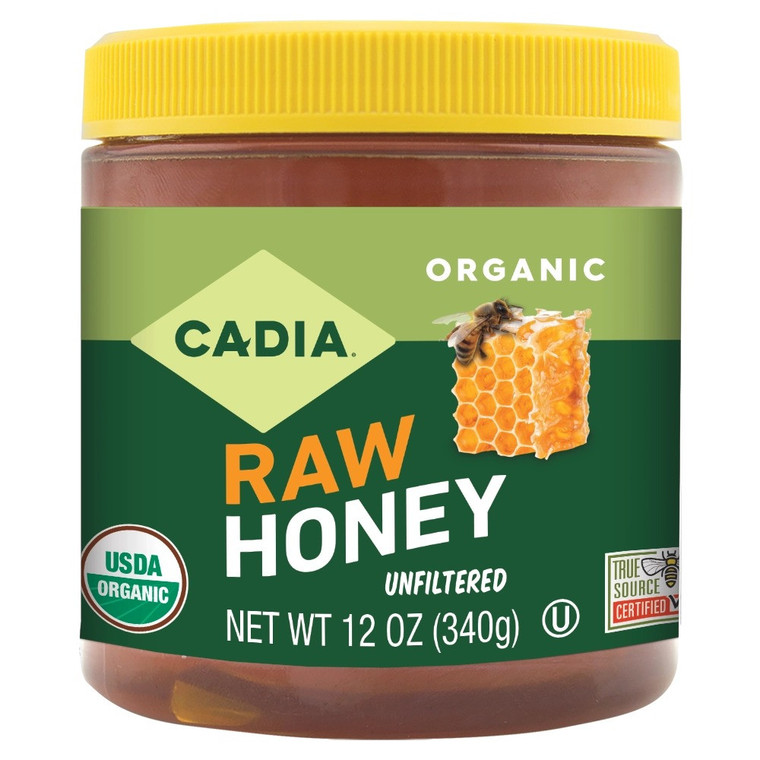
Raw Unfiltered Honey - 12 oz
Cadia
$7.49
Below are the available bulk discount rates for each individual item when you purchase a certain amount
- Buy 2 - 2 and get 2% off
- Buy 3 - 5 and get 4% off
- Buy 6 or above and get 8% off
(No reviews yet)

Write a Review
Cadia
Raw Unfiltered Honey - 12 oz
Raw and unfiltered means this honey still carries what the hive actually made — natural pollen, trace propolis, and active enzymes intact, never heated past the point where those things break down. Cadia sources it for one purpose: giving independent neighborhood grocers a sustainably sourced, non-GMO honey that can go toe-to-toe with anything on a big-box shelf, sold exclusively through the hometown store that stocked it.
- Stir into tea, drizzle over yogurt, or swap into baking and marinades anywhere you want honey's full raw texture and flavor to come through, unfiltered.
- Never ultra-filtered or heat-processed the way most jarred honey is — the natural pollen grains and enzyme activity stay intact instead of being strained and pasteurized out.
- Certified organic, kosher, and non-GMO, available exclusively at the independent neighborhood grocers who put clean-ingredient staples within reach.
Golden, slow-flowing, and cloudy the way raw, unfiltered honey looks straight out of the hive — this jar skips the high-heat processing and fine filtration that most supermarket honey goes through to stay crystal-clear on the shelf.
Each 12 oz jar is USDA Organic certified, kosher, non-GMO, and made from a single ingredient: honey from bees foraging land free of synthetic pesticides and herbicides. Nothing is added, and nothing beyond light straining is done to it before it's jarred. It fits naturally into a paleo pantry, though its natural sugar content means it's not suited to a strict keto diet.
Use it anywhere you'd reach for a sweetener with more going on: stirred into hot tea, drizzled over yogurt or oatmeal, whisked into a salad dressing or marinade, or swapped in for refined sugar in baking. Because it's raw, it pairs especially well with anything you're not cooking at high heat, where its natural enzymes and flavor stay intact.
Because it's unfiltered, this honey may crystallize into a thicker, grainy texture over time — that's a sign of purity, not spoilage. Set the jar in a warm water bath to gently reliquefy it; avoid the microwave, which can scorch the natural sugars. Store at room temperature, tightly sealed, away from direct sunlight. As with all raw honey, this product should not be fed to infants under 1 year of age.
Ingredients: Organic Honey.
Common Questions
How does this honey actually differ from the clear honey bear on a regular grocery shelf?
Most supermarket honey is ultra-filtered and pasteurized, meaning it's heated to around 145-160°F and pushed through fine filters under pressure to strip out pollen, wax, and air bubbles so it stays clear indefinitely. A 2011 Food Safety News investigation tested 60 store-bought honey samples and found that 76% had virtually no pollen left, which is one of the main ways researchers verify a honey's floral and geographic source. This jar is only lightly strained, so it keeps its pollen, fine wax particles, and propolis intact, which is why it looks cloudy and will eventually crystallize. Nutritionally the sugar content is nearly identical between raw and filtered honey, but the raw version retains more of the trace enzymes and plant compounds that heat processing degrades.
What actually happens to honey's beneficial compounds when it's heated or filtered?
Raw honey contains an enzyme called glucose oxidase, added by bees during nectar processing, which slowly converts glucose into gluconic acid and hydrogen peroxide when the honey is diluted, such as in a wound or on skin. Heating honey above about 120°F starts to deactivate this enzyme along with invertase, another bee-added enzyme that helps break down complex sugars. Raw honey also carries higher levels of phenolic compounds like chrysin, pinocembrin, and various flavonoids, which act as antioxidants; a 2009 study in the Journal of Agricultural and Food Chemistry found antioxidant activity dropped measurably in honey heated past pasteurization temperatures. None of this makes raw honey a medical treatment, but it does explain why raw and processed honey aren't nutritionally identical despite looking similar on a label.
Does this honey fit into a keto, paleo, or carnivore diet?
Honey is roughly 80% sugar by weight, and one tablespoon carries about 17 grams of carbohydrates, almost all of it glucose and fructose, so it does not fit a standard ketogenic diet where daily carbs are typically capped at 20-50 grams total. It does fit paleo eating, since paleo protocols generally allow honey as an unrefined, unprocessed natural sweetener in place of table sugar or artificial sweeteners. It has no place in carnivore diets, which by definition exclude all plant-derived foods, and honey is a plant-nectar product even though bees process it. If you're tracking macros closely, treat each tablespoon as 17g carbs and roughly 64 calories, with no meaningful protein or fat.
What can I use this honey for besides tea and toast?
In baking, substitute honey for granulated sugar at a ratio of about 3/4 cup honey per 1 cup sugar, reduce other liquids in the recipe by about 1/4 cup, and lower the oven temperature by 25°F since honey's fructose content browns faster than table sugar. It works well whisked into salad dressings and marinades in place of sugar or maple syrup, stirred into homemade granola bars as a binder, or swirled into softened butter for a compound spread. Because raw honey's natural enzymes and flavor compounds break down with sustained high heat, it's best added toward the end of cooking sauces or glazes rather than simmered for long stretches. For overnight oats, yogurt bowls, or salad dressings where nothing gets heated, this is where the raw character comes through most.
How can I verify the organic and sourcing claims on this jar?
The USDA Organic seal means the bees foraged on land that has been free of prohibited synthetic pesticides and herbicides for at least three years, and the certification is verified annually by a USDA-accredited third-party agency, not self-reported by the brand. This jar also carries True Source Certified status, an industry program created specifically to combat honey laundering and mislabeled country-of-origin honey, which has been a documented problem with cheap imported honey being relabeled to avoid tariffs and food safety checks. True Source requires traceability records back to the originating apiaries, which is a stricter standard than organic certification alone provides. Kosher certification adds a separate layer of oversight confirming the honey was processed according to kosher dietary rules with no cross-contamination from non-kosher equipment.
Why does this honey look cloudy and thick instead of clear and runny, and is that a problem?
Cloudiness and eventual crystallization are direct results of skipping the fine micro-filtration that removes pollen grains, tiny air bubbles, and glucose crystals from conventional honey. Raw honey has a naturally higher ratio of glucose to fructose than some processed versions, and glucose is the sugar that crystallizes first, forming the grainy texture you may notice after a few weeks or months on the shelf. This is a physical change, not spoilage, and honey has an effectively indefinite shelf life due to its low moisture content and high acidity, both of which inhibit microbial growth. If it crystallizes, set the sealed jar in a bowl of warm water until it loosens back up, and avoid microwaving it since concentrated heat in a small area can scorch the sugars and destroy the enzymes you're paying for in the first place.
Each 12 oz jar is USDA Organic certified, kosher, non-GMO, and made from a single ingredient: honey from bees foraging land free of synthetic pesticides and herbicides. Nothing is added, and nothing beyond light straining is done to it before it's jarred. It fits naturally into a paleo pantry, though its natural sugar content means it's not suited to a strict keto diet.
Use it anywhere you'd reach for a sweetener with more going on: stirred into hot tea, drizzled over yogurt or oatmeal, whisked into a salad dressing or marinade, or swapped in for refined sugar in baking. Because it's raw, it pairs especially well with anything you're not cooking at high heat, where its natural enzymes and flavor stay intact.
Because it's unfiltered, this honey may crystallize into a thicker, grainy texture over time — that's a sign of purity, not spoilage. Set the jar in a warm water bath to gently reliquefy it; avoid the microwave, which can scorch the natural sugars. Store at room temperature, tightly sealed, away from direct sunlight. As with all raw honey, this product should not be fed to infants under 1 year of age.
Ingredients: Organic Honey.
Common Questions
How does this honey actually differ from the clear honey bear on a regular grocery shelf?
Most supermarket honey is ultra-filtered and pasteurized, meaning it's heated to around 145-160°F and pushed through fine filters under pressure to strip out pollen, wax, and air bubbles so it stays clear indefinitely. A 2011 Food Safety News investigation tested 60 store-bought honey samples and found that 76% had virtually no pollen left, which is one of the main ways researchers verify a honey's floral and geographic source. This jar is only lightly strained, so it keeps its pollen, fine wax particles, and propolis intact, which is why it looks cloudy and will eventually crystallize. Nutritionally the sugar content is nearly identical between raw and filtered honey, but the raw version retains more of the trace enzymes and plant compounds that heat processing degrades.
What actually happens to honey's beneficial compounds when it's heated or filtered?
Raw honey contains an enzyme called glucose oxidase, added by bees during nectar processing, which slowly converts glucose into gluconic acid and hydrogen peroxide when the honey is diluted, such as in a wound or on skin. Heating honey above about 120°F starts to deactivate this enzyme along with invertase, another bee-added enzyme that helps break down complex sugars. Raw honey also carries higher levels of phenolic compounds like chrysin, pinocembrin, and various flavonoids, which act as antioxidants; a 2009 study in the Journal of Agricultural and Food Chemistry found antioxidant activity dropped measurably in honey heated past pasteurization temperatures. None of this makes raw honey a medical treatment, but it does explain why raw and processed honey aren't nutritionally identical despite looking similar on a label.
Does this honey fit into a keto, paleo, or carnivore diet?
Honey is roughly 80% sugar by weight, and one tablespoon carries about 17 grams of carbohydrates, almost all of it glucose and fructose, so it does not fit a standard ketogenic diet where daily carbs are typically capped at 20-50 grams total. It does fit paleo eating, since paleo protocols generally allow honey as an unrefined, unprocessed natural sweetener in place of table sugar or artificial sweeteners. It has no place in carnivore diets, which by definition exclude all plant-derived foods, and honey is a plant-nectar product even though bees process it. If you're tracking macros closely, treat each tablespoon as 17g carbs and roughly 64 calories, with no meaningful protein or fat.
What can I use this honey for besides tea and toast?
In baking, substitute honey for granulated sugar at a ratio of about 3/4 cup honey per 1 cup sugar, reduce other liquids in the recipe by about 1/4 cup, and lower the oven temperature by 25°F since honey's fructose content browns faster than table sugar. It works well whisked into salad dressings and marinades in place of sugar or maple syrup, stirred into homemade granola bars as a binder, or swirled into softened butter for a compound spread. Because raw honey's natural enzymes and flavor compounds break down with sustained high heat, it's best added toward the end of cooking sauces or glazes rather than simmered for long stretches. For overnight oats, yogurt bowls, or salad dressings where nothing gets heated, this is where the raw character comes through most.
How can I verify the organic and sourcing claims on this jar?
The USDA Organic seal means the bees foraged on land that has been free of prohibited synthetic pesticides and herbicides for at least three years, and the certification is verified annually by a USDA-accredited third-party agency, not self-reported by the brand. This jar also carries True Source Certified status, an industry program created specifically to combat honey laundering and mislabeled country-of-origin honey, which has been a documented problem with cheap imported honey being relabeled to avoid tariffs and food safety checks. True Source requires traceability records back to the originating apiaries, which is a stricter standard than organic certification alone provides. Kosher certification adds a separate layer of oversight confirming the honey was processed according to kosher dietary rules with no cross-contamination from non-kosher equipment.
Why does this honey look cloudy and thick instead of clear and runny, and is that a problem?
Cloudiness and eventual crystallization are direct results of skipping the fine micro-filtration that removes pollen grains, tiny air bubbles, and glucose crystals from conventional honey. Raw honey has a naturally higher ratio of glucose to fructose than some processed versions, and glucose is the sugar that crystallizes first, forming the grainy texture you may notice after a few weeks or months on the shelf. This is a physical change, not spoilage, and honey has an effectively indefinite shelf life due to its low moisture content and high acidity, both of which inhibit microbial growth. If it crystallizes, set the sealed jar in a bowl of warm water until it loosens back up, and avoid microwaving it since concentrated heat in a small area can scorch the sugars and destroy the enzymes you're paying for in the first place.
- __Storage_Location:
- Dry
- __Volume:
- 972
- __Owner:
- TCFarm