


Sheer Mineral Sunscreen Spray SPF 30 Fragrance Free - 5 fl oz
Alba Botanica
$14.99
(No reviews yet)

Write a Review
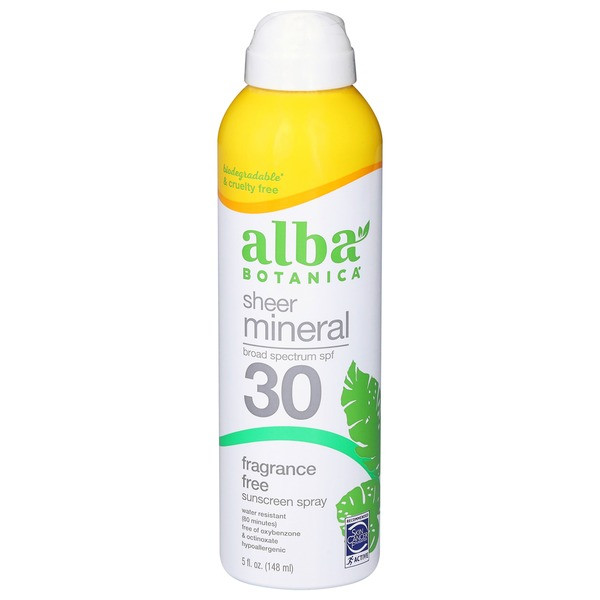
Alba Botanica
Sheer Mineral Sunscreen Spray SPF 30 Fragrance Free - 5 fl oz
Zinc oxide protection without the chemical trade-offs — Alba Botanica's Sheer Mineral Sunscreen Spray delivers broad-spectrum SPF 30 using mineral zinc oxide as its only active UV filter, with zero oxybenzone or octinoxate. The formula sprays as an air-powered mist that dries quickly without a heavy or sticky residue, and it's built around a botanical base of aloe vera, sunflower seed oil, calendula, chamomile, and green tea extract — ingredients chosen to calm and support skin rather than just sit on top of it. The biodegradable, fragrance-free formula is certified cruelty-free and carries up to 80 minutes of water resistance.
- Ideal for sensitive skin, daily wear, and active days outdoors — the fragrance-free, oxybenzone-free formula is designed for people who've had reactions to conventional chemical sunscreens, and the spray format makes reapplication fast whether you're at the beach, trail, or pool.
- Mineral-only UV filter with a verified clean formulation: zinc oxide sits on top of skin to physically deflect UVA and UVB rays rather than absorbing them chemically. Paired with a biodegradable formula and no octinoxate — two filters linked to coral reef damage and endocrine disruption — this is reef-considerate sun protection in a travel-friendly 5 fl oz bottle.
- Certified cruelty-free, fragrance-free, paraben-free, and gluten-free — suitable for vegetarian and fragrance-sensitive shoppers; FSA/HSA eligible at participating retailers.
Most spray sunscreens earn their shelf space by being convenient — not by being conscientious. They lean on chemical UV absorbers like oxybenzone and octinoxate that the FDA has flagged for further safety review, load in synthetic fragrances that trigger reactions on sensitive skin, and use formulas that persist in waterways long after the beach day is over. Alba Botanica built this spray from the opposite direction.
The Alba Botanica Sheer Mineral Sunscreen Spray is a 5 fl oz air-powered mist with broad-spectrum SPF 30 protection. Its only active UV filter is zinc oxide — a mineral that sits on the surface of skin and physically deflects both UVA and UVB radiation, rather than absorbing into the skin to neutralize UV chemically. There is no oxybenzone, no octinoxate. The formula is fragrance-free and built around a botanical supporting cast: aloe vera (aloe barbadensis leaf juice) to soothe, sunflower seed oil rich in linoleic acid, calendula flower extract, chamomile (matricaria) flower extract, green tea (camellia sinensis) leaf extract, ginkgo biloba leaf extract, jojoba esters, and shea butter ethyl esters — a roster that reads more like a facial serum than a sport sunscreen. Bentonite clay and microcrystalline cellulose help keep the mineral zinc oxide suspended and the finish matte rather than greasy. The formula is certified biodegradable and cruelty-free.
Water resistance is rated at up to 80 minutes — the maximum rating allowed under FDA sunscreen monograph rules — making it appropriate for swimming and active outdoor use. The spray format requires shaking well before use; apply liberally and spread by hand 15 minutes before sun exposure, holding the nozzle 6–8 inches from skin. Do not spray directly onto the face — spray onto hands first, then apply. Reapply after 80 minutes of water exposure, immediately after towel drying, or at least every 2 hours.
The 5 fl oz bottle is FSA/HSA eligible at participating retailers and travels easily in a beach bag or pack. Store away from excessive heat and direct sun — no refrigeration needed, making it a straightforward addition to any medicine cabinet, gym bag, or travel kit. Suitable for vegetarian and fragrance-sensitive shoppers; because this is a topical sunscreen with no dietary components, it falls outside the scope of keto, paleo, or carnivore diet classifications. Paraben-free, gluten-free, oxybenzone-free — and a considered choice for anyone seeking a reef-safe, clean mineral sunscreen without sacrificing ease of use.
Active Ingredient: Zinc Oxide 18.3%. Inactive Ingredients: Aloe Barbadensis Leaf Juice, Bentonite, Bisabolol, Butyloctyl Salicylate, Calendula Officinalis Flower Extract, Camellia Sinensis Leaf Extract, Caprylhydroxamic Acid, Caprylic/Capric Triglyceride, Capryloyl Glycerin/Sebacic Acid Copolymer, Cellulose Gum, Cetearyl Alcohol, Chamomilla Recutita (Matricaria) Flower Extract, Coco-Glucoside, Ethyl Macadamiate, Ginkgo Biloba Leaf Extract, Glycerin, Glyceryl Caprylate, Helianthus Annuus (Sunflower) Seed Oil, Jojoba Esters, Methyl Dihydroabietate, Microcrystalline Cellulose, Propanediol, Shea Butter Ethyl Esters, Sodium Gluconate, Tocopherol, Water (Aqua).
Common Questions
How does zinc oxide actually protect skin from UV radiation, and why is it different from chemical sunscreen actives?
Zinc oxide works by sitting on top of the skin's surface and physically scattering and reflecting both UVA (320–400 nm) and UVB (280–320 nm) wavelengths before they penetrate skin cells. Chemical UV filters like oxybenzone and avobenzone work differently — they absorb UV energy and convert it to heat through a chemical reaction inside the skin, which requires them to be absorbed transdermally to function. Zinc oxide does not need to be absorbed to work, which is why dermatologists frequently recommend it for sensitive and reactive skin types. The FDA's 2019 proposed sunscreen rule found that oxybenzone reaches blood plasma concentrations far exceeding the 0.5 ng/mL threshold that triggers a full safety review, while zinc oxide was placed in a Category I (generally recognized as safe and effective) grouping. This formula uses zinc oxide as its sole active, with no chemical UV absorbers.
What does the 80-minute water resistance rating actually mean, and how should I adjust reapplication in practice?
The FDA sunscreen monograph allows only two water resistance claims: 40 minutes and 80 minutes, tested using a standardized protocol in which subjects are immersed in water twice for 20-minute intervals. An 80-minute rating — the maximum allowed — means the product passed SPF testing after two full 20-minute water immersion cycles with a 15-minute rest between them, confirming the SPF 30 protection held through that exposure. It does not mean protection is guaranteed for 80 continuous minutes of swimming. In practice, reapplication is required after 80 minutes of water exposure, immediately after towel drying (which physically removes the sunscreen film), or at minimum every 2 hours even without water exposure, per FDA labeling rules. On active beach or pool days, reapplying every 60–75 minutes is a more conservative and widely recommended approach.
Why does this formula exclude oxybenzone and octinoxate specifically, and what is the environmental concern around those ingredients?
Oxybenzone and octinoxate are chemical UV filters that have been detected in coral reef ecosystems at concentrations associated with coral bleaching, DNA damage in juvenile corals, and endocrine disruption in marine organisms. Hawaii became the first U.S. state to ban sunscreens containing both ingredients, effective January 2021, citing studies showing oxybenzone causes coral bleaching at concentrations as low as 62 parts per trillion. Octinoxate has similarly been flagged for hormonal activity in aquatic species. Beyond marine toxicity, oxybenzone has been detected in human breast milk, amniotic fluid, and urine at measurable concentrations following topical application, which prompted the FDA's call for further safety data. This formula omits both compounds entirely, and the biodegradable certification indicates the full formula has been tested to break down in the environment rather than persist in waterways.
What are the main botanical ingredients in this sunscreen and what is each one understood to do for skin?
Aloe barbadensis leaf juice is the first inactive ingredient listed, meaning it is present in the highest concentration among the inactives; aloe is primarily used as a soothing and humectant agent with studies showing it reduces UV-induced erythema and supports wound-associated skin recovery. Calendula officinalis flower extract and chamomilla recutita (matricaria) flower extract are both anti-inflammatory botanicals used in European wound-care traditions with in-vitro evidence for reducing pro-inflammatory cytokine activity. Camellia sinensis (green tea) leaf extract contains epigallocatechin gallate (EGCG), a polyphenol studied for its ability to reduce UV-induced oxidative stress in skin cells. Ginkgo biloba leaf extract contributes additional antioxidant flavonoids including quercetin and kaempferol. Sunflower seed oil is rich in linoleic acid (an omega-6 fatty acid), which helps reinforce the skin barrier, and tocopherol (vitamin E) rounds out the antioxidant protection by neutralizing free radicals generated during UV exposure.
Is this sunscreen appropriate for use on the face, and are there any application limits to be aware of?
The spray format should not be applied by spraying directly onto the face — this is both an Alba Botanica product instruction and a broader FDA safety guidance for all spray sunscreens, which cautions against inhalation of aerosolized mineral particles. The correct method is to spray the product onto your hands first, then apply to the face as you would a lotion, spreading until no white residue remains visible. The formula contains bisabolol (a chamomile-derived soothing agent) and is fragrance-free, making it suitable for sensitive facial skin once applied correctly. It is not formulated as a dedicated facial sunscreen and does not contain niacinamide, retinol, or specific sebum-control actives found in some face-focused SPF products. Shake for 10 seconds before spraying, hold the nozzle 6–8 inches from skin, and apply liberally — inadequate application is the most common reason consumers under-experience the labeled SPF.
What does the biodegradable formula certification mean, and how is that verified?
A biodegradable sunscreen certification indicates that the product's ingredients have been tested to break down into non-harmful substances through biological processes — typically microbial activity — within a defined timeframe under standardized conditions. The most common standard referenced is OECD 301B (Ready Biodegradability test), in which a substance is considered readily biodegradable if at least 60% of its theoretical oxygen demand is consumed within a 28-day test window. For a sunscreen formula to carry this claim, the full ingredient deck — not just selected actives — must be shown not to persist and accumulate in aquatic environments. This is directly relevant because conventional sunscreen ingredients like benzophenone compounds have been detected in wastewater effluent and marine sediment globally. Alba Botanica's cruelty-free certification is third-party verified through Leaping Bunny or PETA's Beauty Without Bunnies programs, though customers who want to confirm the specific biodegradability testing methodology should contact the brand directly for documentation.
How does SPF 30 compare to SPF 50 in terms of actual UV blocking, and is SPF 30 sufficient for most outdoor use?
SPF 30 blocks approximately 97% of UVB rays, while SPF 50 blocks approximately 98% — a difference of about one percentage point in UVB filtration when applied at the FDA-standard 2 mg per square centimeter of skin. The meaningful gap between SPF 30 and SPF 50 is smaller than most consumers expect, and the American Academy of Dermatology considers SPF 30 adequate for most everyday and recreational outdoor use when applied correctly and reapplied on schedule. The more important variable is application volume: most people apply 25–50% of the recommended 2 mg/cm² amount, which can reduce effective SPF to roughly half of the labeled value regardless of whether the product is SPF 30 or SPF 50. For very fair skin, extended outdoor time above 9,000 feet elevation, or post-procedure skin, SPF 50 may be preferred. For general daily outdoor activity, SPF 30 applied liberally and reapplied every two hours meets the protection standard set by the American Academy of Dermatology.
The Alba Botanica Sheer Mineral Sunscreen Spray is a 5 fl oz air-powered mist with broad-spectrum SPF 30 protection. Its only active UV filter is zinc oxide — a mineral that sits on the surface of skin and physically deflects both UVA and UVB radiation, rather than absorbing into the skin to neutralize UV chemically. There is no oxybenzone, no octinoxate. The formula is fragrance-free and built around a botanical supporting cast: aloe vera (aloe barbadensis leaf juice) to soothe, sunflower seed oil rich in linoleic acid, calendula flower extract, chamomile (matricaria) flower extract, green tea (camellia sinensis) leaf extract, ginkgo biloba leaf extract, jojoba esters, and shea butter ethyl esters — a roster that reads more like a facial serum than a sport sunscreen. Bentonite clay and microcrystalline cellulose help keep the mineral zinc oxide suspended and the finish matte rather than greasy. The formula is certified biodegradable and cruelty-free.
Water resistance is rated at up to 80 minutes — the maximum rating allowed under FDA sunscreen monograph rules — making it appropriate for swimming and active outdoor use. The spray format requires shaking well before use; apply liberally and spread by hand 15 minutes before sun exposure, holding the nozzle 6–8 inches from skin. Do not spray directly onto the face — spray onto hands first, then apply. Reapply after 80 minutes of water exposure, immediately after towel drying, or at least every 2 hours.
The 5 fl oz bottle is FSA/HSA eligible at participating retailers and travels easily in a beach bag or pack. Store away from excessive heat and direct sun — no refrigeration needed, making it a straightforward addition to any medicine cabinet, gym bag, or travel kit. Suitable for vegetarian and fragrance-sensitive shoppers; because this is a topical sunscreen with no dietary components, it falls outside the scope of keto, paleo, or carnivore diet classifications. Paraben-free, gluten-free, oxybenzone-free — and a considered choice for anyone seeking a reef-safe, clean mineral sunscreen without sacrificing ease of use.
Active Ingredient: Zinc Oxide 18.3%. Inactive Ingredients: Aloe Barbadensis Leaf Juice, Bentonite, Bisabolol, Butyloctyl Salicylate, Calendula Officinalis Flower Extract, Camellia Sinensis Leaf Extract, Caprylhydroxamic Acid, Caprylic/Capric Triglyceride, Capryloyl Glycerin/Sebacic Acid Copolymer, Cellulose Gum, Cetearyl Alcohol, Chamomilla Recutita (Matricaria) Flower Extract, Coco-Glucoside, Ethyl Macadamiate, Ginkgo Biloba Leaf Extract, Glycerin, Glyceryl Caprylate, Helianthus Annuus (Sunflower) Seed Oil, Jojoba Esters, Methyl Dihydroabietate, Microcrystalline Cellulose, Propanediol, Shea Butter Ethyl Esters, Sodium Gluconate, Tocopherol, Water (Aqua).
Common Questions
How does zinc oxide actually protect skin from UV radiation, and why is it different from chemical sunscreen actives?
Zinc oxide works by sitting on top of the skin's surface and physically scattering and reflecting both UVA (320–400 nm) and UVB (280–320 nm) wavelengths before they penetrate skin cells. Chemical UV filters like oxybenzone and avobenzone work differently — they absorb UV energy and convert it to heat through a chemical reaction inside the skin, which requires them to be absorbed transdermally to function. Zinc oxide does not need to be absorbed to work, which is why dermatologists frequently recommend it for sensitive and reactive skin types. The FDA's 2019 proposed sunscreen rule found that oxybenzone reaches blood plasma concentrations far exceeding the 0.5 ng/mL threshold that triggers a full safety review, while zinc oxide was placed in a Category I (generally recognized as safe and effective) grouping. This formula uses zinc oxide as its sole active, with no chemical UV absorbers.
What does the 80-minute water resistance rating actually mean, and how should I adjust reapplication in practice?
The FDA sunscreen monograph allows only two water resistance claims: 40 minutes and 80 minutes, tested using a standardized protocol in which subjects are immersed in water twice for 20-minute intervals. An 80-minute rating — the maximum allowed — means the product passed SPF testing after two full 20-minute water immersion cycles with a 15-minute rest between them, confirming the SPF 30 protection held through that exposure. It does not mean protection is guaranteed for 80 continuous minutes of swimming. In practice, reapplication is required after 80 minutes of water exposure, immediately after towel drying (which physically removes the sunscreen film), or at minimum every 2 hours even without water exposure, per FDA labeling rules. On active beach or pool days, reapplying every 60–75 minutes is a more conservative and widely recommended approach.
Why does this formula exclude oxybenzone and octinoxate specifically, and what is the environmental concern around those ingredients?
Oxybenzone and octinoxate are chemical UV filters that have been detected in coral reef ecosystems at concentrations associated with coral bleaching, DNA damage in juvenile corals, and endocrine disruption in marine organisms. Hawaii became the first U.S. state to ban sunscreens containing both ingredients, effective January 2021, citing studies showing oxybenzone causes coral bleaching at concentrations as low as 62 parts per trillion. Octinoxate has similarly been flagged for hormonal activity in aquatic species. Beyond marine toxicity, oxybenzone has been detected in human breast milk, amniotic fluid, and urine at measurable concentrations following topical application, which prompted the FDA's call for further safety data. This formula omits both compounds entirely, and the biodegradable certification indicates the full formula has been tested to break down in the environment rather than persist in waterways.
What are the main botanical ingredients in this sunscreen and what is each one understood to do for skin?
Aloe barbadensis leaf juice is the first inactive ingredient listed, meaning it is present in the highest concentration among the inactives; aloe is primarily used as a soothing and humectant agent with studies showing it reduces UV-induced erythema and supports wound-associated skin recovery. Calendula officinalis flower extract and chamomilla recutita (matricaria) flower extract are both anti-inflammatory botanicals used in European wound-care traditions with in-vitro evidence for reducing pro-inflammatory cytokine activity. Camellia sinensis (green tea) leaf extract contains epigallocatechin gallate (EGCG), a polyphenol studied for its ability to reduce UV-induced oxidative stress in skin cells. Ginkgo biloba leaf extract contributes additional antioxidant flavonoids including quercetin and kaempferol. Sunflower seed oil is rich in linoleic acid (an omega-6 fatty acid), which helps reinforce the skin barrier, and tocopherol (vitamin E) rounds out the antioxidant protection by neutralizing free radicals generated during UV exposure.
Is this sunscreen appropriate for use on the face, and are there any application limits to be aware of?
The spray format should not be applied by spraying directly onto the face — this is both an Alba Botanica product instruction and a broader FDA safety guidance for all spray sunscreens, which cautions against inhalation of aerosolized mineral particles. The correct method is to spray the product onto your hands first, then apply to the face as you would a lotion, spreading until no white residue remains visible. The formula contains bisabolol (a chamomile-derived soothing agent) and is fragrance-free, making it suitable for sensitive facial skin once applied correctly. It is not formulated as a dedicated facial sunscreen and does not contain niacinamide, retinol, or specific sebum-control actives found in some face-focused SPF products. Shake for 10 seconds before spraying, hold the nozzle 6–8 inches from skin, and apply liberally — inadequate application is the most common reason consumers under-experience the labeled SPF.
What does the biodegradable formula certification mean, and how is that verified?
A biodegradable sunscreen certification indicates that the product's ingredients have been tested to break down into non-harmful substances through biological processes — typically microbial activity — within a defined timeframe under standardized conditions. The most common standard referenced is OECD 301B (Ready Biodegradability test), in which a substance is considered readily biodegradable if at least 60% of its theoretical oxygen demand is consumed within a 28-day test window. For a sunscreen formula to carry this claim, the full ingredient deck — not just selected actives — must be shown not to persist and accumulate in aquatic environments. This is directly relevant because conventional sunscreen ingredients like benzophenone compounds have been detected in wastewater effluent and marine sediment globally. Alba Botanica's cruelty-free certification is third-party verified through Leaping Bunny or PETA's Beauty Without Bunnies programs, though customers who want to confirm the specific biodegradability testing methodology should contact the brand directly for documentation.
How does SPF 30 compare to SPF 50 in terms of actual UV blocking, and is SPF 30 sufficient for most outdoor use?
SPF 30 blocks approximately 97% of UVB rays, while SPF 50 blocks approximately 98% — a difference of about one percentage point in UVB filtration when applied at the FDA-standard 2 mg per square centimeter of skin. The meaningful gap between SPF 30 and SPF 50 is smaller than most consumers expect, and the American Academy of Dermatology considers SPF 30 adequate for most everyday and recreational outdoor use when applied correctly and reapplied on schedule. The more important variable is application volume: most people apply 25–50% of the recommended 2 mg/cm² amount, which can reduce effective SPF to roughly half of the labeled value regardless of whether the product is SPF 30 or SPF 50. For very fair skin, extended outdoor time above 9,000 feet elevation, or post-procedure skin, SPF 50 may be preferred. For general daily outdoor activity, SPF 30 applied liberally and reapplied every two hours meets the protection standard set by the American Academy of Dermatology.
- __Storage_Location:
- Dry
- __Volume:
- 400
- __Owner:
- TCFarm
- __badge:
- Reef-Safe