


Shiitake Garum Vegan Fish Sauce - 200ml
Third Coast Superior
$23.99
(No reviews yet)

Write a Review
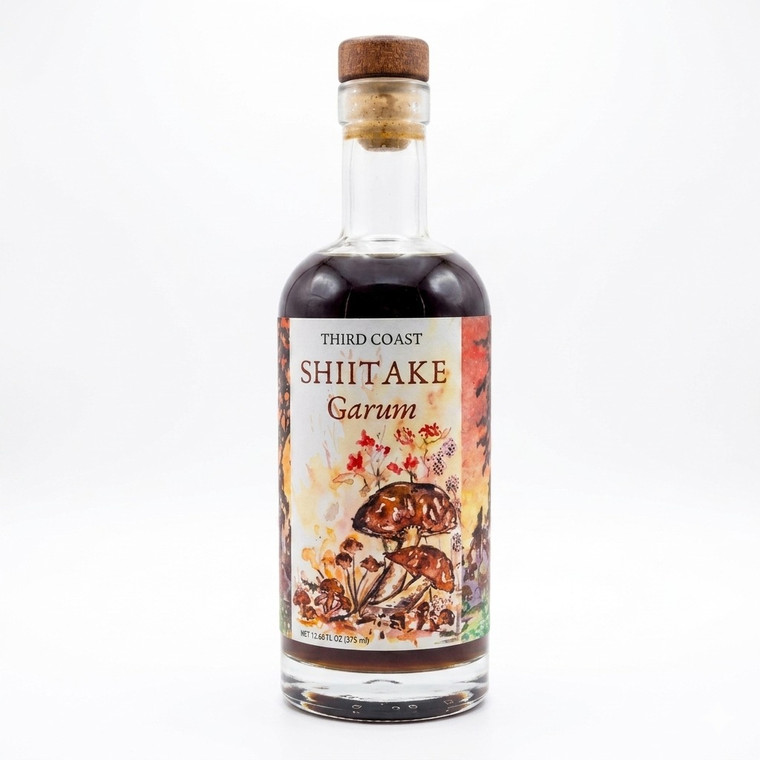
Third Coast Superior
Shiitake Garum Vegan Fish Sauce - 200ml
Third Coast Superior's Shiitake Garum is a small-batch fermented mushroom sauce built on four ingredients — shiitake mushrooms, sea salt, rice koji, and time — and the result is a concentrated umami depth that outperforms soy sauce in roundness and leaves traditional fish sauce behind entirely. Made in Minnesota, it brings a layered, savory complexity to anything you cook, without sharpness, without brine, and without anything derived from the sea.
- Endless application: Stir into broths, ramen, and soups; build into pan sauces, marinades, and dressings; drizzle over roasted vegetables or eggs — a small pour adds the quiet backbone that makes a dish taste complete.
- Fermented in Minnesota, in small batches: The garum method — slow fermentation of fungi with salt — is a centuries-old technique for building concentrated savory flavor. Third Coast applies it to shiitake mushrooms and rice koji, creating a sauce with a flavor profile closer to aged miso than to vinegar-bright condiments.
- Certified vegan and gluten-free — a rare umami-builder that works across plant-based, paleo, and gluten-free kitchens alike, packaged in a 375mL glass bottle with a cork closure.
Third Coast Superior's Shiitake Garum is what happens when a fermentation-forward Minnesota producer applies a chef's technique — garum — to shiitake mushrooms, sea salt, and rice koji. The result is a sauce with the kind of deep, savory backbone that most kitchens spend years trying to build through stocks and reductions. This does it in a pour.
The formula is stripped to essentials: shiitake mushrooms, sea salt, rice koji, and a slow fermentation process. There are no flavor enhancers, no preservatives, no animal byproducts, and no soy. The fermentation process unlocks glutamates naturally present in shiitake mushrooms and concentrates them into a liquid that is richer and rounder than soy sauce, without soy's sharpness, and more complex than conventional fish sauce, without any of the brine. The 375mL glass bottle with cork closure signals the product's positioning clearly: this is a pantry ingredient treated with the same care as a small-production wine or artisan vinegar.
In practical kitchen terms: a teaspoon in a broth adds the savory depth that would otherwise require hours of simmering. It builds into vinaigrettes, marinades, and stir-fry sauces without announcing itself — the food tastes more like itself, only more so. Try it stirred into miso soup, whisked into a mushroom pan sauce, or drizzled over roasted root vegetables before serving. It works at the building stage (into the pan, into the marinade) and at the finishing stage (over the bowl, over the plate).
Third Coast Superior sources and produces domestically, with a regenerative harvesting philosophy applied to the mushroom sourcing. The brand's shiitake garum line carries both Vegan and Gluten-Free certifications, making it one of the only umami concentrates on the market that is simultaneously chef-grade, plant-based, and accessible to gluten-free kitchens.
Store at room temperature in a cool, dry place. Refrigerate after opening. Suitable for vegan, plant-based, gluten-free, dairy-free, and paleo diets.
Ingredients: Shiitake Mushrooms, Sea Salt, Rice Koji.
Common Questions
How does shiitake garum compare to conventional soy sauce or fish sauce in terms of flavor and ingredients?
Conventional soy sauce is brewed from soybeans and wheat, which gives it a sharp, salty edge and makes it off-limits for gluten-free and soy-free kitchens. Traditional fish sauce is fermented anchovies and salt — intensely briny and obviously animal-derived. Shiitake garum is neither: it is made from only two ingredients, shiitake mushrooms and sea salt, fermented slowly to concentrate the glutamates that occur naturally in the mushrooms. The result is a savory liquid that is rounder and less sharp than soy sauce, with none of fish sauce's brine character, and with no soy, gluten, or animal byproducts. Blind kitchen tests with chef-focused fermentation products in this category consistently show that mushroom-derived garums dissolve into dishes without leaving a detectable mushroom or fermented note — the food just tastes deeper.
What is the actual science behind why this sauce makes food taste more savory?
The mechanism is glutamate-driven umami. Shiitake mushrooms are naturally high in free glutamic acid and also contain guanosine monophosphate (GMP), a nucleotide that produces a synergistic amplification effect when combined with glutamates — the two compounds together stimulate umami receptors on the tongue more powerfully than either does alone. Slow fermentation breaks down proteins in the mushroom into free amino acids, including glutamate, dramatically increasing the concentration of these compounds compared to raw or cooked mushrooms. This is the same biological mechanism that makes aged parmesan, miso, and anchovy paste so effective at building savory depth. A small amount — as little as a teaspoon — is enough to shift the flavor baseline of a broth, sauce, or marinade without the ingredient announcing itself as mushroom or fermented.
Is this product actually suitable for strict paleo and whole-food plant-based diets, or are there hidden additives?
The ingredient list is two items: shiitake mushrooms and sea salt. There are no flavor enhancers, no MSG, no yeast extract, no preservatives, no colorants, and no fillers. That makes it straightforwardly compliant with paleo protocols, which exclude soy, grains, and processed additives but permit fermented condiments with clean ingredient lists. It is also suitable for whole-food plant-based, vegan, gluten-free, dairy-free, and carnivore-adjacent diets where fermented condiments are accepted. The product carries formal Vegan and Gluten-Free certifications, so these are not self-declared marketing claims — they reflect third-party verification of the formulation and production process.
How do I use this as a substitute for fish sauce or soy sauce in specific recipes, and do I need to adjust quantities?
In most applications, you can substitute 1:1 by volume for fish sauce or soy sauce, though it is worth tasting as you go because the flavor profile is rounder and less sharp, so you may find you want slightly more to achieve the same perceived salinity. In Thai-style dressings and dipping sauces that call for fish sauce, it swaps directly and produces a cleaner finish. In stir-fry sauces, add it early with aromatics so it has time to integrate rather than sitting on top. In braises, soups, and stews, a teaspoon to a tablespoon stirred in during the last 10-15 minutes of cooking deepens the base without making the dish taste like mushrooms. For finishing applications — over roasted vegetables, stirred into miso soup, drizzled over grain bowls — start with a small amount and add to taste, as the flavor is concentrated.
What does regenerative harvesting actually mean for the mushroom sourcing in this product?
Regenerative harvesting, as applied to mushroom cultivation and sourcing, refers to practices that maintain or improve the substrate and ecosystem from which mushrooms are grown or foraged, rather than depleting them. For cultivated shiitake, this typically involves using agricultural byproduct substrates like hardwood sawdust or straw, which can be composted after use, creating a closed-loop system. Third Coast Superior applies this philosophy domestically — the mushrooms are sourced and the sauce is produced within the United States. While the specific farm partners are not publicly enumerated on this product page, the combination of domestic sourcing, a two-ingredient formulation, and regenerative sourcing certification points to a supply chain with a meaningfully shorter and more transparent chain than import-dependent umami products.
How should I store this once I open it, and how long does it stay good?
Before opening, store the bottle at room temperature in a cool, dry place away from direct light — the cork closure and glass bottle are designed to protect the contents without refrigeration. After opening, refrigerate it. Fermented salt-cured products like garum are naturally shelf-stable due to their high salt content and low water activity, but refrigeration after opening slows any oxidation and preserves the flavor profile at its best. A 375mL bottle used regularly in cooking should last several months after opening without any quality loss. If you notice any off aromas or visible changes, those would be the indicators to watch, though with a properly fermented and salted product, spoilage is uncommon.
Why does this come in a 375mL bottle with a cork closure rather than a standard condiment bottle?
The 375mL format is the same volume as a half-bottle of wine, and the cork closure is borrowed from the same tradition — it signals that this is a small-production, artisan ingredient meant to be used with some intentionality, not squeezed from a bulk container. Practically, the glass bottle is inert and does not interact with the acidic, saline contents the way some plastics can over time. The cork allows the bottle to breathe slightly, which is appropriate for a living fermented product. The format also reflects how the product is actually used in the kitchen: at a teaspoon to a tablespoon per application, 375mL is a meaningful supply that lasts without requiring a bulk purchase.
The formula is stripped to essentials: shiitake mushrooms, sea salt, rice koji, and a slow fermentation process. There are no flavor enhancers, no preservatives, no animal byproducts, and no soy. The fermentation process unlocks glutamates naturally present in shiitake mushrooms and concentrates them into a liquid that is richer and rounder than soy sauce, without soy's sharpness, and more complex than conventional fish sauce, without any of the brine. The 375mL glass bottle with cork closure signals the product's positioning clearly: this is a pantry ingredient treated with the same care as a small-production wine or artisan vinegar.
In practical kitchen terms: a teaspoon in a broth adds the savory depth that would otherwise require hours of simmering. It builds into vinaigrettes, marinades, and stir-fry sauces without announcing itself — the food tastes more like itself, only more so. Try it stirred into miso soup, whisked into a mushroom pan sauce, or drizzled over roasted root vegetables before serving. It works at the building stage (into the pan, into the marinade) and at the finishing stage (over the bowl, over the plate).
Third Coast Superior sources and produces domestically, with a regenerative harvesting philosophy applied to the mushroom sourcing. The brand's shiitake garum line carries both Vegan and Gluten-Free certifications, making it one of the only umami concentrates on the market that is simultaneously chef-grade, plant-based, and accessible to gluten-free kitchens.
Store at room temperature in a cool, dry place. Refrigerate after opening. Suitable for vegan, plant-based, gluten-free, dairy-free, and paleo diets.
Ingredients: Shiitake Mushrooms, Sea Salt, Rice Koji.
Common Questions
How does shiitake garum compare to conventional soy sauce or fish sauce in terms of flavor and ingredients?
Conventional soy sauce is brewed from soybeans and wheat, which gives it a sharp, salty edge and makes it off-limits for gluten-free and soy-free kitchens. Traditional fish sauce is fermented anchovies and salt — intensely briny and obviously animal-derived. Shiitake garum is neither: it is made from only two ingredients, shiitake mushrooms and sea salt, fermented slowly to concentrate the glutamates that occur naturally in the mushrooms. The result is a savory liquid that is rounder and less sharp than soy sauce, with none of fish sauce's brine character, and with no soy, gluten, or animal byproducts. Blind kitchen tests with chef-focused fermentation products in this category consistently show that mushroom-derived garums dissolve into dishes without leaving a detectable mushroom or fermented note — the food just tastes deeper.
What is the actual science behind why this sauce makes food taste more savory?
The mechanism is glutamate-driven umami. Shiitake mushrooms are naturally high in free glutamic acid and also contain guanosine monophosphate (GMP), a nucleotide that produces a synergistic amplification effect when combined with glutamates — the two compounds together stimulate umami receptors on the tongue more powerfully than either does alone. Slow fermentation breaks down proteins in the mushroom into free amino acids, including glutamate, dramatically increasing the concentration of these compounds compared to raw or cooked mushrooms. This is the same biological mechanism that makes aged parmesan, miso, and anchovy paste so effective at building savory depth. A small amount — as little as a teaspoon — is enough to shift the flavor baseline of a broth, sauce, or marinade without the ingredient announcing itself as mushroom or fermented.
Is this product actually suitable for strict paleo and whole-food plant-based diets, or are there hidden additives?
The ingredient list is two items: shiitake mushrooms and sea salt. There are no flavor enhancers, no MSG, no yeast extract, no preservatives, no colorants, and no fillers. That makes it straightforwardly compliant with paleo protocols, which exclude soy, grains, and processed additives but permit fermented condiments with clean ingredient lists. It is also suitable for whole-food plant-based, vegan, gluten-free, dairy-free, and carnivore-adjacent diets where fermented condiments are accepted. The product carries formal Vegan and Gluten-Free certifications, so these are not self-declared marketing claims — they reflect third-party verification of the formulation and production process.
How do I use this as a substitute for fish sauce or soy sauce in specific recipes, and do I need to adjust quantities?
In most applications, you can substitute 1:1 by volume for fish sauce or soy sauce, though it is worth tasting as you go because the flavor profile is rounder and less sharp, so you may find you want slightly more to achieve the same perceived salinity. In Thai-style dressings and dipping sauces that call for fish sauce, it swaps directly and produces a cleaner finish. In stir-fry sauces, add it early with aromatics so it has time to integrate rather than sitting on top. In braises, soups, and stews, a teaspoon to a tablespoon stirred in during the last 10-15 minutes of cooking deepens the base without making the dish taste like mushrooms. For finishing applications — over roasted vegetables, stirred into miso soup, drizzled over grain bowls — start with a small amount and add to taste, as the flavor is concentrated.
What does regenerative harvesting actually mean for the mushroom sourcing in this product?
Regenerative harvesting, as applied to mushroom cultivation and sourcing, refers to practices that maintain or improve the substrate and ecosystem from which mushrooms are grown or foraged, rather than depleting them. For cultivated shiitake, this typically involves using agricultural byproduct substrates like hardwood sawdust or straw, which can be composted after use, creating a closed-loop system. Third Coast Superior applies this philosophy domestically — the mushrooms are sourced and the sauce is produced within the United States. While the specific farm partners are not publicly enumerated on this product page, the combination of domestic sourcing, a two-ingredient formulation, and regenerative sourcing certification points to a supply chain with a meaningfully shorter and more transparent chain than import-dependent umami products.
How should I store this once I open it, and how long does it stay good?
Before opening, store the bottle at room temperature in a cool, dry place away from direct light — the cork closure and glass bottle are designed to protect the contents without refrigeration. After opening, refrigerate it. Fermented salt-cured products like garum are naturally shelf-stable due to their high salt content and low water activity, but refrigeration after opening slows any oxidation and preserves the flavor profile at its best. A 375mL bottle used regularly in cooking should last several months after opening without any quality loss. If you notice any off aromas or visible changes, those would be the indicators to watch, though with a properly fermented and salted product, spoilage is uncommon.
Why does this come in a 375mL bottle with a cork closure rather than a standard condiment bottle?
The 375mL format is the same volume as a half-bottle of wine, and the cork closure is borrowed from the same tradition — it signals that this is a small-production, artisan ingredient meant to be used with some intentionality, not squeezed from a bulk container. Practically, the glass bottle is inert and does not interact with the acidic, saline contents the way some plastics can over time. The cork allows the bottle to breathe slightly, which is appropriate for a living fermented product. The format also reflects how the product is actually used in the kitchen: at a teaspoon to a tablespoon per application, 375mL is a meaningful supply that lasts without requiring a bulk purchase.
- __Storage_Location:
- Dry
- __Volume:
- 300
- __Owner:
- ThirdCoast
- __badge:
- Vegan