


Sale
Strawberry Energy Chews - 2.1 oz
PROBAR
$2.79
$2.49
Below are the available bulk discount rates for each individual item when you purchase a certain amount
- Buy 2 - 5 and get 2% off
- Buy 6 - 11 and get 4% off
- Buy 12 or above and get 8% off
(No reviews yet)

Write a Review
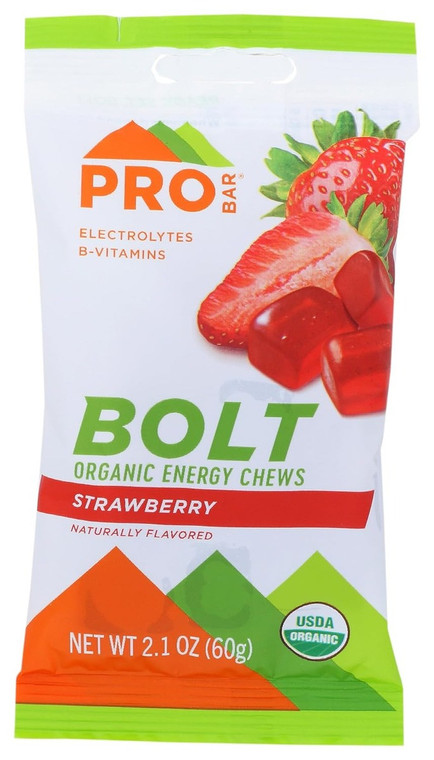
PROBAR
Strawberry Energy Chews - 2.1 oz
Most energy chews on the trailhead shelf are built on corn syrup solids and dextrose, colored with dyes that have nothing to do with fruit. ProBar's Strawberry Energy Chews start with organic tapioca syrup and cane sugar, get their color from carrot and black currant extract instead of synthetic dye, and fold in a real fruit blend of apple, acai, blueberry, and pomegranate fruit extract — the kind of ingredient panel you can actually read out loud on the trail.
- Pocket-sized fuel for trail runs, long rides, hikes, and the walk from soccer practice to the car — built for everyday adventures, not just race day.
- Colored with carrot and black currant extract (not artificial dye), with added B3, B6, and B12 to support the energy metabolism active bodies lean on.
- Certified USDA Organic, Non-GMO Project Verified, plant-based, gluten-free, and nut-free — safe to toss in a kid's lunchbox or a race vest without a second read of the label.
ProBar makes food for the people who read the ingredient panel before they buy — hikers refueling at a switchback, cyclists reaching into a jersey pocket, parents packing a soccer-practice snack bag. These organic energy chews are built for exactly that crowd of runners, cyclists, and walkers.
Each organic chew starts with tapioca syrup and cane sugar for quick-digesting carbohydrates, then builds in pectin for the classic chewy texture, sodium citrate for electrolyte support, and a real fruit blend of apple, acai, blueberry, and pomegranate fruit extract for flavor depth beyond straight sugar. Color comes from carrot and black currant extract rather than synthetic dye, and the formula is rounded out with added Vitamin B3, B6, and B12 — three B vitamins the body uses to help convert food into usable energy during sustained activity. These chews are made in the USA and are plant-based, vegan-friendly, and gluten-free, though the fast-digesting carbohydrates that make them effective mid-workout fuel also mean they're not a fit for keto, paleo, or carnivore diets.
Toss a pack in a hydration vest pocket for a long run, split one between bike jersey pockets for a century ride, or drop one in a kid's backpack for the walk home from practice — they're built to be eaten on the move, no water or prep required.
Customers who've packed these on runs and rides describe them as a go-to pre-workout and pre-race snack, with a texture and strawberry flavor closer to a fruit snack than a typical energy chew.
Certified USDA Organic, Non-GMO Project Verified, plant-based, gluten-free, and made without nuts, Strawberry Energy Chews store at room temperature — no fridge, no freezer, no ice pack needed, just a spot in the pantry or the bottom of a pack.
Ingredients: Tapioca Syrup, Cane Sugar, Water, Tapioca Syrup Solids, Pectin, Citric Acid, Sodium Citrate, Natural Flavor, Colored with Extracts (Carrot, Black Currant), Ascorbic Acid, Vitamin B3, Sunflower Oil, Fruit Blend (Apple, Acai, Blueberry, Pomegranate Fruit Extract), Sea Salt, Carnauba Wax, Vitamin B6, and Vitamin B12.
Common Questions
How do these compare to a typical conventional energy chew or gel on ingredients and sugar content?
A standard conventional energy chew often relies on high fructose corn syrup or dextrose, artificial dyes like Red 40, and no organic certification, typically packing 20-24 grams of sugar per serving. ProBar's Strawberry Energy Chews use organic tapioca syrup and organic cane sugar as the primary carbohydrate source, landing around 20 grams of sugar per pack, with color coming from carrot and black currant extract instead of synthetic dye. The bigger difference is traceability: every ingredient marked with a dagger symbol is certified organic, meaning it's grown without synthetic pesticides or fertilizers, which conventional chews don't require. Both deliver a similar fast-digesting carbohydrate hit for exercise, but the sourcing standard behind the sugar and flavoring is where they diverge.
What do the added B vitamins actually do during exercise?
Vitamin B3 (niacin), B6, and B12 are all cofactors in the metabolic pathways that convert carbohydrates, fats, and protein into ATP, the molecule muscles use directly for contraction. B3 specifically supports the citric acid cycle and electron transport chain, the two processes that generate the bulk of cellular energy during sustained aerobic effort like a long run or ride. B6 assists in glycogen breakdown, helping release stored carbohydrate from muscle and liver tissue when you need quick fuel. B12 supports red blood cell formation, which matters for oxygen delivery to working muscles over a multi-hour effort. None of these vitamins provide calories themselves, but they support the enzymatic machinery that turns the sugar in these chews into usable energy faster.
Do these fit a keto, paleo, or carnivore diet?
No. Each pack carries roughly 40 grams of total carbohydrate and about 20 grams of sugar, almost entirely from tapioca syrup and cane sugar, which puts a single serving well beyond the daily carb allowance most keto protocols (20-50 grams net carbs per day) are built around. Carnivore is also a non-fit since the entire product is plant-derived carbohydrate with zero animal ingredients. Paleo is a partial gray area — the fruit blend and organic sourcing align with paleo's whole-food preference, but refined cane sugar and tapioca syrup solids are processed carbohydrates that strict paleo eating typically avoids. These chews are formulated for endurance athletes who need fast glucose during activity, which is functionally the opposite goal of a low-carb or ketogenic eating pattern.
Can these be used in something other than eating them straight during a workout?
Yes — some runners and cyclists chop a chew into smaller pieces and mix it into a trail mix or homemade energy bar recipe to spread carbohydrate intake across a longer effort instead of taking a whole piece at once. Because the texture holds up at room temperature and doesn't melt like a gel, it also works stirred into oatmeal or yogurt as a pre-workout breakfast add-in for extra quick-digesting carbs. There's no cooking adaptation needed since the chews are ready-to-eat and heat-stable up to normal room temperature, but avoid leaving them in direct sun or a hot car, since the pectin-based texture can soften. They're not a direct substitute for savory cooking ingredients — they're formulated specifically as a fueling carbohydrate, not a recipe component like sugar or syrup would be.
How can I verify the organic and non-GMO claims on the label?
The USDA Organic seal on this product means it was certified by a USDA-accredited certifying agent that audits the supply chain to confirm at least 95% of ingredients are organically produced, without synthetic pesticides, irradiation, or GMOs. You can look up ProBar's certifying body and certificate status through the USDA's organic integrity database, which lists every certified operation by name. The Non-GMO Project Verified mark is a separate, third-party audit specifically testing for genetically modified organisms, run independently of the USDA process, so seeing both marks together means the product passed two distinct verification systems rather than one company's self-declared claim. The ingredient panel itself marks every organic-sourced ingredient with a dagger symbol, so you can cross-check exactly which components carry the certification.
What makes these different from gelatin-based fruit chews or gummies?
Most fruit chews and gummy candies use gelatin, an animal-derived protein from collagen, as their gelling agent, which is why they're not vegan and often have an animal-product allergen consideration. ProBar's Strawberry Energy Chews use pectin instead, a plant-derived carbohydrate extracted from fruit (commonly citrus or apple), which creates a comparable chewy texture without any animal ingredients. This makes the entire product plant-based by formulation, not just by marketing claim, and it's why the certification list includes Non-GMO Project Verified and USDA Organic alongside a fully vegan ingredient panel. For anyone avoiding animal-derived gelling agents specifically, pectin-based texture is the mechanism that makes that possible here.
Are these safe for someone with a nut allergy?
The product is certified Nut-Free, and the ingredient list confirms no tree nuts or peanuts appear anywhere in the formulation — the only oil present is sunflower oil, which is a seed oil, not a nut-derived oil. That said, always check the manufacturing facility statement on the physical packaging for any shared-equipment disclosures, since certification standards can vary on cross-contact handling even when the recipe itself contains no nut ingredients. If you have a severe nut allergy, contacting ProBar directly to confirm current facility protocols is a reasonable extra step before relying on the certification alone.
Each organic chew starts with tapioca syrup and cane sugar for quick-digesting carbohydrates, then builds in pectin for the classic chewy texture, sodium citrate for electrolyte support, and a real fruit blend of apple, acai, blueberry, and pomegranate fruit extract for flavor depth beyond straight sugar. Color comes from carrot and black currant extract rather than synthetic dye, and the formula is rounded out with added Vitamin B3, B6, and B12 — three B vitamins the body uses to help convert food into usable energy during sustained activity. These chews are made in the USA and are plant-based, vegan-friendly, and gluten-free, though the fast-digesting carbohydrates that make them effective mid-workout fuel also mean they're not a fit for keto, paleo, or carnivore diets.
Toss a pack in a hydration vest pocket for a long run, split one between bike jersey pockets for a century ride, or drop one in a kid's backpack for the walk home from practice — they're built to be eaten on the move, no water or prep required.
Customers who've packed these on runs and rides describe them as a go-to pre-workout and pre-race snack, with a texture and strawberry flavor closer to a fruit snack than a typical energy chew.
- "These are amazing for pre game energy!" — Verified Buyer
- "These taste so yummy. The texture is good too." — Verified Buyer
- "I love these chews, they're probably my favorite 'energy chew'... the taste reminds me of strawberry fruit snacks." — Verified Buyer
Certified USDA Organic, Non-GMO Project Verified, plant-based, gluten-free, and made without nuts, Strawberry Energy Chews store at room temperature — no fridge, no freezer, no ice pack needed, just a spot in the pantry or the bottom of a pack.
Ingredients: Tapioca Syrup, Cane Sugar, Water, Tapioca Syrup Solids, Pectin, Citric Acid, Sodium Citrate, Natural Flavor, Colored with Extracts (Carrot, Black Currant), Ascorbic Acid, Vitamin B3, Sunflower Oil, Fruit Blend (Apple, Acai, Blueberry, Pomegranate Fruit Extract), Sea Salt, Carnauba Wax, Vitamin B6, and Vitamin B12.
Common Questions
How do these compare to a typical conventional energy chew or gel on ingredients and sugar content?
A standard conventional energy chew often relies on high fructose corn syrup or dextrose, artificial dyes like Red 40, and no organic certification, typically packing 20-24 grams of sugar per serving. ProBar's Strawberry Energy Chews use organic tapioca syrup and organic cane sugar as the primary carbohydrate source, landing around 20 grams of sugar per pack, with color coming from carrot and black currant extract instead of synthetic dye. The bigger difference is traceability: every ingredient marked with a dagger symbol is certified organic, meaning it's grown without synthetic pesticides or fertilizers, which conventional chews don't require. Both deliver a similar fast-digesting carbohydrate hit for exercise, but the sourcing standard behind the sugar and flavoring is where they diverge.
What do the added B vitamins actually do during exercise?
Vitamin B3 (niacin), B6, and B12 are all cofactors in the metabolic pathways that convert carbohydrates, fats, and protein into ATP, the molecule muscles use directly for contraction. B3 specifically supports the citric acid cycle and electron transport chain, the two processes that generate the bulk of cellular energy during sustained aerobic effort like a long run or ride. B6 assists in glycogen breakdown, helping release stored carbohydrate from muscle and liver tissue when you need quick fuel. B12 supports red blood cell formation, which matters for oxygen delivery to working muscles over a multi-hour effort. None of these vitamins provide calories themselves, but they support the enzymatic machinery that turns the sugar in these chews into usable energy faster.
Do these fit a keto, paleo, or carnivore diet?
No. Each pack carries roughly 40 grams of total carbohydrate and about 20 grams of sugar, almost entirely from tapioca syrup and cane sugar, which puts a single serving well beyond the daily carb allowance most keto protocols (20-50 grams net carbs per day) are built around. Carnivore is also a non-fit since the entire product is plant-derived carbohydrate with zero animal ingredients. Paleo is a partial gray area — the fruit blend and organic sourcing align with paleo's whole-food preference, but refined cane sugar and tapioca syrup solids are processed carbohydrates that strict paleo eating typically avoids. These chews are formulated for endurance athletes who need fast glucose during activity, which is functionally the opposite goal of a low-carb or ketogenic eating pattern.
Can these be used in something other than eating them straight during a workout?
Yes — some runners and cyclists chop a chew into smaller pieces and mix it into a trail mix or homemade energy bar recipe to spread carbohydrate intake across a longer effort instead of taking a whole piece at once. Because the texture holds up at room temperature and doesn't melt like a gel, it also works stirred into oatmeal or yogurt as a pre-workout breakfast add-in for extra quick-digesting carbs. There's no cooking adaptation needed since the chews are ready-to-eat and heat-stable up to normal room temperature, but avoid leaving them in direct sun or a hot car, since the pectin-based texture can soften. They're not a direct substitute for savory cooking ingredients — they're formulated specifically as a fueling carbohydrate, not a recipe component like sugar or syrup would be.
How can I verify the organic and non-GMO claims on the label?
The USDA Organic seal on this product means it was certified by a USDA-accredited certifying agent that audits the supply chain to confirm at least 95% of ingredients are organically produced, without synthetic pesticides, irradiation, or GMOs. You can look up ProBar's certifying body and certificate status through the USDA's organic integrity database, which lists every certified operation by name. The Non-GMO Project Verified mark is a separate, third-party audit specifically testing for genetically modified organisms, run independently of the USDA process, so seeing both marks together means the product passed two distinct verification systems rather than one company's self-declared claim. The ingredient panel itself marks every organic-sourced ingredient with a dagger symbol, so you can cross-check exactly which components carry the certification.
What makes these different from gelatin-based fruit chews or gummies?
Most fruit chews and gummy candies use gelatin, an animal-derived protein from collagen, as their gelling agent, which is why they're not vegan and often have an animal-product allergen consideration. ProBar's Strawberry Energy Chews use pectin instead, a plant-derived carbohydrate extracted from fruit (commonly citrus or apple), which creates a comparable chewy texture without any animal ingredients. This makes the entire product plant-based by formulation, not just by marketing claim, and it's why the certification list includes Non-GMO Project Verified and USDA Organic alongside a fully vegan ingredient panel. For anyone avoiding animal-derived gelling agents specifically, pectin-based texture is the mechanism that makes that possible here.
Are these safe for someone with a nut allergy?
The product is certified Nut-Free, and the ingredient list confirms no tree nuts or peanuts appear anywhere in the formulation — the only oil present is sunflower oil, which is a seed oil, not a nut-derived oil. That said, always check the manufacturing facility statement on the physical packaging for any shared-equipment disclosures, since certification standards can vary on cross-contact handling even when the recipe itself contains no nut ingredients. If you have a severe nut allergy, contacting ProBar directly to confirm current facility protocols is a reasonable extra step before relying on the certification alone.
- __Storage_Location:
- Dry
- __Volume:
- 175
- __Owner:
- TCFarm
- __badge:
- for delivery by 10/21