


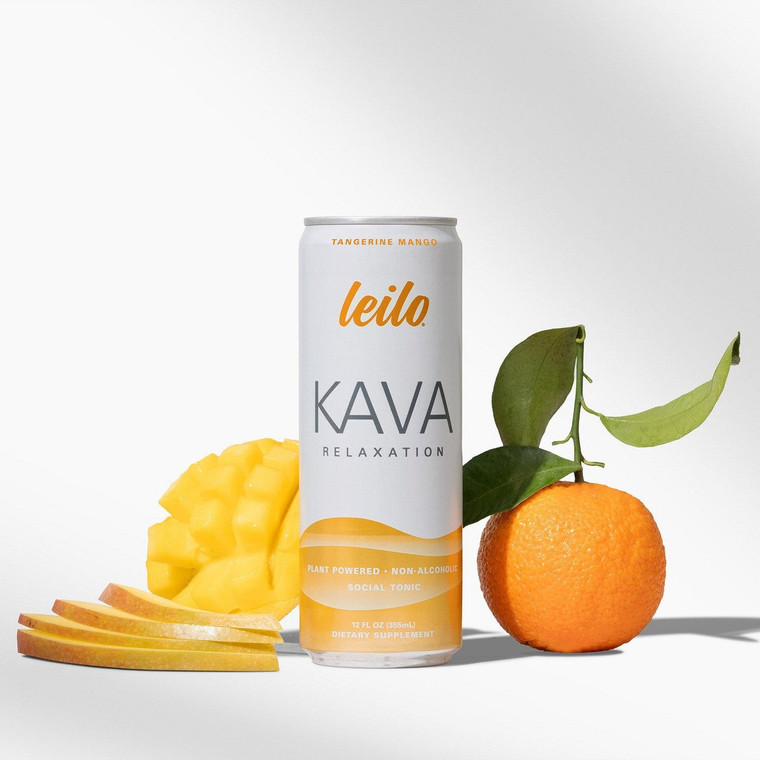
Tangerine Mango Kava Social Tonic - 12 fl oz
Leilo
$4.89
Below are the available bulk discount rates for each individual item when you purchase a certain amount
- Buy 2 - 5 and get 2% off
- Buy 6 - 11 and get 4% off
- Buy 12 or above and get 8% off
(No reviews yet)

Write a Review
Leilo
Tangerine Mango Kava Social Tonic - 12 fl oz
Kava root has anchored South Pacific social gatherings for centuries — a calm, clear-headed ease that alcohol has never been able to replicate. Leilo bottles that root into a sparkling, single-serve can, balancing kava's naturally earthy profile with bright tangerine and mango so it reads like a fruit spritz, not a tincture.
- Pour it straight over ice as a stand-alone sipper, or use it as the base for a zero-proof spritz with soda water and a citrus twist.
- Built around kava's naturally occurring kavalactones — plant compounds that bind selectively to specific GABA-A receptor subtypes, delivering a relaxed, level-headed calm without the broad neural disruption or next-day impairment that comes with ethanol.
- Certified vegan and kosher, with zero alcohol in the can.
Kava [kah-vuh], noun: a South Pacific plant long known for its relaxing qualities. This canned kava seltzer delivers that root in a plant-powered, non-alcoholic format — sparkling, ready-to-drink, and balanced with bright Tangerine Mango so the profile reads like a fruit spritz rather than a tincture.
Each 12oz can is a single-serve social tonic built around a proprietary 1,000mg kava root extract blend (Piper methysticum) plus 100mg of L-theanine, 290mg of potassium as potassium citrate, and a B-vitamin lineup of niacin, B6, B12, and pantothenic acid. Kavalactones like kavain and dihydrokavain bind more selectively to certain GABA-A receptor subtypes than alcohol does, without alcohol's broad glutamate suppression — which is why kava is associated with a relaxed, clear-headed state rather than intoxication. There's no ethanol anywhere in the can, so there's no blood alcohol effect and no next-day impairment.
Stacked against a standard 5-ounce glass of wine — roughly 120 to 125 calories, 4 to 5 grams of residual sugar, and about 14 grams of pure ethanol at 12 to 14 percent ABV — this tonic swaps the ethanol load for a psychoactive plant compound doing the relaxing instead. A basic vodka soda or gin and tonic can tack on another 10 to 16 grams of sugar from the mixer alone; this can is sweetened with organic cane sugar and organic stevia extract rather than a heavy syrup pour.
Serve it straight from the can over ice, or build it into a zero-proof spritz with a splash of soda water and a citrus twist. For a dinner-party pitcher, try a kava sangria with sliced orange, mint, and a splash of pomegranate juice, or mix it 1-to-1 with ginger beer for a Moscow mule profile. Because it's carbonated, add ice or mixers right before serving rather than letting it sit, or the sparkle flattens out.
Certified vegan and kosher, and built around a whole, unprocessed plant root that fits comfortably within paleo guidelines — though as an entirely plant-derived product, it does not fit a carnivore protocol. The kava root itself is naturally low-carb, but because this can includes organic cane sugar for balance, strict keto followers tracking total grams should factor that in. The root is traditionally cultivated on South Pacific islands like Fiji, Vanuatu, and Tonga, where it has anchored ceremonial and social drinking for generations. Best served chilled; refrigerate after opening.
Per 12 fl oz can: 25 calories, Total Carbohydrates 5 g, Total Sugars 4 g, Added Sugar 4 g.
Ingredients: Filtered Water, Organic Cane Sugar, Citric Acid, Natural Flavors, Organic Stevia Extract, Fruit and Vegetable Juice (Color). Supplement Facts (per can): Proprietary Kava Root Extract Blend (Piper methysticum) 1000 mg, L-Theanine 100 mg, Potassium (as Potassium Citrate) 290 mg, Niacin, Vitamin B6, Vitamin B12, Pantothenic Acid.
Common Questions
How does the kavalactone dose in one can compare to a traditional kava shell serving?
A traditional kava shell in the South Pacific typically delivers somewhere between 150 and 250 mg of kavalactones from freshly pounded root, though this varies widely by cultivar and preparation method. One can of this seltzer is built on a 1,000 mg proprietary kava root extract blend, which includes both kavalactones and other root constituents rather than isolated kavalactones alone, so the two numbers aren't a direct apples-to-apples match. In practice, most people find the effect closer to one or two traditional shells rather than a full ceremonial session, since extract-based kavalactone concentration tends to be more consistent than hand-pounded root. If you're used to kava bars or ceremonial prep, start with one can and gauge your response before reaching for a second.
What does L-theanine do in this formula, and why is it paired with kava?
L-theanine is an amino acid found naturally in tea leaves that increases alpha brain wave activity, a pattern associated with a calm, focused mental state. It works partly by modulating glutamate receptors and increasing GABA and dopamine availability, which is a different mechanism than the kavalactones' more direct binding to GABA-A receptor subtypes. At 100 mg per can, the dose is in line with amounts used in sleep and focus studies, and it's included here to round out the relaxation profile without adding sedation on top of the kava. The combination is a common stack in the functional beverage space specifically because the two compounds hit relaxation pathways from different angles rather than doubling up on the same one.
Does this fit a keto, paleo, or carnivore diet?
For keto, each can runs light on carbohydrates thanks to the organic stevia extract doing most of the sweetening work alongside a smaller amount of organic cane sugar, so it can generally fit within a daily net carb budget of 20 to 50 grams, though you should check the can's nutrition panel against your personal limit since even a few grams matters at the stricter end of keto. For paleo, the core ingredient is a whole, unprocessed plant root, which aligns with paleo's whole-food framework, though strict paleo followers sometimes debate whether any added cane sugar belongs in the category. For carnivore, this doesn't fit at all: the entire product is plant-derived, from the kava root extract to the fruit and vegetable juice used for color, so there's no animal-based angle to reconcile it with a zero-plant protocol.
Can this be used in mocktails or cooking, not just poured over ice?
Yes, it works well as a base for zero-proof cocktail builds beyond a simple pour. Try it in place of the alcohol in a Paloma by combining it with fresh grapefruit juice and a squeeze of lime, or use it as the sparkling component in a brunch-style mimosa swap with orange juice. For cooking, it can stand in for a splash of white wine or citrus liqueur when deglazing a pan for a light pan sauce, since the citric acid and fruit juice give it enough acidity to lift browned bits without leaving any ethanol behind. Because the carbonation and kavalactones are both heat-sensitive, add it toward the end of cooking rather than simmering it for an extended period, or you'll lose both the fizz and some of the kava's intended effect.
What does the kava certification actually verify, and why does that matter?
Kava certification programs, run through groups tied to Pacific Island growers, verify that the root used is a noble kava cultivar rather than tudei kava. This distinction matters because tudei strains carry higher levels of flavokavain B, a compound that's been linked in some research to liver stress with heavy or prolonged use, while noble strains have a long history of traditional daily consumption without that association. So when a kava product carries this certification, it's a signal that the sourcing has been checked against strain type, not just a general quality claim. Pairing that with vegan and kosher certification means three separate third-party standards are backing up what's actually in the can, rather than relying on marketing copy alone.
Why is the kava root extract listed as a proprietary blend instead of a single ingredient with an exact kavalactone percentage?
The 1,000 mg figure refers to the total proprietary kava root extract blend, which is standard practice across most kava beverage brands because kavalactone concentration in raw root can range from roughly 3 percent to over 20 percent depending on the cultivar, growing region, and extraction method. Listing a blend weight rather than an isolated kavalactone percentage is common when a brand is combining root material from more than one batch or supplier to keep supply consistent, but it does mean the exact kavalactone milligram count isn't printed on the can. If you want that level of precision, you'd need to contact the brand directly for a certificate of analysis, which reputable kava producers typically can provide on request.
How long does it take to feel the effects, and how long do they last?
Kavalactones from extract-based beverages are generally reported to take effect within about 15 to 30 minutes of drinking, faster than traditional pounded-root preparation because the extraction process makes the compounds more readily available for absorption. Most people describe the relaxed, clear-headed state lasting somewhere around 1 to 3 hours, though this varies based on body weight, empty versus full stomach, and individual sensitivity to kavalactones like kavain and dihydrokavain. There's no hangover mechanism at play since there's no ethanol to metabolize, but drinking on an empty stomach tends to bring on the effects faster and more intensely than drinking with food. As with any kava product, effects are cumulative within a session, so spacing out a second can rather than drinking two back-to-back is the more predictable approach.
Each 12oz can is a single-serve social tonic built around a proprietary 1,000mg kava root extract blend (Piper methysticum) plus 100mg of L-theanine, 290mg of potassium as potassium citrate, and a B-vitamin lineup of niacin, B6, B12, and pantothenic acid. Kavalactones like kavain and dihydrokavain bind more selectively to certain GABA-A receptor subtypes than alcohol does, without alcohol's broad glutamate suppression — which is why kava is associated with a relaxed, clear-headed state rather than intoxication. There's no ethanol anywhere in the can, so there's no blood alcohol effect and no next-day impairment.
Stacked against a standard 5-ounce glass of wine — roughly 120 to 125 calories, 4 to 5 grams of residual sugar, and about 14 grams of pure ethanol at 12 to 14 percent ABV — this tonic swaps the ethanol load for a psychoactive plant compound doing the relaxing instead. A basic vodka soda or gin and tonic can tack on another 10 to 16 grams of sugar from the mixer alone; this can is sweetened with organic cane sugar and organic stevia extract rather than a heavy syrup pour.
Serve it straight from the can over ice, or build it into a zero-proof spritz with a splash of soda water and a citrus twist. For a dinner-party pitcher, try a kava sangria with sliced orange, mint, and a splash of pomegranate juice, or mix it 1-to-1 with ginger beer for a Moscow mule profile. Because it's carbonated, add ice or mixers right before serving rather than letting it sit, or the sparkle flattens out.
Certified vegan and kosher, and built around a whole, unprocessed plant root that fits comfortably within paleo guidelines — though as an entirely plant-derived product, it does not fit a carnivore protocol. The kava root itself is naturally low-carb, but because this can includes organic cane sugar for balance, strict keto followers tracking total grams should factor that in. The root is traditionally cultivated on South Pacific islands like Fiji, Vanuatu, and Tonga, where it has anchored ceremonial and social drinking for generations. Best served chilled; refrigerate after opening.
Per 12 fl oz can: 25 calories, Total Carbohydrates 5 g, Total Sugars 4 g, Added Sugar 4 g.
Ingredients: Filtered Water, Organic Cane Sugar, Citric Acid, Natural Flavors, Organic Stevia Extract, Fruit and Vegetable Juice (Color). Supplement Facts (per can): Proprietary Kava Root Extract Blend (Piper methysticum) 1000 mg, L-Theanine 100 mg, Potassium (as Potassium Citrate) 290 mg, Niacin, Vitamin B6, Vitamin B12, Pantothenic Acid.
Common Questions
How does the kavalactone dose in one can compare to a traditional kava shell serving?
A traditional kava shell in the South Pacific typically delivers somewhere between 150 and 250 mg of kavalactones from freshly pounded root, though this varies widely by cultivar and preparation method. One can of this seltzer is built on a 1,000 mg proprietary kava root extract blend, which includes both kavalactones and other root constituents rather than isolated kavalactones alone, so the two numbers aren't a direct apples-to-apples match. In practice, most people find the effect closer to one or two traditional shells rather than a full ceremonial session, since extract-based kavalactone concentration tends to be more consistent than hand-pounded root. If you're used to kava bars or ceremonial prep, start with one can and gauge your response before reaching for a second.
What does L-theanine do in this formula, and why is it paired with kava?
L-theanine is an amino acid found naturally in tea leaves that increases alpha brain wave activity, a pattern associated with a calm, focused mental state. It works partly by modulating glutamate receptors and increasing GABA and dopamine availability, which is a different mechanism than the kavalactones' more direct binding to GABA-A receptor subtypes. At 100 mg per can, the dose is in line with amounts used in sleep and focus studies, and it's included here to round out the relaxation profile without adding sedation on top of the kava. The combination is a common stack in the functional beverage space specifically because the two compounds hit relaxation pathways from different angles rather than doubling up on the same one.
Does this fit a keto, paleo, or carnivore diet?
For keto, each can runs light on carbohydrates thanks to the organic stevia extract doing most of the sweetening work alongside a smaller amount of organic cane sugar, so it can generally fit within a daily net carb budget of 20 to 50 grams, though you should check the can's nutrition panel against your personal limit since even a few grams matters at the stricter end of keto. For paleo, the core ingredient is a whole, unprocessed plant root, which aligns with paleo's whole-food framework, though strict paleo followers sometimes debate whether any added cane sugar belongs in the category. For carnivore, this doesn't fit at all: the entire product is plant-derived, from the kava root extract to the fruit and vegetable juice used for color, so there's no animal-based angle to reconcile it with a zero-plant protocol.
Can this be used in mocktails or cooking, not just poured over ice?
Yes, it works well as a base for zero-proof cocktail builds beyond a simple pour. Try it in place of the alcohol in a Paloma by combining it with fresh grapefruit juice and a squeeze of lime, or use it as the sparkling component in a brunch-style mimosa swap with orange juice. For cooking, it can stand in for a splash of white wine or citrus liqueur when deglazing a pan for a light pan sauce, since the citric acid and fruit juice give it enough acidity to lift browned bits without leaving any ethanol behind. Because the carbonation and kavalactones are both heat-sensitive, add it toward the end of cooking rather than simmering it for an extended period, or you'll lose both the fizz and some of the kava's intended effect.
What does the kava certification actually verify, and why does that matter?
Kava certification programs, run through groups tied to Pacific Island growers, verify that the root used is a noble kava cultivar rather than tudei kava. This distinction matters because tudei strains carry higher levels of flavokavain B, a compound that's been linked in some research to liver stress with heavy or prolonged use, while noble strains have a long history of traditional daily consumption without that association. So when a kava product carries this certification, it's a signal that the sourcing has been checked against strain type, not just a general quality claim. Pairing that with vegan and kosher certification means three separate third-party standards are backing up what's actually in the can, rather than relying on marketing copy alone.
Why is the kava root extract listed as a proprietary blend instead of a single ingredient with an exact kavalactone percentage?
The 1,000 mg figure refers to the total proprietary kava root extract blend, which is standard practice across most kava beverage brands because kavalactone concentration in raw root can range from roughly 3 percent to over 20 percent depending on the cultivar, growing region, and extraction method. Listing a blend weight rather than an isolated kavalactone percentage is common when a brand is combining root material from more than one batch or supplier to keep supply consistent, but it does mean the exact kavalactone milligram count isn't printed on the can. If you want that level of precision, you'd need to contact the brand directly for a certificate of analysis, which reputable kava producers typically can provide on request.
How long does it take to feel the effects, and how long do they last?
Kavalactones from extract-based beverages are generally reported to take effect within about 15 to 30 minutes of drinking, faster than traditional pounded-root preparation because the extraction process makes the compounds more readily available for absorption. Most people describe the relaxed, clear-headed state lasting somewhere around 1 to 3 hours, though this varies based on body weight, empty versus full stomach, and individual sensitivity to kavalactones like kavain and dihydrokavain. There's no hangover mechanism at play since there's no ethanol to metabolize, but drinking on an empty stomach tends to bring on the effects faster and more intensely than drinking with food. As with any kava product, effects are cumulative within a session, so spacing out a second can rather than drinking two back-to-back is the more predictable approach.
- __Storage_Location:
- Dry
- __Volume:
- 536
- __Owner:
- TCFarm
- __badge:
- Sugar-Free