


Sale
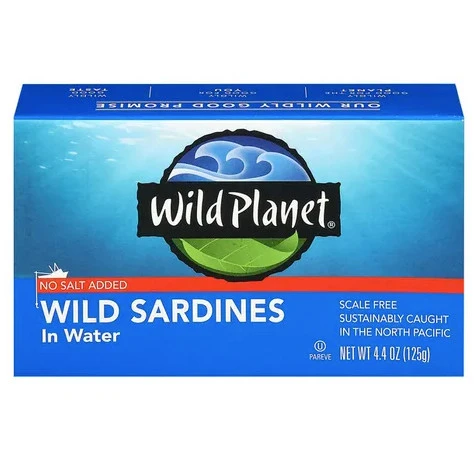
Wild Sardines in Water, No Salt Added - 4.4 oz
Wild Planet
$3.79
$3.29
(No reviews yet)

Write a Review
Wild Planet
Wild Sardines in Water, No Salt Added - 4.4 oz
Wild Planet's No Salt Added Sardines deliver 18g of protein and 140 calories per serving from whole, meaty Pacific sardines packed in water — nothing else. These aren't trimmed or processed into a paste; they're whole fish, firm enough to hold their shape on a cracker or in a grain bowl, with natural sodium kept to just 70mg per serving for those watching their intake without sacrificing the full nutritional profile sardines are known for.
- Use them anywhere: layer onto sourdough toast with mustard and arugula, break into a Niçoise-style salad, stir into pasta with olive oil and capers, or eat straight from the tin — their firm texture handles it all.
- Nutritionally dense: one 4.4 oz tin delivers 18g protein, 195mg calcium (15% DV), 14mcg Vitamin D (70% DV), and omega-3 fatty acids — from wild-caught North Pacific sardines with no sodium added and no flavor enhancers.
- Certified for your lifestyle: Non-GMO Project Verified, Kosher (OU Pareve), Gluten-Free, and confirmed keto and paleo compliant — a shelf-stable protein with zero carbohydrates per serving.
Wild Planet has been sourcing 100% sustainably caught seafood since 2004, and their No Salt Added Wild Sardines represent that commitment at its most straightforward: whole Pacific sardines (Sardinops sagax or Sardinops melanostictus), packed in water, with nothing else added. No salt, no oil, no fillers — just the fish as it comes from the North Pacific.
Each 4.4 oz tin contains whole sardines — not minced, not processed — selected for firm texture and meaty consistency. At 140 calories per 3 oz serving, the tin delivers 18g of protein, 195mg calcium (15% DV), 1.8mg iron (10% DV), and a standout 14mcg Vitamin D (70% DV). Total sodium is just 70mg per serving — making these a meaningful choice for anyone managing sodium intake without reaching for a low-nutrient alternative. Fat content is 8g total, with 2.5g saturated, and zero carbohydrates.
Sardines are one of the lowest-mercury fish available and sit near the bottom of the marine food chain — meaning they accumulate fewer environmental contaminants than larger pelagic fish. Wild Planet's sustainability practices are independently verified; they use methods that avoid bycatch and protect the ocean's natural ecosystem, a standard most commodity canned fish brands don't meet or communicate.
The no-salt-added format gives you full control over seasoning, making these exceptionally versatile: break them into pasta with olive oil, capers, and lemon; layer whole onto a tartine with Dijon and thinly sliced onion; toss into a grain bowl with roasted vegetables and tahini; or eat directly from the tin with a squeeze of lemon. The firm whole-fish format holds up in hot applications where softer, over-processed sardines fall apart.
Certified Non-GMO Project Verified, Kosher (OU Pareve), and Gluten-Free. Confirmed keto and paleo compliant with zero carbohydrates per serving. Store in a cool, dry place; refrigerate and consume within a few days of opening.
Ingredients: Sardines (Sardinops sagax or Sardinops melanostictus), Water.
Common Questions
How do these sardines compare nutritionally to conventional canned sardines with salt added?
The most direct difference is sodium: conventional canned sardines typically contain 300–400mg of sodium per serving, while these No Salt Added sardines deliver just 70mg per serving — roughly 80% less. Protein and fat content are comparable across brands for the same species, with this tin providing 18g protein and 8g fat per 3 oz serving. Where Wild Planet differentiates beyond sodium is the absence of fillers, oils, or preservatives — the only ingredients are sardines and water, meaning the nutrient profile you see is purely the fish itself. Vitamin D at 14mcg per serving (70% DV) and calcium at 195mg (15% DV) are intrinsic to the fish and not diluted by any packing medium.
Why are sardines considered a low-mercury fish, and does that mean they are safer to eat frequently?
Sardines feed on plankton and small crustaceans near the bottom of the marine food chain, so they have very limited exposure to the methylmercury that accumulates in larger, longer-lived predatory fish like tuna, swordfish, and shark — a process called biomagnification. The FDA and EPA consistently list sardines among the 'best choices' for frequent consumption, including for pregnant women and children, allowing up to two to three servings per week. Average mercury levels in sardines are typically below 0.013 parts per million, compared to 0.35 ppm for canned albacore tuna and over 0.97 ppm for swordfish. This makes sardines one of the most practical high-protein, high-omega-3 fish for regular, daily consumption without the mercury concerns that limit tuna intake.
Are these sardines compatible with keto, paleo, and carnivore diets, and what do the macros actually look like?
Yes, they fit all three protocols cleanly. Per 3 oz serving: 140 calories, 18g protein, 8g total fat (2.5g saturated), and 0g carbohydrates. For keto, the zero-carb profile and moderate fat content make them straightforward to include without tracking concerns. Paleo compliance is confirmed by the two-ingredient list — sardines and water — with no seed oils, grains, legumes, or additives. For carnivore, whole sardines in water are one of the most aligned tinned fish options available, since they contain no plant-derived ingredients or fillers. The 70mg sodium per serving is worth noting for carnivore practitioners who manage electrolytes actively, as the no-salt-added format gives full control over sodium intake.
What omega-3 fatty acids are in sardines, and what does the research say about their effects?
Sardines are a source of the long-chain omega-3 fatty acids EPA (eicosapentaenoic acid) and DHA (docosahexaenoic acid), which are the biologically active forms the body uses directly — unlike the ALA found in flaxseed or walnuts, which must be converted at low efficiency. DHA is a structural component of brain cell membranes and retinal tissue, while EPA plays a role in modulating inflammation via prostaglandin and leukotriene pathways. Meta-analyses published in journals including JAMA and the Lancet have associated regular consumption of EPA and DHA with reduced triglyceride levels, reduced risk of cardiovascular events, and improved markers of systemic inflammation. Fatty fish like sardines typically contain 1,000–1,800mg of combined EPA and DHA per 3 oz serving, making them one of the most efficient whole-food sources available.
How can these sardines be used as a substitute for meat or other proteins in everyday cooking?
Whole sardines in water are firm enough to hold up in cooked applications where softer, oil-packed sardines break apart. They work as a direct substitute for anchovies in pasta sauces — use two to three sardines in place of a small tin of anchovies in dishes like puttanesca or aglio e olio, noting they are milder and less salty, so you may want to add a pinch of salt separately. In grain bowls or salads, they substitute for grilled chicken or hard-boiled eggs as a protein anchor. For a quick open-faced sandwich, layer whole sardines on sourdough or rye with Dijon mustard, thinly sliced shallot, and capers — a format common in Portuguese and Scandinavian cuisine. Because there is no added salt, these sardines also blend cleanly into fish cakes, dips, or spreads where you want precise seasoning control without fighting against pre-salted fish.
What does Non-GMO Project Verified mean for a fish product, and how does it apply here?
The Non-GMO Project Verified seal indicates the product has been assessed by the Non-GMO Project, a third-party nonprofit organization, for compliance with their Standard — which for seafood products primarily evaluates the feed, inputs, and any processing agents used in production. For wild-caught fish like these sardines, the certification confirms that no genetically engineered materials were used in any stage of processing, including brine solutions, additives, or manufacturing inputs. The OU Kosher (Pareve) designation is independently granted by the Orthodox Union, one of the most widely recognized kosher certification bodies globally, and confirms the product contains no meat or dairy components and meets their rabbinical standards. The Gluten-Free certification is meaningful here because some canned fish products use processing equipment shared with grain-containing products — this certification addresses cross-contamination risk. Taken together, these three independent certifications provide verifiable third-party accountability that goes beyond a brand's self-reported claims.
What species of sardines are in this tin, and does the species matter for quality or nutrition?
This product contains either Sardinops sagax (Pacific sardine) or Sardinops melanostictus (Japanese sardine or maiwashi), both members of the
Each 4.4 oz tin contains whole sardines — not minced, not processed — selected for firm texture and meaty consistency. At 140 calories per 3 oz serving, the tin delivers 18g of protein, 195mg calcium (15% DV), 1.8mg iron (10% DV), and a standout 14mcg Vitamin D (70% DV). Total sodium is just 70mg per serving — making these a meaningful choice for anyone managing sodium intake without reaching for a low-nutrient alternative. Fat content is 8g total, with 2.5g saturated, and zero carbohydrates.
Sardines are one of the lowest-mercury fish available and sit near the bottom of the marine food chain — meaning they accumulate fewer environmental contaminants than larger pelagic fish. Wild Planet's sustainability practices are independently verified; they use methods that avoid bycatch and protect the ocean's natural ecosystem, a standard most commodity canned fish brands don't meet or communicate.
The no-salt-added format gives you full control over seasoning, making these exceptionally versatile: break them into pasta with olive oil, capers, and lemon; layer whole onto a tartine with Dijon and thinly sliced onion; toss into a grain bowl with roasted vegetables and tahini; or eat directly from the tin with a squeeze of lemon. The firm whole-fish format holds up in hot applications where softer, over-processed sardines fall apart.
Certified Non-GMO Project Verified, Kosher (OU Pareve), and Gluten-Free. Confirmed keto and paleo compliant with zero carbohydrates per serving. Store in a cool, dry place; refrigerate and consume within a few days of opening.
Ingredients: Sardines (Sardinops sagax or Sardinops melanostictus), Water.
Common Questions
How do these sardines compare nutritionally to conventional canned sardines with salt added?
The most direct difference is sodium: conventional canned sardines typically contain 300–400mg of sodium per serving, while these No Salt Added sardines deliver just 70mg per serving — roughly 80% less. Protein and fat content are comparable across brands for the same species, with this tin providing 18g protein and 8g fat per 3 oz serving. Where Wild Planet differentiates beyond sodium is the absence of fillers, oils, or preservatives — the only ingredients are sardines and water, meaning the nutrient profile you see is purely the fish itself. Vitamin D at 14mcg per serving (70% DV) and calcium at 195mg (15% DV) are intrinsic to the fish and not diluted by any packing medium.
Why are sardines considered a low-mercury fish, and does that mean they are safer to eat frequently?
Sardines feed on plankton and small crustaceans near the bottom of the marine food chain, so they have very limited exposure to the methylmercury that accumulates in larger, longer-lived predatory fish like tuna, swordfish, and shark — a process called biomagnification. The FDA and EPA consistently list sardines among the 'best choices' for frequent consumption, including for pregnant women and children, allowing up to two to three servings per week. Average mercury levels in sardines are typically below 0.013 parts per million, compared to 0.35 ppm for canned albacore tuna and over 0.97 ppm for swordfish. This makes sardines one of the most practical high-protein, high-omega-3 fish for regular, daily consumption without the mercury concerns that limit tuna intake.
Are these sardines compatible with keto, paleo, and carnivore diets, and what do the macros actually look like?
Yes, they fit all three protocols cleanly. Per 3 oz serving: 140 calories, 18g protein, 8g total fat (2.5g saturated), and 0g carbohydrates. For keto, the zero-carb profile and moderate fat content make them straightforward to include without tracking concerns. Paleo compliance is confirmed by the two-ingredient list — sardines and water — with no seed oils, grains, legumes, or additives. For carnivore, whole sardines in water are one of the most aligned tinned fish options available, since they contain no plant-derived ingredients or fillers. The 70mg sodium per serving is worth noting for carnivore practitioners who manage electrolytes actively, as the no-salt-added format gives full control over sodium intake.
What omega-3 fatty acids are in sardines, and what does the research say about their effects?
Sardines are a source of the long-chain omega-3 fatty acids EPA (eicosapentaenoic acid) and DHA (docosahexaenoic acid), which are the biologically active forms the body uses directly — unlike the ALA found in flaxseed or walnuts, which must be converted at low efficiency. DHA is a structural component of brain cell membranes and retinal tissue, while EPA plays a role in modulating inflammation via prostaglandin and leukotriene pathways. Meta-analyses published in journals including JAMA and the Lancet have associated regular consumption of EPA and DHA with reduced triglyceride levels, reduced risk of cardiovascular events, and improved markers of systemic inflammation. Fatty fish like sardines typically contain 1,000–1,800mg of combined EPA and DHA per 3 oz serving, making them one of the most efficient whole-food sources available.
How can these sardines be used as a substitute for meat or other proteins in everyday cooking?
Whole sardines in water are firm enough to hold up in cooked applications where softer, oil-packed sardines break apart. They work as a direct substitute for anchovies in pasta sauces — use two to three sardines in place of a small tin of anchovies in dishes like puttanesca or aglio e olio, noting they are milder and less salty, so you may want to add a pinch of salt separately. In grain bowls or salads, they substitute for grilled chicken or hard-boiled eggs as a protein anchor. For a quick open-faced sandwich, layer whole sardines on sourdough or rye with Dijon mustard, thinly sliced shallot, and capers — a format common in Portuguese and Scandinavian cuisine. Because there is no added salt, these sardines also blend cleanly into fish cakes, dips, or spreads where you want precise seasoning control without fighting against pre-salted fish.
What does Non-GMO Project Verified mean for a fish product, and how does it apply here?
The Non-GMO Project Verified seal indicates the product has been assessed by the Non-GMO Project, a third-party nonprofit organization, for compliance with their Standard — which for seafood products primarily evaluates the feed, inputs, and any processing agents used in production. For wild-caught fish like these sardines, the certification confirms that no genetically engineered materials were used in any stage of processing, including brine solutions, additives, or manufacturing inputs. The OU Kosher (Pareve) designation is independently granted by the Orthodox Union, one of the most widely recognized kosher certification bodies globally, and confirms the product contains no meat or dairy components and meets their rabbinical standards. The Gluten-Free certification is meaningful here because some canned fish products use processing equipment shared with grain-containing products — this certification addresses cross-contamination risk. Taken together, these three independent certifications provide verifiable third-party accountability that goes beyond a brand's self-reported claims.
What species of sardines are in this tin, and does the species matter for quality or nutrition?
This product contains either Sardinops sagax (Pacific sardine) or Sardinops melanostictus (Japanese sardine or maiwashi), both members of the
- __badge:
- Zero Sugar
- __Owner:
- TCFarm
- __Storage_Location:
- Dry